The ancient Column of Marcus Aurelius in Rome, constructed between 180 CE and 193 CE, is undergoing a meticulous restoration process using advanced technology. Standing at approximately 30 meters tall, this iconic monument features intricate carvings that commemorate the military campaigns of the Roman emperor. A dedicated team of 18 specialists has been deployed to clean and preserve the column, with the restoration expected to conclude in early 2026.
Advanced Techniques for Preservation
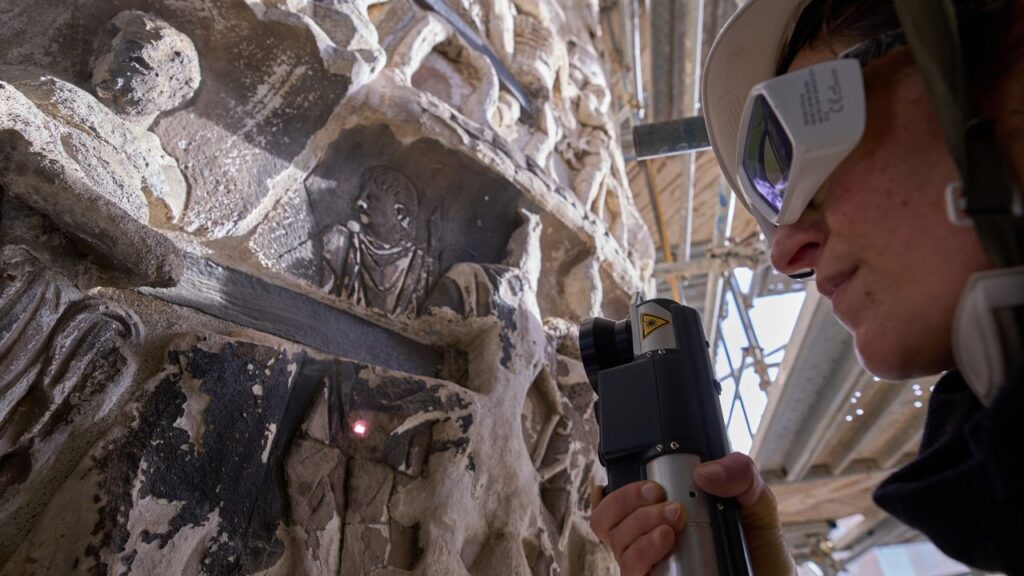
In a recent visit to the site, CNN correspondent Ben Wedeman reported on the innovative restoration methods being utilized. The team employs high-tech lasers that precisely target dirt and grime without damaging the marble surface. This combination of technology and expertise aims to preserve the column’s historical significance while ensuring its longevity for future generations.
The process involves thorough cleaning of the column’s detailed carvings, which depict scenes from various military campaigns. The use of lasers allows for a careful approach, as the specialists can adjust the intensity and focus to suit the specific needs of the marble. This technique not only enhances the aesthetics of the column but also protects it from further deterioration caused by pollutants and environmental factors.
Historical Significance and Future Vision
The Column of Marcus Aurelius is not just a remarkable architectural feat; it is also a vital piece of Roman history. The carvings narrate stories of conquest and leadership, providing valuable insights into the era’s military strategies and political dynamics. As the restoration progresses, experts hope to attract more visitors to this ancient landmark, bringing renewed attention to its historical and cultural importance.
By the time the restoration is completed, the column is expected to be in pristine condition, ready to inspire awe in visitors from around the world. The project reflects a growing recognition of the need to preserve cultural heritage using modern techniques, ensuring that future generations can appreciate these timeless works of art.
In conclusion, the ongoing restoration of the Column of Marcus Aurelius exemplifies the intersection of technology and history. As Rome continues to balance its ancient legacy with modern advancements, projects like this highlight the commitment to preserving the past for the benefit of all.