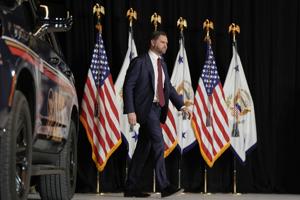
Vice President JD Vance visited Minneapolis on March 15, 2024, emphasizing the need for local officials to collaborate with federal authorities amidst escalating tensions over immigration enforcement. Vance, addressing a backdrop of federal agents and ICE vehicles, asserted that “far-left people” and local law enforcement are contributing to the chaos surrounding the White House’s aggressive deportation campaign.
Vance’s remarks came as the U.S. Justice Department investigates Minnesota’s Democratic leaders, including Governor Tim Walz and Minneapolis Mayor Jacob Frey, for allegedly obstructing immigration enforcement through their public criticism of federal policies. Walz and Frey have labeled the investigation as political intimidation.
In response to the unrest following aggressive rhetoric from the White House, including threats from President Donald Trump to invoke the Insurrection Act, Vance stated, “We’re doing everything that we can to lower the temperature,” urging Minnesota officials to “meet us halfway.” Federal agents have been dispatched to Minnesota, primarily to address reports of child care fraud linked to Somali immigrants.
As Vance spoke, tensions heightened following the recent fatal shooting of Renee Good, a mother of three, by an ICE agent. Good’s death has sparked outrage, prompting local officials and community leaders to advocate for a more measured approach to enforcement. In a social media statement, Walz criticized the federal government for exacerbating local turmoil, calling for a focus on targeted enforcement rather than aggressive confrontations.
Vance defended ICE actions, including the detention of a five-year-old child alongside his father during an arrest. “When they went to arrest his illegal alien father, the father ran,” he explained, emphasizing the complexities of enforcement situations. The vice president also reiterated that ICE would not conduct operations in homes without proper warrants, although recent reports revealed that some immigration officers assert broader powers that could bypass traditional judicial oversight.
Demonstrations are planned in response to the ongoing tensions, with nearly 600 local businesses set to close in solidarity with protests organized by Minnesota faith leaders and labor unions. This mobilization reflects widespread discontent with federal immigration tactics and the perceived overreach of enforcement operations.
During his visit to Ohio earlier on the same day, Vance acknowledged that mistakes can occur in immigration enforcement but attributed the responsibility for these errors to a lack of cooperation from local jurisdictions. He highlighted the importance of collaboration in reducing such incidents, reinforcing the administration’s message that a united front is essential for effective law enforcement.
As Vance targets his political opponents, he remains focused on promoting the administration’s economic achievements, despite public skepticism regarding the state of the economy. He urged voters to be patient, likening the challenges of economic recovery to the difficulty of turning a large ship around, stating, “You don’t turn the Titanic around overnight.”
The unfolding events in Minnesota highlight a deepening divide between federal and local authorities over immigration policy, with calls for dialogue and cooperation becoming increasingly urgent as protests and tensions continue to rise.