COMP Why Venezuela's allies Russia and China are slinking away as Trump ramps up the pressure on Maduro
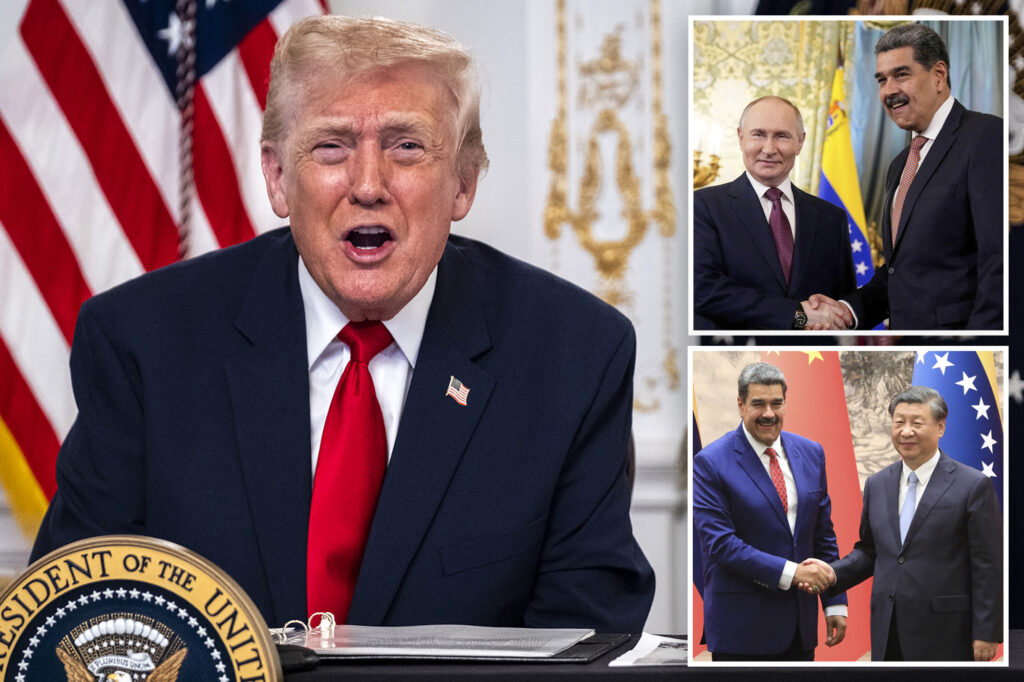
Venezuelan President Nicolás Maduro is experiencing a significant decline in support from his traditional allies, Russia and China, as pressure from the United States intensifies. With U.S. President Donald Trump increasing military readiness against Caracas, both nations are retreating from their previous robust support, which included military aid and financial assistance.
Historically, Russia and China have provided Venezuela with military equipment, army training, and financial resources to counteract U.S. influence. However, recent developments indicate a shift in strategy for both countries as they confront their own military and economic challenges. For instance, Russia, which had previously showcased military might by deploying nuclear-capable bombers to Venezuela in 2018, has scaled back its engagement. Currently, it has only supplied two oil tankers to assist Caracas in exporting crude oil to China, according to international relations professor Vladimir Rouvinski from Icesi University.
Rouvinski pointed out that these gestures are insufficient should the U.S. decide to take military action against Venezuela. He noted that both Russia and China are currently navigating complex diplomatic and trade relationships with the Trump administration, making them cautious about confronting the U.S. directly regarding Venezuela. “Russia isn’t going to help Maduro beyond what they’ve already done,” Rouvinski stated.
The diminishing support from these allies comes in the wake of a long-standing effort by Maduro to forge relationships with Beijing, Moscow, and other adversaries of the U.S. during his tenure. His predecessor, Hugo Chavez, successfully utilized the country’s vast oil and mineral resources to secure over $30 billion in loans and partnerships with nations such as China, Russia, Cuba, and Iran. This economic alliance has, however, suffered setbacks as Venezuela’s oil production has declined and civil unrest has escalated since Maduro took office in 2013. The situation worsened after the U.S. imposed sanctions on Venezuela’s oil sector in 2019.
China stands to lose significantly if Maduro’s government collapses, as it has invested heavily in Venezuela, providing more than $30 billion in arms since 2000, according to the Stockholm International Peace Research Institute. This investment underscores the potential fallout for Beijing should Maduro’s regime fail.
The current dynamics echo the situation in Iran during the summer conflict, where both Russia and China were notably absent in support of Tehran against U.S.-Israeli military actions. Recently, Maduro reached out to his allies for assistance, particularly as the U.S. began bolstering its military presence in the Caribbean. Documents obtained by the Washington Post reveal Maduro’s direct requests to Russian President Vladimir Putin for defensive radars, aircraft repairs, and missiles. Additionally, he sought an “expanded military cooperation” with Chinese President Xi Jinping to address the perceived escalation from the U.S.
As Maduro navigates this increasingly isolated position, the implications for Venezuela and its alliances will unfold amid a high-stakes geopolitical landscape.