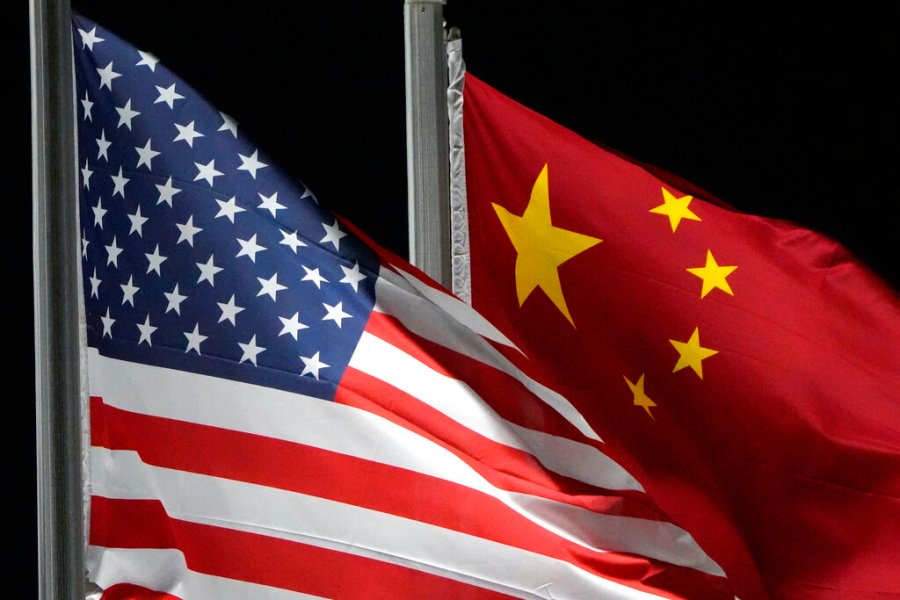
The United States’ policy of strategic decoupling from China is proving ineffective, leading to significant financial setbacks for American companies, confusion among international allies, and an unexpected acceleration in China’s technological independence.
As the U.S. government pushes for reduced economic ties with China, the anticipated benefits have not materialized. Instead, many American businesses are grappling with increased costs and diminished market access. According to a report from the U.S. Trade Representative, the trade deficit with China grew by $24 billion in the first half of 2023, exacerbating concerns among business leaders about the sustainability of this approach.
Impact on American Businesses
The strategic decoupling policy has created a challenging environment for firms that rely on Chinese supply chains. Industries like technology, manufacturing, and agriculture have reported rising costs and logistical complications. A survey conducted by the National Security Council in September 2023 revealed that 68% of American businesses operating in China reported a decline in profitability due to new tariffs and trade restrictions.
Furthermore, the uncertainty surrounding future trade policies is causing hesitation among investors. The Foreign Direct Investment (FDI) from the U.S. into China decreased by 18% in 2023, as companies reassess their global strategies. Many executives have expressed concerns that the decoupling efforts may limit their competitiveness in the global market, ultimately harming their innovation capabilities.
Confusion Among Allies
The decoupling strategy has also led to confusion among U.S. allies, particularly in Europe and Asia. As the U.S. pushes for a more isolated approach to China, European allies are caught in a dilemma between adhering to U.S. directives and maintaining their own economic relationships with China. According to a September 2023 analysis by the European Union, the region’s trade with China has continued to grow, undermining the U.S. push for a united front against Chinese influence.
Many European leaders are concerned that the U.S. strategy may inadvertently create a divide in global trade, leading to a fragmented market that could disadvantage both American and European businesses. This uncertainty has sparked debates about how to balance security concerns with economic realities.
As the U.S. government grapples with the implications of its decoupling policy, the unintended consequence has been a boost to China’s technological independence. Reports indicate that Chinese investments in domestic technology and innovation have surged, with the government allocating an estimated $1 trillion to strengthen its tech sector over the next five years.
This substantial investment is expected to yield significant advancements in areas such as artificial intelligence, semiconductors, and clean energy technologies. As a result, China is rapidly closing the gap in technological capabilities, which poses long-term challenges for U.S. dominance in the global innovation landscape.
The current trajectory suggests that without a comprehensive and strategic plan, U.S. decoupling from China may not only fail to achieve its intended goals but could also exacerbate existing challenges for American businesses and allies while inadvertently benefiting China. As policymakers reassess their strategies, the need for a balanced approach that considers both security and economic interests has never been more critical.