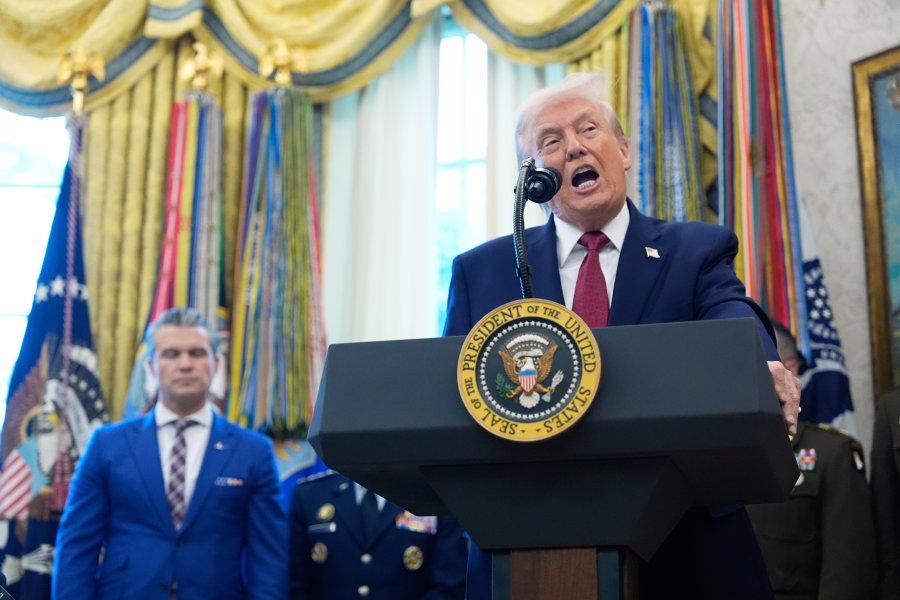
President Donald Trump’s senior national security officials will return to Capitol Hill on March 12, 2024, to address concerns regarding the recent escalation of U.S. military actions in international waters near Venezuela. Secretary of Defense Pete Hegseth and Secretary of State Marco Rubio are among those scheduled to brief lawmakers on the situation, which has drawn significant attention due to its potential implications for regional stability.
The briefing comes amid rising tensions and reports of deadly maritime incidents. U.S. military forces have increased their presence in the Caribbean, a response attributed to heightened threats from Venezuelan forces. The discussions in Congress will aim to clarify the rationale behind these military maneuvers, which some critics argue could lead to further conflict in the region.
Lawmakers are expected to question the administration’s strategy, particularly regarding the safety of both military personnel and civilian populations in Venezuela. The briefing will provide an opportunity for officials to present their assessments and address any legislative concerns.
As the situation develops, the Biden administration faces pressure from various factions within Congress. Some members advocate for a more diplomatic approach, while others support a stronger military response. This divergence highlights the complexities of U.S. foreign policy in Latin America, especially concerning a country undergoing significant political turmoil.
In recent weeks, U.S. naval assets have been involved in operations aimed at countering illicit activities along the Venezuelan coast. This includes targeting drug trafficking operations that are said to be linked to the regime of Venezuelan President Nicolás Maduro. The administration maintains that these actions are necessary to uphold national security interests and to protect American allies in the region.
The briefing will not only shed light on current military strategies but also on the administration’s broader foreign policy objectives. Lawmakers are keen to understand how these goals align with ongoing humanitarian crises in Venezuela, where millions are facing food shortages and economic instability.
As U.S. officials prepare to present their case, the implications of their actions could reverberate beyond national borders, influencing relations with other countries in Latin America and beyond. The outcome of this briefing may very well shape the future of U.S. engagement in the region as tensions continue to rise.