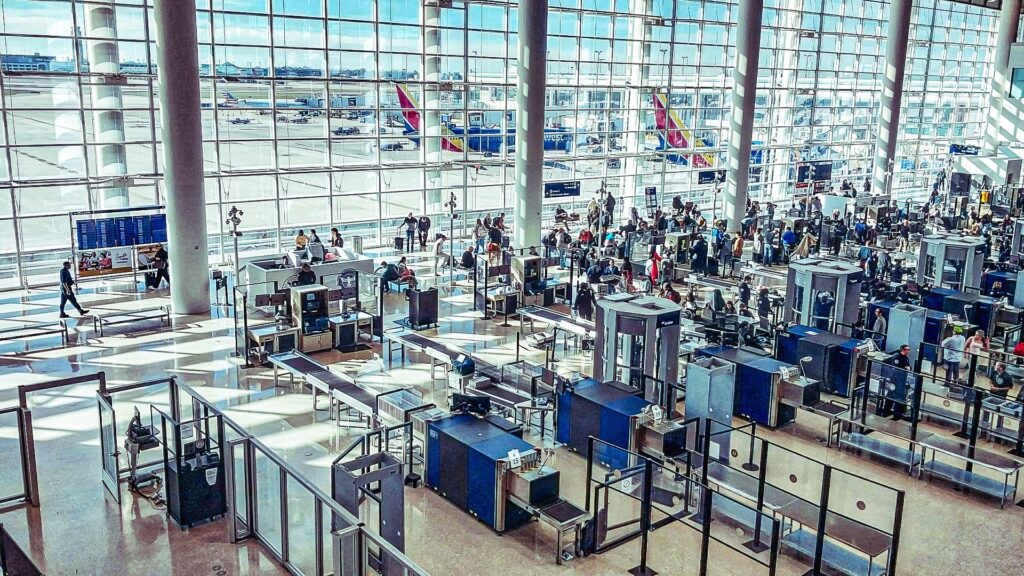
The Transportation Security Administration (TSA) has officially implemented stringent identification requirements for domestic air travel in the United States, effective from May 7, 2025. With the full enforcement of the REAL ID Act, travelers without a compliant form of identification face significant consequences, including potential fees, additional screenings, or even denial of boarding. This change marks a pivotal shift in air travel regulations, compelling travelers to ensure they possess valid identification before arriving at the airport.
Understanding the REAL ID Act and Its Implications
Since its inception in the post-9/11 era, the REAL ID Act has undergone multiple delays. Now, with nationwide enforcement, air travelers must present a state-issued driver’s license or photo ID that features a specific marking, typically a star in the upper right corner. If a driver’s license does not display this symbol, it is deemed invalid for TSA checkpoints unless accompanied by an acceptable alternative.
The TSA’s updated list of acceptable IDs now includes:
- REAL ID-compliant state licenses/IDs
- State-issued Enhanced Driver’s Licenses (EDL/EID)
- U.S. passport or passport card
- DHS “Trusted Traveler” cards (e.g., Global Entry, NEXUS, SENTRI)
- U.S. military IDs (active/retired, or dependents)
- Permanent resident cards
- Canadian provincial driver’s licenses
- Foreign government-issued passports
Travelers are encouraged to check the TSA website for the most current information, as rules may change without notice. Notably, standard state licenses lacking the REAL ID marking, temporary paper licenses, and generic membership cards are no longer accepted. Individuals aged 18 and older must present valid identification, while those under 18 are not required to show ID when traveling domestically.
What Happens If You Arrive Without Valid ID?
For travelers arriving at the airport without a compliant ID, the TSA offers an alternative identity-verification process. This approach may involve answering personal questions or using technology-based verification systems. However, this option comes with a non-refundable fee of $18, introduced in November 2025 as part of the Modernized Alternative Identity Verification Program. Successful verification grants access to secure areas for up to 10 days, as reported by The Washington Post. Yet, even with payment, clearance is not guaranteed.
“You may still be subject to additional screening or be denied access should identity verification fail,” warns TSA documentation.
Travelers opting for this verification process may experience longer wait times, additional bag checks, and possible pat-downs. Many individuals have shared their frustrations on social media, highlighting the challenges of navigating the new regulations. One traveler noted that their trusted-traveler card was not recognized as compliant, despite being on the TSA’s approved list.
The new policy has reshaped the air travel landscape, emphasizing the importance of complying with identification requirements. Reports indicate that approximately 94% of travelers already possess compliant IDs, a significant increase from 81% earlier in 2025, according to Forbes. The TSA’s initiatives are designed to streamline processes while ensuring the security of air travel.
Best Practices for Travelers
Given the heightened stakes, travelers are advised to take proactive measures to avoid complications:
- Verify your ID before heading to the airport. Ensure your state license is REAL ID-compliant or carry an alternative acceptable form of ID.
- Consider the $18 fee option only as a last resort, understanding that success is not guaranteed.
- Arrive early at the airport, accounting for potential delays due to additional verification processes.
- Carry backup identification if possible, such as a passport or other federally accepted documentation.
- If you travel frequently, upgrading to a REAL ID is the most secure option moving forward.
Ultimately, the enforcement of the REAL ID Act represents a significant turning point for air travel in the United States. For most travelers, the transition may be seamless, provided they have compliant identification. However, for those who may overlook these requirements, the consequences can be severe, including financial losses and missed flights. As the landscape of domestic air travel evolves, understanding and adhering to these new rules is crucial for a smooth travel experience.