U.S. President Donald Trump has issued stark threats regarding Greenland, exacerbating tensions within the North Atlantic Treaty Organization (NATO). This situation could represent a significant challenge for the alliance, traditionally focused on responding to external threats. The prospect of an armed confrontation involving NATO members raises questions about the organization’s unity and stability.
Context of the Threats
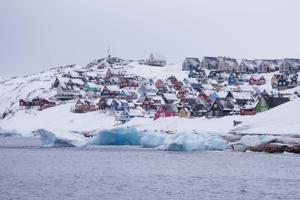
In September 2023, President Trump escalated his rhetoric by suggesting that the United States might take military action to assert its interests in Greenland. This territory, an autonomous region of Denmark, has historically been of strategic importance due to its location in the Arctic. Trump’s comments have sparked fears of a potential conflict in a region already facing geopolitical tensions.
Greenland’s significance has grown in recent years, particularly as climate change opens new shipping routes and access to natural resources. The Arctic region is becoming increasingly contested as nations vie for control over its rich deposits. NATO, while a defensive alliance, may find itself drawn into a confrontation that could test its fundamental principles.
Reactions from NATO and Member Countries
NATO officials have expressed concern over Trump’s declarations, emphasizing the importance of diplomacy and cooperation among member states. The alliance has primarily focused on threats from external sources, such as terrorism and aggression from nations like Russia. The potential for an internal conflict prompted by a member state’s actions presents an unprecedented dilemma.
Denmark’s government has officially responded to the threats, reaffirming its sovereignty over Greenland. Danish Foreign Minister Lars Løkke Rasmussen stated that any threats against Greenland would be viewed seriously and would not be tolerated. This strong stance indicates that Denmark is prepared to defend its territory against any aggression.
“Greenland is part of the Kingdom of Denmark, and we will not allow anyone to undermine our sovereignty,” Rasmussen declared.
The European Union has also weighed in on the issue, calling for de-escalation and dialogue between the United States and Denmark. The EU’s statement highlights the delicate nature of international relations in the Arctic and the need for collaborative approaches to address emerging challenges.
As this situation unfolds, NATO’s response will be closely monitored by both member nations and global observers. The alliance’s ability to maintain cohesion in the face of internal threats will be critical for its future effectiveness. Moreover, the implications of Trump’s rhetoric may extend beyond NATO, influencing broader geopolitical dynamics in the Arctic region.
Implications for Global Security
The ramifications of Trump’s threats extend beyond Greenland and NATO. As nations increasingly focus on Arctic security, the potential for military conflict raises alarms about global stability. This scenario could redefine alliances and shift power balances in an already volatile international landscape.
Should tensions escalate, NATO may need to address how it manages internal disputes and external threats simultaneously. The challenge will be to maintain unity among member states while responding to aggressive actions that may jeopardize collective security.
Moving forward, the international community will watch closely as this situation develops. The importance of diplomacy and dialogue cannot be overstated, particularly as the Arctic continues to draw attention for its strategic relevance. The stakes are high, and the actions taken by both the United States and Denmark will shape the future of NATO and the security of the Arctic region.