Passenger numbers at Canadian airports are on the rise, with the country’s eight largest airports welcoming approximately 58.2 million departing passengers in 2024. This is a 2.1% increase from the previous year and a remarkable 4.8% growth compared to pre-pandemic levels in 2019. While Canada ranks mid-tier globally in terms of air traffic, it is experiencing a notable recovery as air travel rebounds from pandemic-induced groundings.
Toronto Pearson Leads the Pack
At the forefront of this surge is Toronto Pearson International Airport (YYZ), which has firmly established itself as Canada’s busiest airport. In 2024, it served approximately 46.8 million passengers, far surpassing the second-busiest airport, Vancouver International Airport (YVR), which recorded just under 30 million passengers. The gap between Toronto and Vancouver is significant, with Toronto accommodating nearly 17 million more passengers that year.
Toronto Pearson supports over 50,000 jobs and is the largest employment zone in Canada, according to airport data. Covering an area of 4,600 acres—equivalent to almost 12,500 hockey arenas—the airport features five main runways and continues to expand its operations. In the first nine months of 2025 alone, Toronto Pearson recorded 35.8 million passengers, generating revenue of $1.6 billion.
Shifts in Travel Patterns
Notably, a significant portion of air traffic from Canada is directed towards the United States. In December 2025, 23.2% of screened passengers at the eight largest airports headed to the U.S., according to government data. However, a trend has emerged over the past year, with many Canadians choosing alternative destinations. Statistics Canada reported the U.S.-bound air traffic fell by 7.5% in 2025 compared to the previous year, marking the eleventh consecutive month of decline.
This shift can be attributed to various factors, including changing political climates and a growing interest in destinations such as Mexico, Portugal, and the Bahamas. Despite this decline, Toronto Pearson remains resilient, bolstered by a strong domestic passenger base that has mitigated the decrease in cross-border travel.
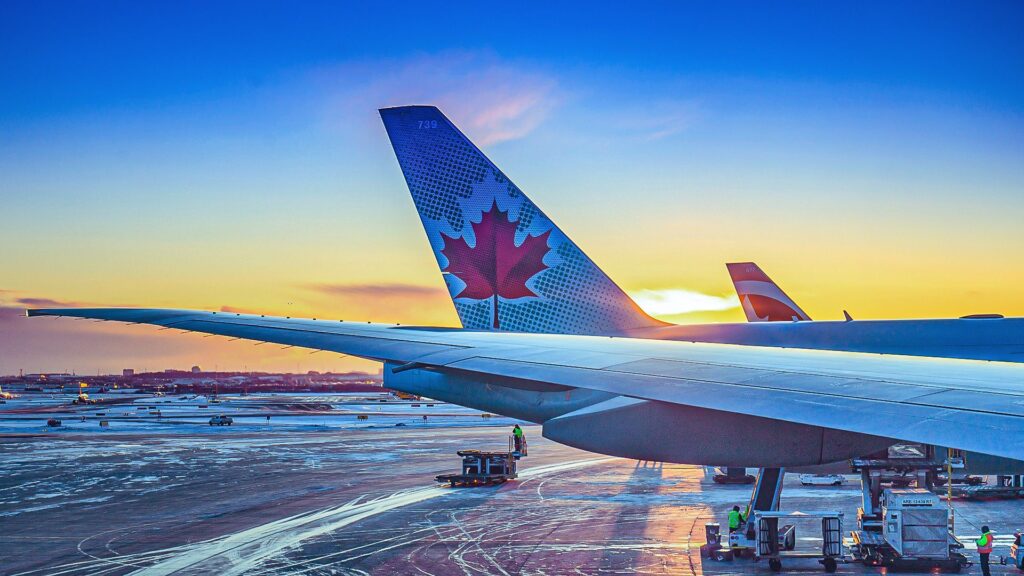
In terms of overall foot traffic, the majority of Toronto Pearson’s passengers are international travelers, with approximately 22.8 million flying to destinations outside Canada in 2025. The anticipated influx of 15,512 Air Canada flights to New York’s JFK Airport in March 2025 alone will provide 2.5 million seats, indicating that U.S. travel remains significant.
Canada’s Other Major Airports
Following Toronto Pearson and Vancouver International Airport, the third position is held by Montréal–Trudeau International Airport (YUL), which recorded 22.4 million passengers in 2025. Calgary International Airport (YYC) followed closely with 19.4 million, and Edmonton International Airport (YEG) rounded out the top five with 7.9 million passengers.
While Toronto is the busiest in terms of passenger numbers, it is not the largest airport in Canada by size. That title belongs to Montreal-Mirabel International Airport, which spans 17,000 acres. Although no longer serving passenger flights, Mirabel plays an essential role in aircraft manufacturing and testing.
As the air travel landscape continues to evolve, Toronto Pearson’s position as the busiest airport in Canada looks secure for now. With plans for new routes and an expected increase in transatlantic flights, Toronto remains a crucial hub for both domestic and international travelers as Canada’s aviation market grows.