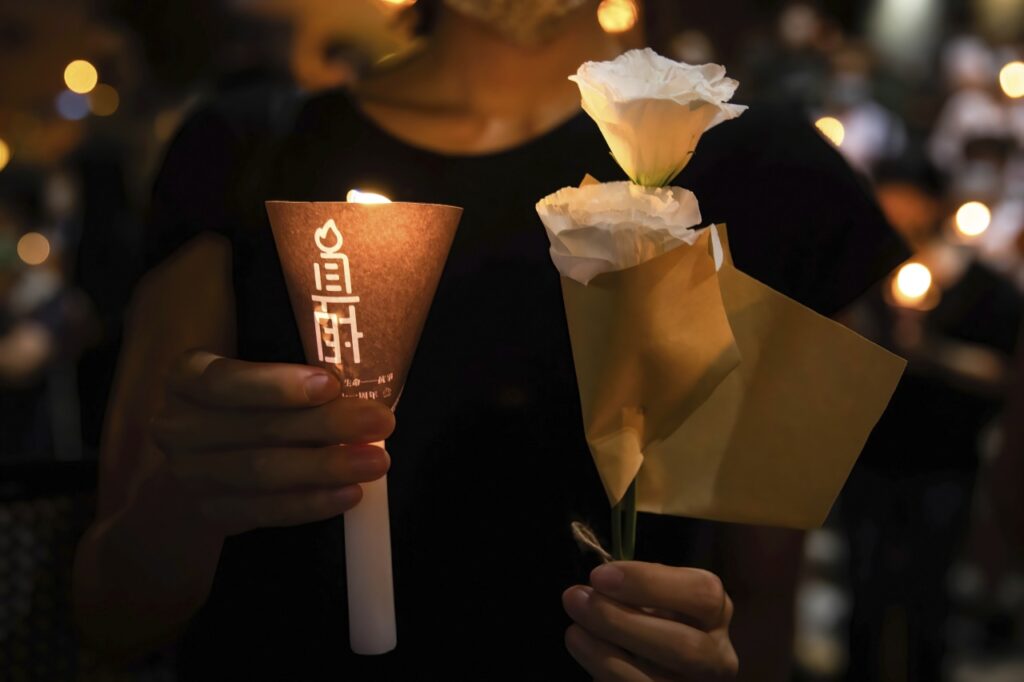
Three residents of Hong Kong have been sentenced to up to ten years in prison for their involvement in a candlelight vigil commemorating the Tiananmen Square protests. This event, held annually to honor those who lost their lives during the crackdown on June 4, 1989, has faced increasing scrutiny and repression from authorities in recent years.
The individuals, aged between 50 and 70, participated in the vigil organized by the now-disbanded Civil Human Rights Front. Their actions included lighting candles and reciting prayers, which led to charges of inciting others to participate in an unauthorized assembly. The Hong Kong Police Force deemed the gathering illegal under the current national security laws that have tightened control over public expressions of dissent.
Legal Context and Sentencing
The sentences were handed down by a Hong Kong court on March 14, 2024, amid a broader crackdown on political freedoms in the region. The judicial process has drawn international criticism, with human rights organizations expressing concerns over the erosion of civil liberties in Hong Kong. According to Amnesty International, the convictions are part of a systematic effort to suppress commemorative events linked to the Tiananmen Square protests.
Legal experts suggest that the harsh penalties reflect the government’s determination to deter any form of public remembrance that could challenge its authority. In a statement following the sentencing, the defendants’ lawyer emphasized the need for a fair trial and criticized the use of national security laws to stifle basic freedoms.
International Reactions and Implications
The sentencing has sparked outrage both locally and internationally. Activists in Hong Kong have vowed to continue their efforts to remember the Tiananmen Square victims despite the risks involved. The international community has responded with calls for the Hong Kong government to respect its citizens’ rights to freedom of expression and assembly.
The United States and several European nations have condemned the sentences, urging Hong Kong authorities to uphold the principles of democracy and human rights. The U.S. State Department reiterated its support for the people of Hong Kong in their pursuit of autonomy and freedom from repression.
This latest development occurs against a backdrop of heightened tensions in Hong Kong, where political dissent is increasingly met with severe legal consequences. As the region grapples with its identity and the legacy of its past, the actions taken by the Hong Kong government continue to draw scrutiny and condemnation from across the globe.
The fate of these three citizens serves as a stark reminder of the ongoing struggle for free expression in Hong Kong, a struggle that resonates deeply with those who remember the events of Tiananmen Square.