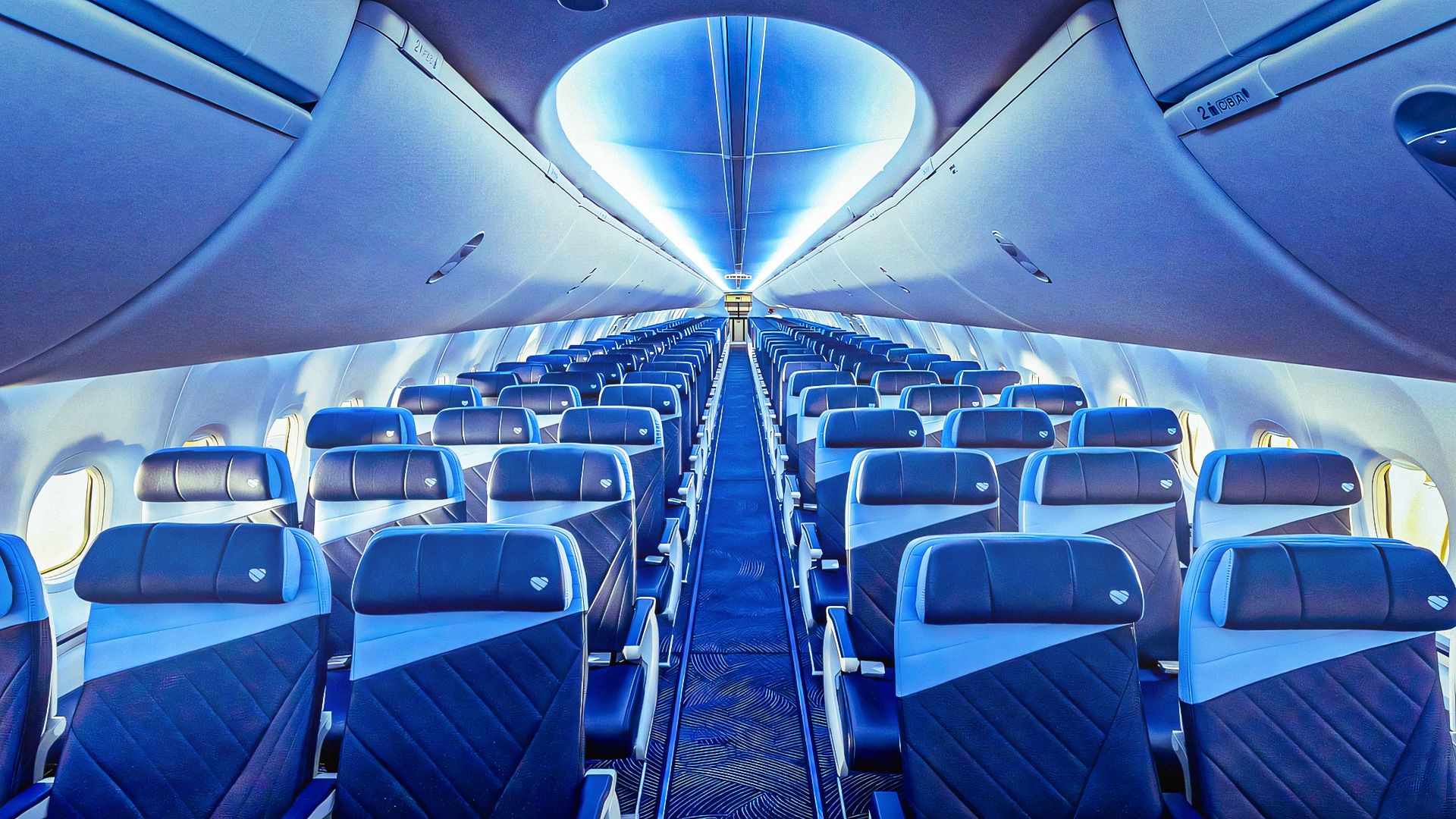
Southwest Airlines has completed a significant overhaul of its cabin interiors, adding extra legroom seating across its fleet. The changes affect over 800 Boeing 737 aircraft, including the 737 MAX 8 and 737-800 models, which have seen their seat pitches adjusted to accommodate these new configurations. The reconfiguration was finished a week ahead of schedule in January 2026, marking a pivotal shift in the airline’s approach to passenger seating and service.
The adjustments include a dedicated section of extra legroom seats, with 36 inches (91.44 centimeters) of legroom now available for 45 of the 175 seats on the 737 MAX 8 and 737-800. The 737-700 models have been reconfigured to reduce their seating capacity from 143 to 137 to incorporate 40 extra legroom seats, which offer a generous 38 inches (96.52 centimeters) of legroom. While the newest aircraft feature Recaro R2 seats, older models will retain their existing seats, such as the Collins Meridian and Innovator II, although retrofitting is planned to ensure consistency across the fleet.
Potential Introduction of First Class
Looking ahead, Southwest Airlines’ CEO Bob Jordan has indicated that the airline is actively considering the addition of a first-class cabin. While no official announcement has been made, Jordan’s acknowledgment of the idea suggests a strong likelihood that first-class seating will soon become a reality for the carrier. The introduction of this premium option aligns with trends in the US airline market, where demand for premium seating has surged.
First-class cabins typically offer higher profit margins, and airlines like Delta Air Lines and United Airlines have been reaping substantial financial benefits from such offerings. Southwest’s potential entry into this market may enhance its Rapid Rewards loyalty program, providing customers with more incentives to remain loyal to the airline.
This shift comes at a time when the airline industry is increasingly moving towards premium products. Budget carriers are beginning to offer first-class options to compete effectively with legacy airlines. This evolution reflects a broader trend where affordability alone is no longer enough to attract and retain customers.
Impact of Industry Trends on Southwest’s Strategy
The decision to explore a first-class cabin follows a significant transformation in Southwest’s business model, driven in part by shareholder Elliott Investment. Since taking a stake in the airline in June 2024, Elliott has advocated for changes that have reshaped Southwest’s offerings, including the introduction of premium seating options and the elimination of complimentary services like checked baggage.
This strategic shift aims to align Southwest with industry leaders in profitability and customer loyalty. As airlines like Delta and Alaska Airlines have successfully capitalized on the lucrative premium seating market, Southwest is now repositioning itself to compete for a share of that revenue.
While the specifics of the potential first-class product remain speculative, it is clear that Southwest is adapting to meet evolving consumer demands. The airline’s ability to enhance its Rapid Rewards program by adding premium seating options could help attract business travelers and frequent flyers who are currently opting for competitors.
As Southwest Airlines navigates these changes, the company is not only aiming to increase profitability but also to redefine its brand in a competitive landscape that increasingly values premium offerings. The introduction of a first-class cabin appears to be a logical next step in this evolving narrative.
In summary, Southwest Airlines is poised to further transform its service offerings by potentially introducing first-class seating. This change reflects broader trends within the airline industry and an ongoing commitment to adapt to passenger expectations. As the company moves forward, its ability to balance affordability with premium options will be crucial in retaining customer loyalty and ensuring long-term success.