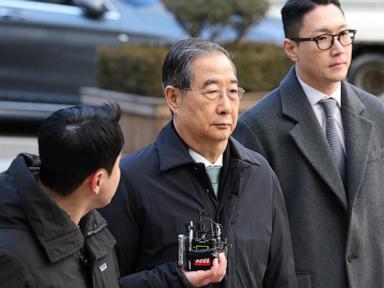
A South Korean court delivered a significant verdict on Wednesday, sentencing former Prime Minister Han Duck-soo to 23 years in prison for his role in the rebellion linked to the imposition of martial law by then-President Yoon Suk Yeol in December 2024. This landmark ruling marks Han as the first official from the Yoon administration to face conviction related to rebellion charges stemming from the controversial martial law.
The Seoul Central District Court’s decision is poised to influence future legal proceedings against Yoon and other associates facing similar charges. Han, who held the position of prime minister—the second-highest office in South Korea—was appointed by Yoon during a turbulent period marked by the martial law crisis. This crisis ultimately led to Yoon’s impeachment and removal from office.
The court characterized the imposition of martial law as an act of rebellion, a serious charge in South Korea’s legal framework. The independent counsel has recently called for the death penalty for Yoon, alleging that he masterminded the rebellion. The next crucial hearing concerning Yoon’s rebellion charges is scheduled for February 19, 2025.
Han’s conviction not only highlights the intense political climate in South Korea but also sets a precedent for how the judiciary may address the actions of high-ranking officials during periods of national crisis. As the situation continues to unfold, the implications of this ruling will likely reverberate through the political landscape, affecting public perception and the trajectory of future governance in the country.
This development underlines the tension between judicial accountability and political authority, raising significant questions about the limits of power and the rule of law in South Korea.