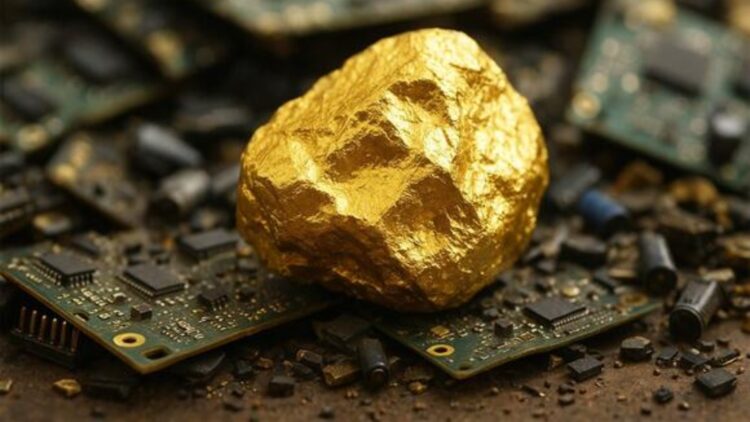
A team of researchers from ETH Zurich in Switzerland has developed an innovative method for extracting 22-karat gold from electronic waste, highlighting the hidden value in discarded devices. This breakthrough not only offers a sustainable approach to waste management but also opens new job opportunities in the technology recycling sector.
The research reveals that even small electronic devices, weighing as little as 25 grams, contain components that can be recycled. Notably, gold can be sourced from motherboards, chips, and circuits often overlooked by consumers when disposing of their old electronics. By adopting this technique, the potential for precious metal recovery could significantly reduce reliance on traditional mining practices.
Innovative Extraction Process
The extraction process relies on a unique technique using sponges made from protein fibrils derived from the cheese industry. According to Talen24h, these sponges, when immersed in solutions derived from dissolved electronic devices, can effectively attract and retain gold ions. Following this, a heat treatment converts these ions into small nuggets. Remarkably, researchers have reported the extraction of up to 450 milligrams of gold from just 20 old motherboards.
This method requires specialized personnel, including trained chemists, technicians, and experts in waste management and food innovation. Consequently, the approach not only focuses on economic gains but also encourages the growth of a specialized workforce, catering to those transitioning into new career paths.
Benefits of Gold Recovery
The advantages of this new method are multifaceted. Firstly, it aims to lessen the dependency on traditional mining, which often leads to significant environmental degradation. Secondly, the creation of jobs in recycling increases demand for qualified personnel in this emerging field, fostering economic growth.
Moreover, this innovative approach contributes to reduced pollution and promotes the reuse of materials. As the volume of electronic waste continues to rise dramatically, many consumers remain unaware of the valuable resources hidden in their outdated devices. This context underscores the importance of the research from ETH Zurich, which seeks not only to provide an environmental solution but also to create a viable economic model.
In essence, the proposed method is a step towards establishing a circular economy, where economic activities, waste recycling, and the demand for skilled workers intersect. It serves as a reminder that behind every discarded electronic device lies potential wealth, both environmentally and financially.