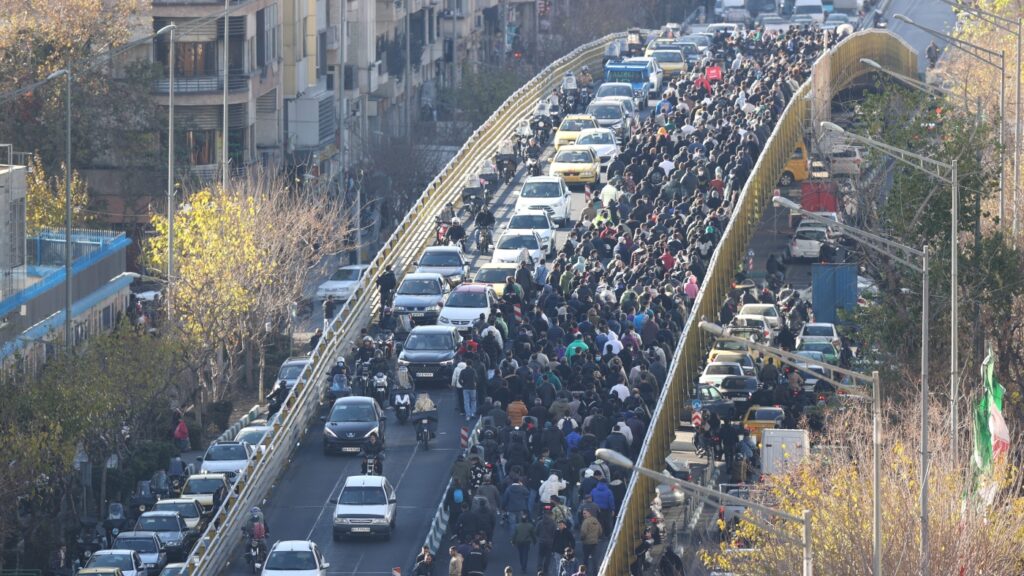
Protesters march in downtown Tehran, Iran, Monday, Dec. 29, 2025. (Fars News Agency via AP)
Widespread protests in Iran, ignited by the nation’s struggling economy, have led to the deaths of at least six individuals, including both demonstrators and security forces. Reports indicate that these incidents mark the first fatalities in the ongoing unrest, which has now expanded to rural regions of the country. The protests, which began to gain traction in the capital, Tehran, have seen a shift towards areas inhabited predominantly by the Lur ethnic group.
The most intense violence occurred in Azna, a city located in Lorestan province, approximately 300 kilometers (185 miles) southwest of Tehran. Online footage purportedly captured scenes of chaos, with flames illuminating the streets and gunfire ringing out as crowds chanted “Shameless! Shameless!” The semiofficial Fars News Agency reported three fatalities in this area, while state media have largely downplayed the scale of the unrest.
In Lordegan, situated about 470 kilometers (290 miles) south of Tehran, two additional deaths were reported by both Fars and the Washington-based Abdorrahman Boroumand Center for Human Rights in Iran. The organization identified the deceased as protesters and shared imagery that appeared to show an Iranian police officer in body armor armed with a shotgun.
Escalating Violence and Economic Grievances
The protests have been described as the largest in Iran since the demonstrations following the death of Mahsa Amini in police custody in 2022. Although the current demonstrations have not reached the same level of intensity, they reflect deep-seated grievances over economic pressures, including rampant inflation and currency devaluation. Currently, the exchange rate stands at approximately 1.4 million rials for $1, significantly impacting daily life for many Iranians.
According to local authorities, a separate protest led to the death of a 21-year-old member of the paramilitary Revolutionary Guard’s Basij force. The state-run IRNA news agency confirmed the incident but provided limited details. Officials in Lorestan province attributed the Guard member’s death to “rioters” during the protests, underscoring the tense atmosphere.
Government Response and Public Sentiment
While President Masoud Pezeshkian has sought to signal a willingness to engage with protesters, he has acknowledged the limitations of his government’s power amid the economic turmoil. The Iranian judiciary reported that approximately 20 individuals were arrested following protests in Kouhdasht, over 400 kilometers (250 miles) southwest of the capital. Local authorities have indicated that calm has returned to the area.
As unrest continues, demonstrations have also featured chants against Iran’s ruling theocracy, reflecting widespread discontent. The Iranian government declared a public holiday on Wednesday in many regions, ostensibly to encourage people to leave the capital for a long weekend. This strategic move comes as the country’s leadership grapples with both domestic unrest and external pressures, including recent military conflicts with Israel and ongoing tensions surrounding its nuclear program.
Despite the government’s attempts to downplay the protests, the situation remains fluid, with citizens expressing their frustrations over economic hardships and demanding more accountability from their leaders. The coming days may reveal whether the authorities will adopt a more conciliatory approach or escalate their response to the dissent.