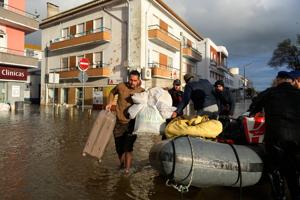
Portuguese Interior Minister Maria Lúcia Amaral has stepped down following intense criticism regarding her government’s handling of recent winter storms that have wreaked havoc across the country. The storms, which have resulted in at least seven fatalities, caused extensive flooding, landslides, and widespread power outages.
The resignation, announced on January 10, 2024, comes as public outrage grows over the perceived inadequacy of the government’s response to the natural disaster. Many citizens expressed their frustration through social media and public demonstrations, calling for accountability from the government.
In a statement, President Marcelo Rebelo de Sousa acknowledged the challenges posed by the severe weather conditions. He emphasized the need for a comprehensive review of the emergency response protocols and has called for a meeting with key government officials and emergency services to assess the situation.
Government’s Response Under Scrutiny
The winter storms, which began on January 5, 2024, have been among the most severe in recent years. Reports indicate that heavy rains have led to flooding in several regions, with the most affected areas being the northern provinces. Landslides have blocked major roads, complicating rescue efforts and hindering access to critical services.
In her resignation letter, Amaral expressed her deep regret for the loss of life and the suffering experienced by many families. She stated, “I take full responsibility for the shortcomings in our response and believe that stepping down is in the best interest of the country.” This statement reflects the gravity of the situation and the pressure faced by officials in the wake of the disaster.
As the nation grapples with the aftermath of the storms, the focus now shifts to the recovery efforts and the measures that will be taken to prevent such tragedies in the future. Emergency services are working around the clock to restore power and assist those displaced by the floods.
Public Reaction and Future Implications
Public reaction to Amaral’s resignation has been mixed. While some citizens view it as a necessary step towards accountability, others are skeptical that a change in leadership will lead to significant improvements. The opposition parties have called for an independent investigation into the government’s response, seeking to ensure that lessons are learned and that adequate preparations are made for future emergencies.
The resignation of a high-ranking official such as Amaral is a rare occurrence in Portuguese politics, highlighting the seriousness of the crisis. As recovery efforts continue, the government faces the challenge of rebuilding trust with the public and ensuring that emergency management protocols are robust enough to handle future natural disasters.
As Portugal navigates this difficult period, the emphasis will undoubtedly remain on ensuring the safety and well-being of its citizens. The coming weeks will be critical as the country evaluates its response strategies and prepares for the potential impact of future storms.