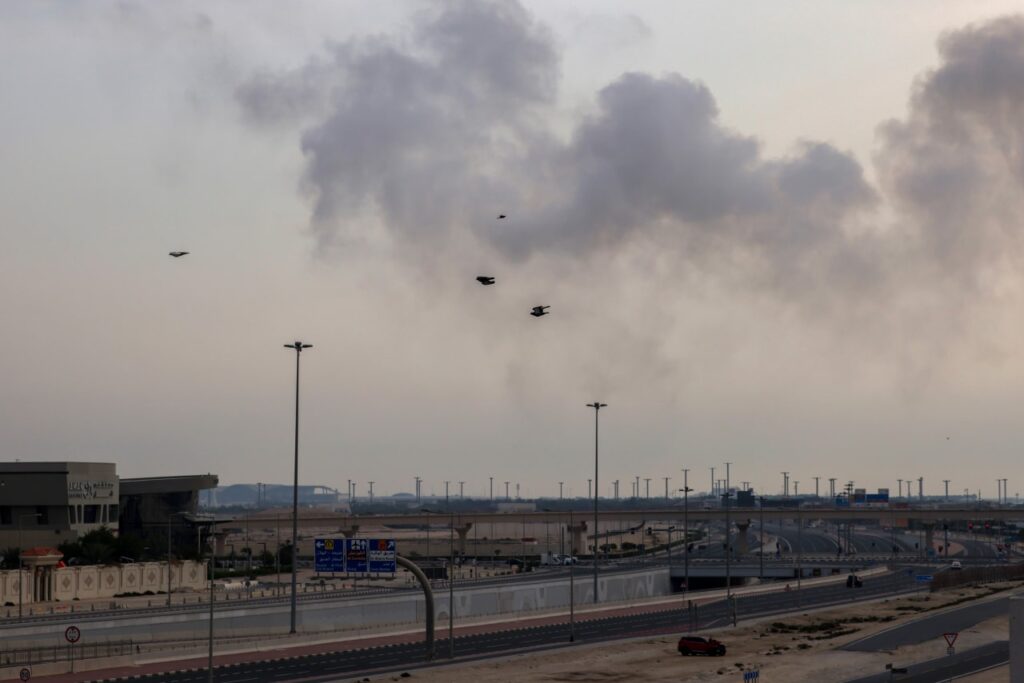
The Middle East is actively exploring more affordable and effective solutions to counter the increasing threat posed by drones, following Ukraine’s successful strategies in managing this challenge. In recent months, the United States, Israel, and various Gulf states have intensified their search for advanced antimissile capabilities that are both economically viable and operationally efficient.
Learning from Ukraine’s Approach
Ukraine’s experience during the ongoing conflict with Russia has provided valuable lessons in drone warfare and defense. The innovative tactics employed by Ukrainian forces have highlighted the need for adaptable and cost-effective solutions. As the conflict escalates, Ukraine has demonstrated how integrating various technologies can neutralize threat perceptions without relying solely on expensive missile systems.
Countries in the Middle East are particularly interested in these strategies, as they face a similar risk from unmanned aerial vehicles (UAVs). The financial burden of existing advanced antimissile systems is prompting a reevaluation of defense budgets and technological investments. For instance, a single missile can cost hundreds of thousands of dollars, which can quickly become unsustainable when faced with waves of cheaper drones.
Strategic Partnerships and Investments
In response to these challenges, the United States has been ramping up defense collaborations with both Israel and Gulf nations. Recent discussions have focused on joint development projects aimed at enhancing drone detection and interception capabilities. According to officials from the U.S. Department of Defense, initiatives include integrating artificial intelligence and machine learning to improve response times and accuracy in targeting.
Israel, known for its cutting-edge defense technology, is also at the forefront of this initiative. The Israeli Defense Forces have been experimenting with low-cost counter-drone systems, which have proven effective in various operational scenarios. Collaboration with the U.S. and Gulf states may lead to shared innovations that could redefine aerial defense strategies across the region.
Investments are not limited to traditional military alliances. The growing involvement of private sector companies in military technology is also shaping the landscape. Startups focused on drone detection and neutralization are receiving increased funding, suggesting a shift towards more agile and innovative solutions.
As nations look toward the future, the emphasis on developing a multi-layered defense architecture becomes increasingly important. This approach allows for a combination of high-tech systems and more economical solutions that can be deployed quickly and effectively.
The urgency of these developments is underscored by recent events. Reports indicate that several Gulf states have experienced drone incursions that have raised national security concerns. The need for a robust defense mechanism is more pressing than ever, prompting regional leaders to seek out the best practices from Ukraine’s ongoing conflict.
In conclusion, the Middle East is poised to transform its approach to drone defense by learning from Ukraine’s experiences. By investing in cost-effective solutions and fostering strategic partnerships, the region aims to enhance its military capabilities while ensuring financial sustainability. As the drone threat continues to evolve, the ability to adapt and innovate will be crucial for maintaining security across these nations.