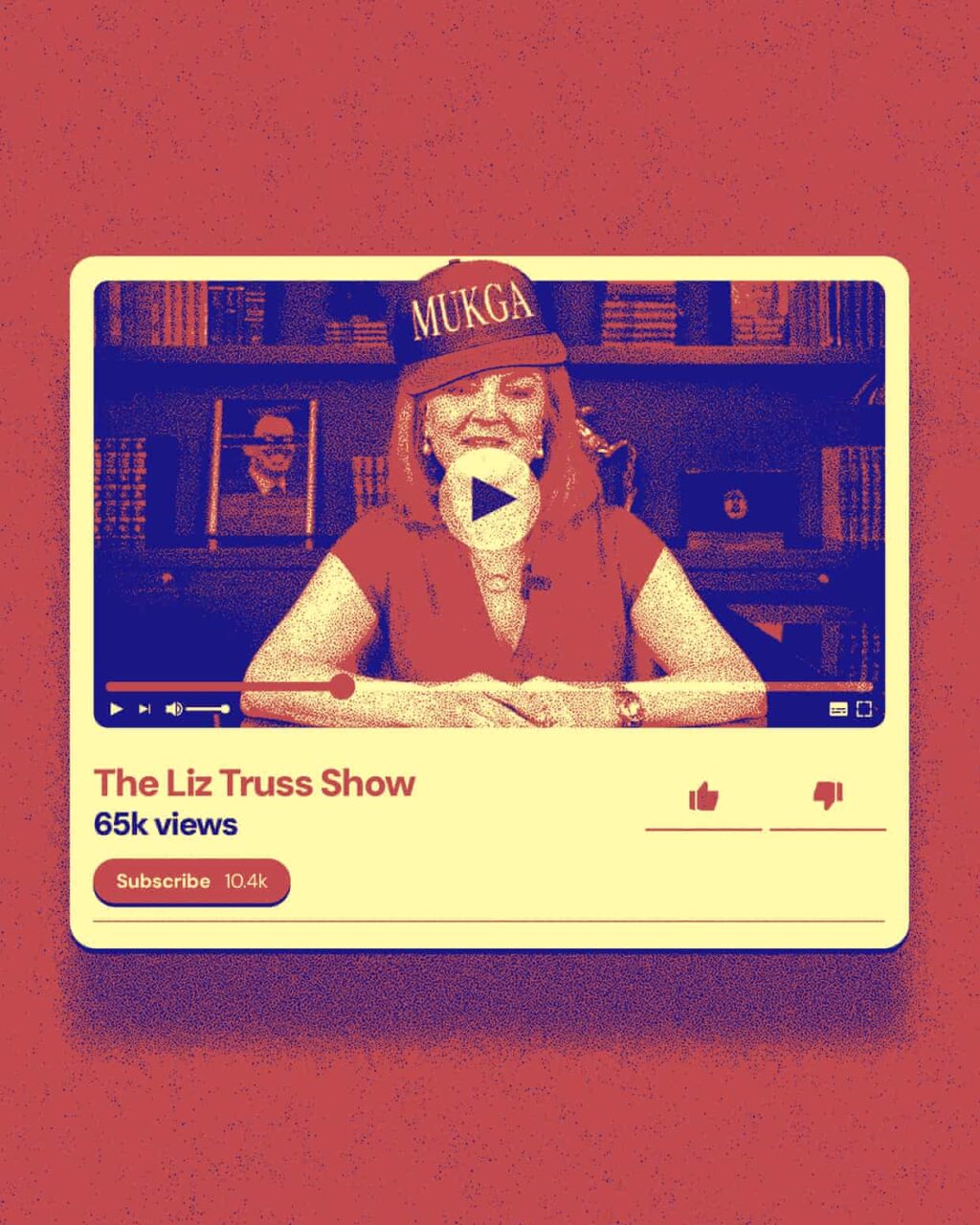
Former British Prime Minister Liz Truss has launched a YouTube show aimed at aligning herself with the American MAGA movement. In her inaugural episode, she vowed to expose “the evil-doers” she claims are undermining democracy in the UK, the US, and Europe. Truss expressed her intention to draw inspiration from the “Trump revolution,” stating, “We’re going to look at the Trump revolution and see how this can be achieved in Britain.”
Truss’s show, hosted on the conservative platform Just the News, has made a modest impact so far, attracting around 10,000 subscribers and garnering 67,000 views in its first week. While the initial numbers suggest a slow start, her partnership with veteran journalist John Solomon positions her within a broader conservative media landscape that amplifies MAGA talking points. Solomon, who established Just the News after facing scrutiny for his reporting, has been a significant figure in promoting narratives that resonate within the MAGA ecosystem.
The production quality of Truss’s show is basic but functional, allowing her to connect with an audience that shares her political views. She has already interviewed influential figures like Steve Bannon, a prominent voice in the MAGA movement. This collaboration places her in proximity to controversial figures who have been instrumental in shaping conservative discourse in the US.
Solomon’s support for Truss underscores the network of media outlets that often promote each other’s content. Despite his contentious past—having been accused of disseminating false information regarding President Joe Biden and his administration’s Ukraine policies—Solomon remains a respected figure in certain conservative circles. His commentary on platforms like Fox News has given him credibility among MAGA supporters.
Truss’s strategy appears aimed at expanding her influence beyond the UK, tapping into a transatlantic conservative audience. Her comments, including a reference to the UK being “poorer than Mississippi,” suggest an attempt to resonate with American viewers while also aligning her narrative with MAGA ideology.
The implications of Truss’s entry into this media space are significant. Alan Finlayson, a political theorist at the University of East Anglia, noted that the conservative digital ecosystem is growing in the UK, potentially influencing mainstream political conversations. Truss and other right-wing figures, such as Nigel Farage, have begun appearing at events like the Conservative Political Action Conference, advocating for messages that echo MAGA themes.
Some analysts caution against underestimating Truss’s potential to carve out a niche within this media environment. Rob Flaherty, a deputy campaign manager for Vice President Kamala Harris, emphasized that the alternative media ecosystem has a history of enabling individuals to reinvent themselves. He remarked, “You have to take folks like that seriously, even if you may not want to take them literally.”
While Truss’s style has drawn criticism in the UK, her connection with influential conservative media figures may provide her with the platform she needs to reshape her public image. Her advisor, Joseph Robertson, a political strategist affiliated with the Reform UK party, shares her concerns regarding what they term the “administrative deep state.” This framing aligns with a broader narrative that aims to mobilize discontent among conservative voters.
In conclusion, Liz Truss’s foray into the world of conservative media reflects a significant shift in her political strategy. By aligning with figures like John Solomon and tapping into the MAGA movement, she is attempting to regain relevance in a political landscape that increasingly values digital engagement and alternative narratives. As she navigates this new terrain, her ability to connect with both American and British audiences will be crucial in determining her future impact.