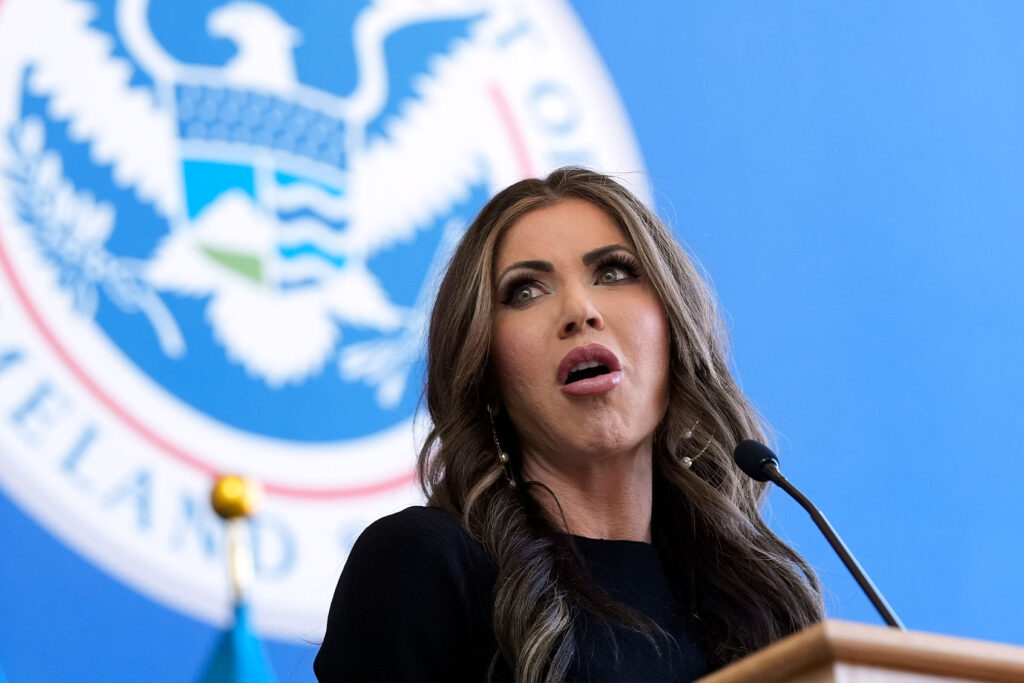
Homeland Security Secretary Kristi Noem has come under scrutiny for allegedly misleading Congress regarding the role of her senior aide, Corey Lewandowski. Internal records reviewed by ProPublica and statements from current and former officials at the Department of Homeland Security (DHS) indicate that Lewandowski has played a significant role in contract approvals, contrary to Noem’s claims during a recent Senate Judiciary Committee hearing.
During the hearing on March 5, 2024, Senator Richard Blumenthal of Connecticut directly asked Noem if Lewandowski had any involvement in approving contracts at DHS. Noem denied this assertion, stating, “No.” However, the internal documents suggest otherwise, revealing that Lewandowski personally approved a multimillion-dollar equipment contract last summer.
Lewandowski’s influence does not appear to be limited to a single incident. According to multiple DHS employees, he has regularly approved various contracts and must sign off on significant expenditures before they are finalized. This pattern raises questions about the extent of his authority within the agency.
Noem implemented a policy last year that concentrated power over DHS spending, requiring her personal review of all contracts exceeding $100,000. Before reaching Noem, contracts must pass through several political appointees, with Lewandowski’s signature typically appearing last on the internal checklist known as a routing sheet.
Under federal law, making a false statement to Congress is a serious offense, though such cases are rarely prosecuted. A spokesperson for DHS reiterated Noem’s denial, asserting that “Mr. Lewandowski does not play a role in approving contracts” and emphasizing that he serves voluntarily without a salary or federal benefits.
The controversy surrounding Lewandowski is not new. Various news outlets, including Politico, have previously reported on his involvement in the contracting process at DHS. Critics have pointed to delays in contract approvals resulting from the newly instituted processes, which are said to impact multiple DHS responsibilities, including immigration enforcement and disaster relief. Despite this, the agency claims that the revised review process has saved taxpayers billions of dollars.
The approval process is similarly structured for other significant policy decisions within DHS. For instance, a checklist related to the rollback of protections for Haitians featured signatures from several top advisers, including Lewandowski, followed by Noem’s signature.
Lewandowski is classified as a “special government employee,” a designation allowing individuals to serve in government roles without relinquishing outside employment. This status has been historically used for experts in various fields, including figures from the Trump administration. Special government employees are subject to a different set of ethics rules and can earn outside income, which Lewandowski has not publicly disclosed.
The ongoing scrutiny of Noem and Lewandowski’s roles at DHS highlights not only the complexities of agency operations but also the challenges of ensuring transparency and accountability in government. As this situation continues to unfold, further revelations may emerge regarding the implications of their actions for national security and public trust.