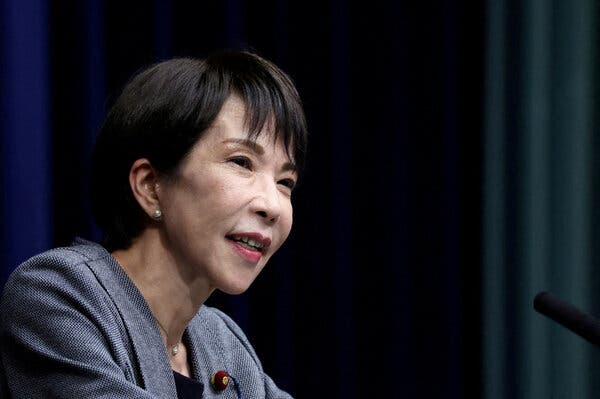
Sanae Takaichi, Japan’s Prime Minister, announced on Monday her decision to dissolve the House of Representatives and call for a snap election. This move, aimed at consolidating her power and revitalizing the prospects of her party, is set to take place when Parliament convenes for its regular session on Friday. Takaichi plans to hold the election on February 8, just three months into her tenure.
In a news conference held in Tokyo, Takaichi emphasized the importance of letting the citizens decide her fate as Prime Minister. She stated, “I believe that the only option is for the people, as sovereign citizens, to decide whether or not Sanae Takaichi should be Prime Minister.” This statement underscores her commitment to democratic principles, even as she faces significant risks with this electoral gamble.
Calling the election represents a pivotal moment for Takaichi, who is Japan’s first female Prime Minister. By seeking a mandate from the electorate, she aims to secure a stronger political foothold. However, this decision carries substantial risks, including the potential loss of critical seats in Parliament. Analysts suggest that such losses could undermine her legislative priorities and diminish her efforts to establish herself as a transformative leader.
Mireya Solís, director of the Center for Asia Policy Studies at the Brookings Institution, commented on the implications of Takaichi’s decision. “She wants to seize the momentum and strengthen her hand at home and on foreign policy,” Solís noted. Yet, she cautioned that failure to gain the necessary support could render Takaichi a less influential figure in the political landscape.
The Liberal Democratic Party (L.D.P.), Japan’s dominant political force, stands to benefit from Takaichi’s leadership if she can successfully navigate this electoral challenge. A victory could provide her with the parliamentary support needed to advance her economic and security agendas, which have been central to her platform since taking office.
Despite the risks, the snap election could reinvigorate the L.D.P. and solidify Takaichi’s position as a leader capable of driving significant policy changes. As the election date approaches, attention will focus on how her party responds to this critical juncture and what it may mean for Japan’s political future.