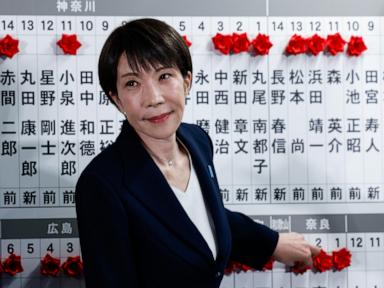
Japanese Prime Minister Sanae Takaichi is poised to implement significant conservative reforms following a decisive victory in parliamentary elections. On Sunday, her party, the Liberal Democratic Party (LDP), secured a two-thirds supermajority in the 465-member lower house, winning 316 seats—a record since the party’s inception in 1955. This electoral success enables Takaichi to pursue a range of policies aimed at reshaping Japan’s security, immigration, and economic landscapes.
As a first step, Takaichi plans to reappoint her Cabinet and advance a delayed budget. She is expected to be re-elected as Prime Minister next week, solidifying her authority. In an interview with public broadcaster NHK, Takaichi expressed her vision for a stronger and more prosperous Japan, emphasizing her commitment to push her agenda forward while seeking support from opposition parties. “I will be flexible,” she stated, indicating a willingness to collaborate despite her party’s dominant position.
The LDP’s coalition with the newly allied Japan Innovation Party (JIP) brings their combined total to 352 seats, creating a formidable governing bloc. Despite lacking a majority in the upper house, Takaichi’s substantial gains in the lower house provide her with a significant opportunity to advance policies that address Japan’s growing security concerns, particularly in relation to China, and to enhance economic growth.
Takaichi’s leadership style, characterized as both playful and assertive, has attracted younger voters who previously showed little interest in politics. Her decision to call an early election after just three months in office appears to have paid off, reflecting her popularity at this critical juncture.
In contrast, the opposition remains fragmented, with a new centrist alliance formed between the LDP’s former coalition partner, the Buddhist-backed Komeito, and the liberal-leaning Constitutional Democratic Party of Japan. Exit polls suggest this alliance may see a significant reduction in their combined share of seats, likely dropping to half of their pre-election total of 167 seats.
Takaichi’s victory has been met with international attention, including a congratulatory message from U.S. President Donald Trump, who praised her leadership and termed the election results a “LANDSLIDE Victory.”
The challenges ahead for Takaichi include addressing pressing issues such as rising costs and stagnant wages through a budget bill that was delayed due to the election. She has committed to revising Japan’s security and defense policies, aiming to bolster military capabilities and lift a ban on weapons exports. This shift marks a significant departure from Japan’s postwar pacifist stance, a move that may provoke concerns both domestically and abroad.
Takaichi’s agenda also includes tougher immigration policies, which may resonate with far-right constituents but could raise civil rights issues, as noted by experts. Furthermore, while she has expressed intentions to increase defense spending, she has not provided specific plans for addressing the financial implications of these policies.
As Takaichi seeks to navigate the complex landscape of Japanese politics, she is expected to maintain cordial relations with South Korea, particularly given shared apprehensions regarding threats from North Korea and China. Yet, any attempts to revise Japan’s pacifist constitution may lead to renewed tensions, according to political analysts.
In her campaign rhetoric, Takaichi has highlighted the necessity for government spending on “crisis management investment and growth,” focusing on strengthening economic security and technology sectors. As she embarks on this ambitious agenda, the outcomes of her policies will be closely scrutinized, with potential implications for Japan’s political future.
The upcoming session of the lower house, scheduled for mid-February, will be pivotal as Takaichi sets forth her plans, underscoring the intersection of political survival and substantive policy-making in contemporary Japanese politics.