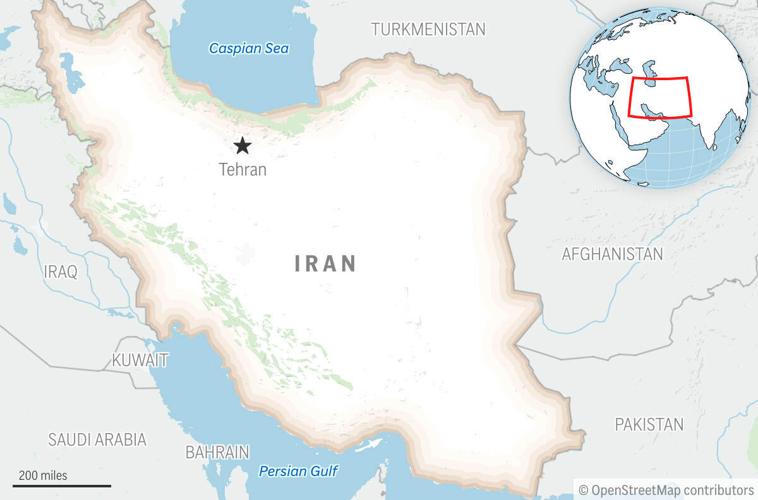
The toll in Iran’s crackdown on nationwide protests has risen sharply, with activists reporting at least 5,002 deaths as of Friday. This figure, provided by the U.S.-based Human Rights Activists News Agency, reflects the severity of the situation as Iran experiences its most extensive internet blackout to date, now surpassing two weeks. Activists have warned that many more fatalities are feared, complicating efforts to obtain information amid government-imposed restrictions.
The protests began on December 28, 2023, and have escalated despite government efforts to suppress them. According to the Human Rights Activists News Agency, the reported deaths include 4,716 demonstrators, 203 government-affiliated individuals, 43 children, and 40 civilians who were not directly participating in the protests. Additionally, the agency stated that over 26,800 people have been detained as authorities continue a widespread crackdown.
The Iranian government has provided a significantly lower death toll, claiming that 3,117 people have died, of which 2,427 were civilians or security forces, while attributing the rest to “terrorists.” Historically, the Iranian government has been criticized for underreporting fatalities during periods of unrest. The Associated Press has faced challenges in independently verifying these figures due to the restrictions on communication and reporting in the country.
Tensions are further exacerbated by military movements in the region. U.S. President Donald Trump confirmed on Thursday that an aircraft carrier group, including the USS Abraham Lincoln, is approaching the Middle East. Trump described this buildup as a precautionary measure, stating, “We have a massive fleet heading in that direction, and maybe we won’t have to use it.” He emphasized that the U.S. is prepared to take action if necessary, referencing previous military campaigns against Iranian nuclear sites.
The Iranian government has labeled some of the detained individuals as “mohareb,” or “enemies of God,” a designation that carries the death penalty. This term has historical significance, recalling mass executions conducted in 1988 that resulted in the deaths of thousands. As tensions mount, the Iranian authorities continue to frame the protests as orchestrated by foreign adversaries, particularly the United States and Israel, without providing evidence to support these claims.
In a related development, the United Kingdom’s Defense Ministry announced that its joint Eurofighter Typhoon fighter jet squadron with Qatar has deployed to the Persian Gulf for defensive purposes, further highlighting the regional security concerns. The situation remains fluid, with the international community closely monitoring the events unfolding in Iran, a country that has faced significant turmoil since the 1979 Islamic Revolution.
As the death toll rises, the human impact of the protests and the government’s response grows increasingly profound, raising urgent questions about the future of civil liberties and governance in Iran.