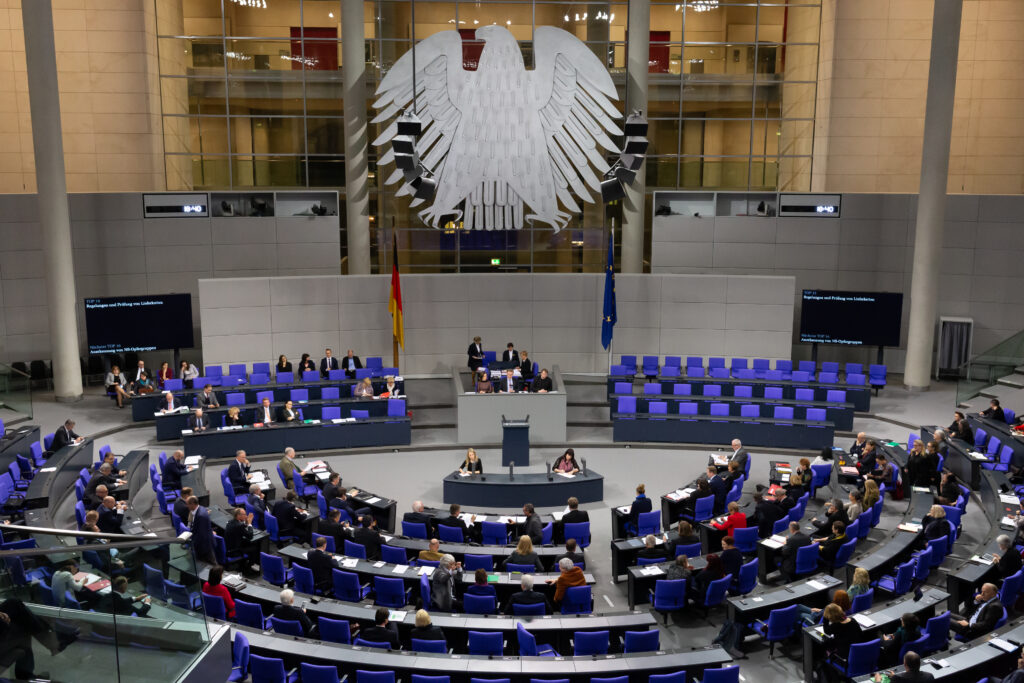
Blick in den Plenarsaal
Human Rights Watch (HRW) has raised significant concerns over a proposed amendment to Germany’s social security system, asserting that it would undermine fundamental human rights and conflict with the nation’s constitution. The organization, a leading advocate for global human rights, has urged the German Parliament to reject the bill, which seeks to amend the basic income program for job seekers.
According to HRW’s senior Europe researcher, Kartik Raj, the proposed legislation fails to meet Germany’s obligations under international human rights law, specifically referencing Article 25 of the Universal Declaration of Human Rights and Article 11 of the International Covenant on Economic, Social and Cultural Rights. Raj emphasized that the implementation of this bill could severely impact low-income families, particularly those headed by single mothers.
The amendment proposes several changes to the Second Book of Germany’s Social Code, including a rebranding of the minimum unemployment benefit from “citizen’s income” to “basic income support.” A significant aspect of the proposed law is the introduction of stricter eligibility criteria for receiving minimum social security benefits. This includes severe sanctions for individuals deemed non-compliant, such as a potential 30 percent reduction in monthly benefits if a job seeker misses an appointment with a job centre or declines available employment.
Additionally, the bill outlines that repeated failures to report to a job centre could lead to the complete withholding of social security benefits, classifying the individual as “unreachable.” The proposed changes also modify job-seeking requirements, treating all single adults as equally available for full-time employment, regardless of caregiving responsibilities. HRW argues that this approach could unjustly penalize single mothers, potentially denying them benefits for opting out of full-time work due to childcare duties.
This proposed legislation is part of the German government’s broader initiative to reduce social spending while reshaping the welfare system. The government contends that the amendment aims to enhance transparency and reinforce a “strong welfare state” that necessitates cooperation from all employable individuals, ensuring that support is directed only to those who genuinely require it.
Despite these assertions, on March 5, 2026, the amendment was approved by the lower house of Parliament and is set to take effect in July 2026. HRW has criticized the bill’s punitive nature, arguing that it violates the right to a dignified minimum existence, a principle upheld by the Federal Constitutional Court. The Court has previously stated that the right to guarantee an existential minimum in accordance with human dignity encompasses not only physical survival but also the ability to maintain social relationships and participate in cultural and political life.
HRW has previously highlighted flaws in Germany’s social security system, particularly regarding women’s rights and inadequate protections against poverty. The organization has pointed out that while women make up the majority of low-wage workers, they often receive lower pensions because child-rearing is not factored into pension calculations.
As Germany grapples with challenges posed by a rapidly aging society, the pressure on its pension system continues to grow. The ongoing debate surrounding the proposed social security amendments underscores the tension between fiscal responsibility and the obligation to uphold human rights standards, particularly for vulnerable populations. HRW remains steadfast in its call for lawmakers to reject this bill, advocating for compliance with both national and international human rights norms.