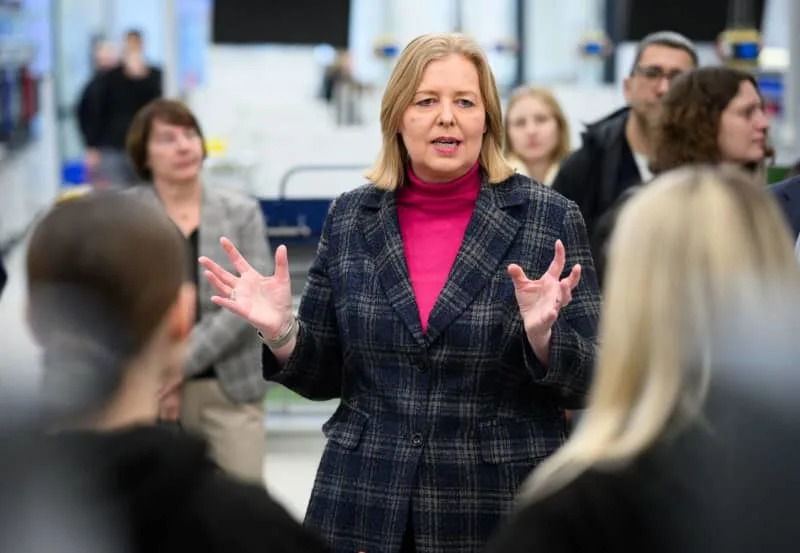
Germany’s Labour Minister, Bärbel Bas, has announced an urgent need for foreign workers to fill numerous job vacancies across the country. Speaking at a conference in Berlin on March 5, 2024, Bas emphasized the necessity of attracting skilled professionals from outside the European Union to sustain the country’s economic growth.
The minister highlighted that Germany’s economy requires “people who develop new ideas, operate diggers or work in production.” She cautioned that many sectors are already experiencing a shortage of qualified employees, stating, “Even if we tap into all the potential of our domestic skilled labour, it will not be enough.”
Shortage of Domestic Workers
Bas pointed out that Germany faces stiff international competition for talent, especially as demographic challenges persist. Approximately 3 million individuals are currently unemployed in Germany, yet they cannot fill existing job vacancies. “The unemployed welder in Kiel cannot simply replace the nursing professional in Konstanz,” she explained, illustrating the mismatch between available skills and job requirements.
Data from the Federal Employment Agency indicates that nearly one in ten employees in Germany were foreign in 2015. By 2023, this figure had increased significantly, with foreign workers constituting one in six employees, or 17% of the workforce. The influx of talent from outside the EU has been notable, with the number of EU citizens employed in Germany at 2.54 million, a decrease of 30,000 from previous figures. In contrast, workers from non-EU countries surged from 2.74 million to 3.29 million in the same timeframe.
Migration as Economic Imperative
Echoing the Labour Minister’s concerns, agency expert Daniel Terzenbach asserted that migration is vital for the country’s economic performance and social stability. He warned that a lack of immigration would likely lead to diminished prosperity, stating, “You can’t run away from this reality.”
As Germany navigates its demographic challenges, the call for skilled foreign workers becomes increasingly critical. The government’s focus on attracting international talent is not just about filling vacancies, but also about ensuring the long-term sustainability of the economy. With the situation evolving, the need for decisive action has never been clearer.