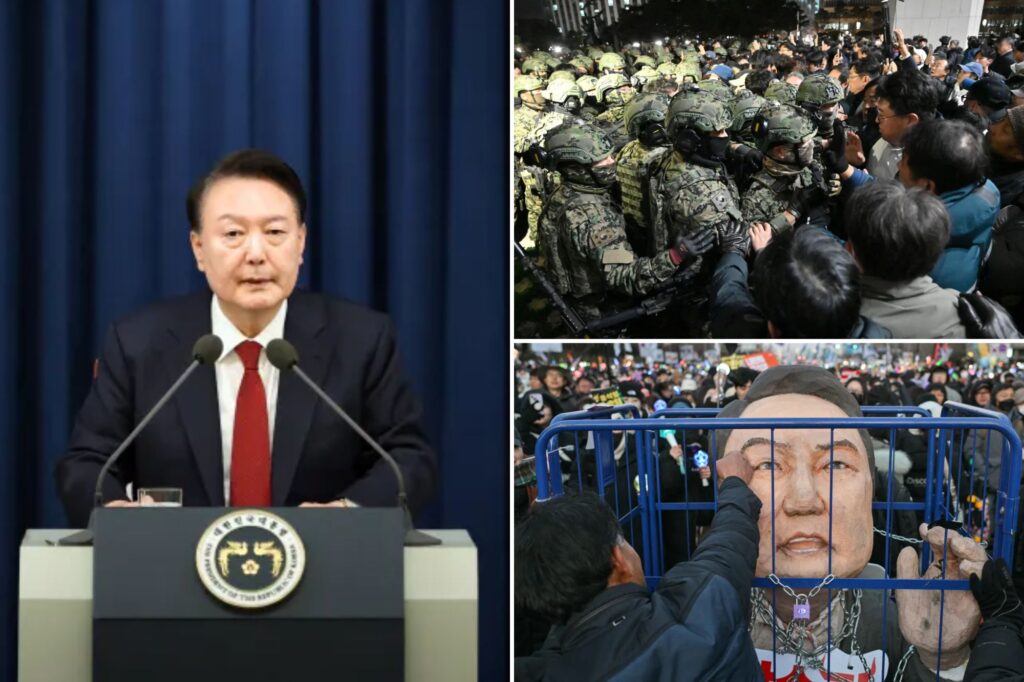
A South Korean court has sentenced former President Yoon Suk Yeol to five years in prison following a verdict on charges associated with his controversial imposition of martial law in late 2024. This ruling marks the first conviction among eight criminal trials related to the decree and various other allegations against him.
The Seoul Central District Court announced the sentence on Friday, addressing multiple charges, including Yoon’s defiance of authorities who sought to detain him. The most severe accusation alleges that he incited rebellion during his enforcement of martial law, a charge that carries a potential death penalty. Yoon has yet to publicly respond to this latest ruling.
Yoon’s legal troubles escalated after his imposition of martial law in December 2024 sparked widespread public protests, demanding his resignation. His defense team has framed the legal actions against him as politically motivated and lacking substantial legal justification. When an independent counsel previously sought a ten-year prison sentence, they described the request as excessively punitive.
In his defense, Yoon has claimed that his decree was not intended to establish long-term military rule. He argued it was merely a warning to the public about the threats posed by a parliament controlled by liberal factions that obstructed his governance. Nonetheless, investigators have characterized Yoon’s actions as an attempt to strengthen and extend his power, prompting charges of rebellion and abuse of power alongside other criminal allegations.
The implications of this verdict extend beyond Yoon’s personal fate. His impeachment and subsequent removal from office have led to a critical examination of South Korea’s political landscape, highlighting tensions between differing political ideologies within the government. The public’s reaction towards Yoon’s martial law decree has been marked by intense scrutiny and debate over the limits of executive power.
As this legal saga continues, the focus will remain on the broader ramifications for governance and civil liberties in South Korea, as well as the potential for future political upheavals.