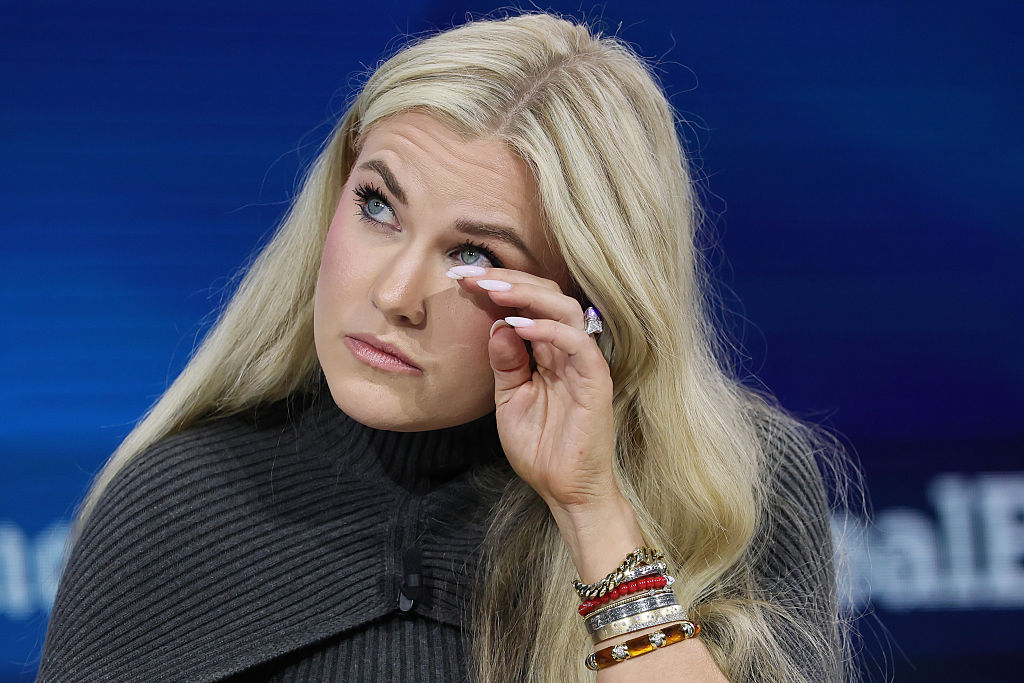
NEW YORK, NEW YORK - DECEMBER 03: C.E.O. and Chair of the Board of Turning Point USA Erika Kirk wipes away tears as she speaks onstage during the 2025 New York Times Dealbook Summit at Jazz at Lincoln Center on December 03, 2025 in New York City. NYT columnist Sorkin hosted the annual Dealbook summit which brings together business and government leaders to discuss the most important stories across business, politics and culture. (Photo by Michael M. Santiago/Getty Images)
CBS News is facing renewed scrutiny following a prime-time town hall featuring Erika Kirk, moderated by Bari Weiss. The program, titled CBS News Presents: A Town Hall With Erika Kirk, aired on March 1, 2024, and has drawn criticism from media observers and concerns from advertisers regarding the network’s editorial direction. This event marked Kirk’s first significant interview since the death of her husband, conservative activist Charlie Kirk.
The town hall was framed as a national discussion on political violence and antisemitism. Nevertheless, critics argue that the broadcast leaned heavily into a singular ideological and religious framework. Throughout the event, there were multiple references to Christian faith and spiritual revival. Observers noted that such language went largely uncontextualized or unchallenged, raising questions about the program’s adherence to traditional journalistic standards.
Concerns have emerged from advertisers, as industry reporting indicates that the town hall may blur the lines between journalism and advocacy. Some media critics are questioning whether Weiss’s leadership marks a shift towards values-driven programming, which could impact CBS News’s credibility.
Supporters of the broadcast maintain that it provided a platform for a grieving widow to address pressing issues of political violence and antisemitism during a time of heightened national division. However, detractors argue that the main issue lies not with Kirk’s presence, but rather with the perceived lack of ideological balance in the framing of the conversation. They contend that the program presented itself as objective journalism while reflecting a belief-centered agenda.
The backlash against this town hall highlights a broader challenge for legacy news organizations, particularly in how they navigate political polarization, platform contentious figures, and maintain advertiser confidence. As CBS News continues to define what it calls “the new CBS News,” the responses to this town hall indicate that both its audience and advertisers are closely monitoring the network’s editorial choices.
In a media landscape increasingly defined by divisive opinions, the network faces the pressing task of maintaining its journalistic integrity while adapting to the changing demands of its viewership. The outcome of this situation may have lasting implications for the direction of CBS News and its role in a rapidly evolving media environment.