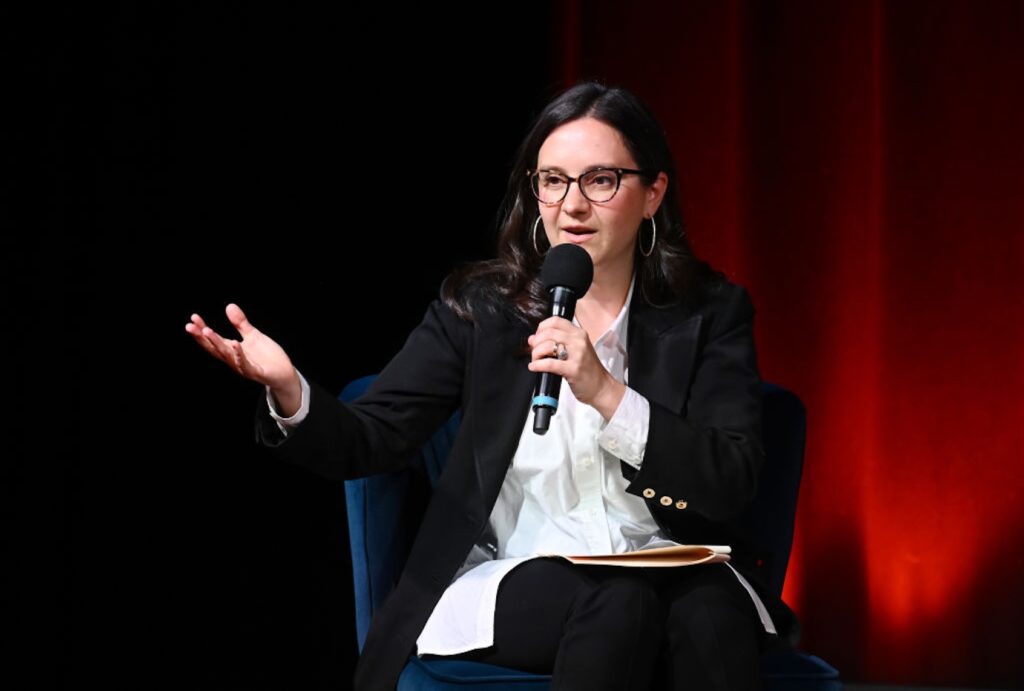
NEW YORK, NEW YORK - NOVEMBER 19: Book Club Event With Peggy Noonan on November 19, 2024 in New York City. (Photo by Noam Galai/Getty Images for The Free Press)
CBS News has faced significant backlash after its new editorial director, Bari Weiss, made a controversial decision to cancel a segment of the renowned program “60 Minutes.” The segment was set to highlight the plight of Venezuelan migrants held in El Salvador’s Terrorism Confinement Center (CECOT), a facility criticized for human rights abuses. This decision has raised questions about editorial independence and the influence of political pressures on journalism.
On the eve of the segment’s airing, CBS abruptly announced its withdrawal, providing little explanation to viewers. The report had undergone extensive vetting, including five screenings and approval from CBS’s legal and Standards and Practices departments. Correspondent Sharyn Alfonsi, who covered the story, indicated in an internal email that Weiss had “spiked our story” at the last moment. The segment aimed to reveal the harsh conditions faced by Venezuelan migrants deported by the Trump administration, detailing accounts of systemic torture and assault, as supported by organizations like Human Rights Watch and the University of California, Berkeley.
Weiss defended her decision, claiming that the report lacked essential perspectives, particularly from the White House. She reportedly suggested that the producers reach out to White House deputy chief of staff Stephen Miller for an interview, despite the administration’s prior refusal. In a recorded editorial call, Weiss expressed her desire for a newsroom environment open to “contentious disagreements” while emphasizing the need to assume good intentions among colleagues.
Alfonsi, however, warned that such a standard could undermine CBS’s role as an investigative leader, potentially reducing the network to merely echoing government narratives. The situation reflects broader concerns about journalism’s integrity in the face of political influence, especially in light of Weiss’s history of controversial stances and her connections to figures associated with right-wing politics.
The cancellation of the segment has sparked further scrutiny, with many viewing it as a symbol of media capitulation to political pressure. Critics argue that Weiss’s approach to editorial control echoes tactics used in previous controversial media practices, reminiscent of those employed by the former National Enquirer publisher, David Pecker.
Weiss’s decision also drew criticism for her apparent discomfort with the terminology used to describe the migrants. Her objections to the term “migrants” reflect a tendency towards language that aligns with politically charged narratives, further complicating the discourse around human rights issues.
As CBS grapples with the implications of this incident, former “60 Minutes” anchor Scott Pelley had recently reassured audiences of the program’s editorial independence, a statement that now seems undermined. The incident raises broader questions about the role of media in holding power accountable and the potential erosion of journalistic standards when faced with political pressures.
The backlash from this incident has led to calls for accountability, with some lawmakers demanding explanations from CBS. Critics argue that if the network operates in alignment with governmental narratives, it risks losing its credibility and independence, essential traits for effective journalism.
As the media landscape continues to evolve, the implications of Weiss’s actions at CBS News serve as a cautionary tale about the delicate balance between editorial independence and political influence. The incident underscores the importance of rigorous investigative journalism in the face of challenges to press freedom and the pursuit of truth.