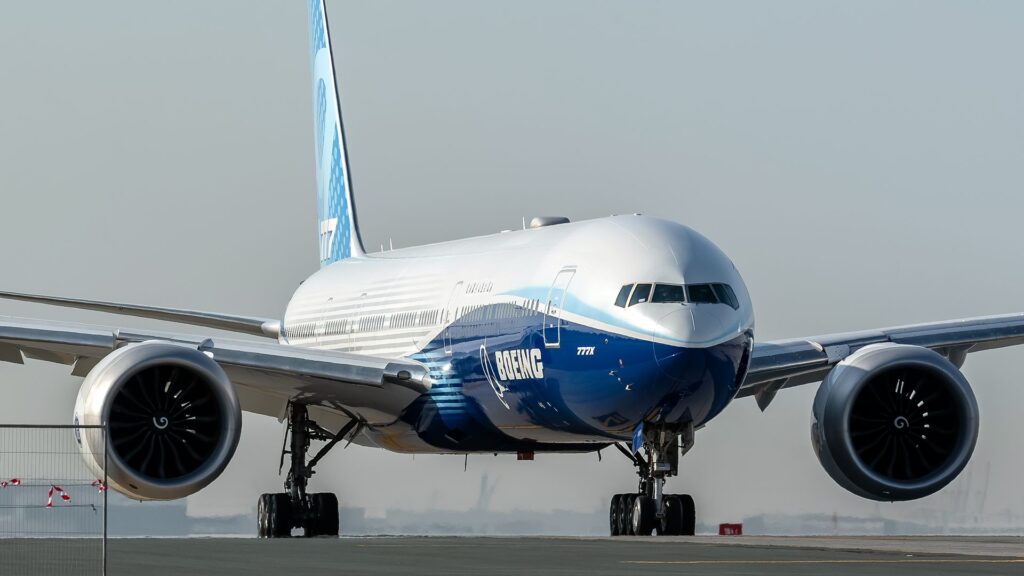
Boeing is urging the Federal Aviation Administration (FAA) to grant a waiver for emissions standards concerning the Boeing 777 Freighter, following significant delays in the certification of its newer model, the Boeing 777-8F. The company formally submitted a petition on December 19, 2023, requesting an exemption that would enable the sale of 35 additional Boeing 777F aircraft. These aircraft would otherwise be ineligible for sale due to impending emissions regulations set to take effect in 2028.
In its argument to the FAA, Boeing emphasizes that the current Boeing 777F exceeds future fuel-efficiency limits, while the upcoming 777-8F model will meet these standards. However, the timeline for the 777-8F’s readiness has been pushed back, creating a potential supply gap in the market for widebody freighters. Boeing asserts that the waiver is necessary to prevent disruption in global cargo operations and to provide continuity for customers awaiting the 777-8F’s entry into commercial service.
Regulatory Challenges and Market Implications
The FAA’s international carbon emissions framework stipulates that aircraft exceeding specified fuel-efficiency limits will lose eligibility for new airworthiness certificates after December 31, 2027. If Boeing’s request is not approved, the sale of the 777F could effectively cease as the industry approaches the 2028 deadline. This situation presents a dilemma for regulators, who aim to encourage the adoption of cleaner, more efficient aircraft while also addressing current market demands.
Boeing’s petition highlights the critical role of large freighters in transporting high-value air exports. Historically, Congress has granted extensions for aircraft production to accommodate similar circumstances; for instance, Boeing’s production of the 767F was allowed to continue past the 2028 emissions standards. Currently, the 777F is touted as the only major freighter in production, underscoring its significance in the market.
Competitive Landscape and Future Prospects
Boeing’s request for an emissions waiver coincides with competitive pressures, particularly from Airbus, which is developing the A350F and plans to introduce it to the market in the latter half of 2027. Analysts have noted that the Boeing 777F, powered by General Electric’s GE90 engines, remains the most fuel-efficient option among high-capacity freighters, crucial for the growth of the e-commerce sector.
Despite its advantages, the Boeing 777-8F is facing delays that could push its entry into service to as late as 2029, with some customers projecting deliveries as far out as 2030. This timeline poses challenges for operators looking to phase out older widebody jets, especially as demand for timely cargo delivery continues to grow.
The recent fatal crash of a UPS Airlines MD-11F in November 2023 has further intensified the scrutiny on cargo capacity, leading to groundings and highlighting the urgency for new freighter options. Without the introduction of new-production aircraft, operators may be forced to rely on aging freighters, undermining the efficiency gains that the emissions standards aim to achieve.
Boeing projects that each exported 777F could represent an economic impact of approximately $440 million in transaction value, emphasizing the aircraft’s importance not only to the company but also to the broader logistics and transportation sectors. As Boeing navigates these regulatory hurdles, the outcome of their emissions waiver request could significantly influence the future of the widebody freighter market.