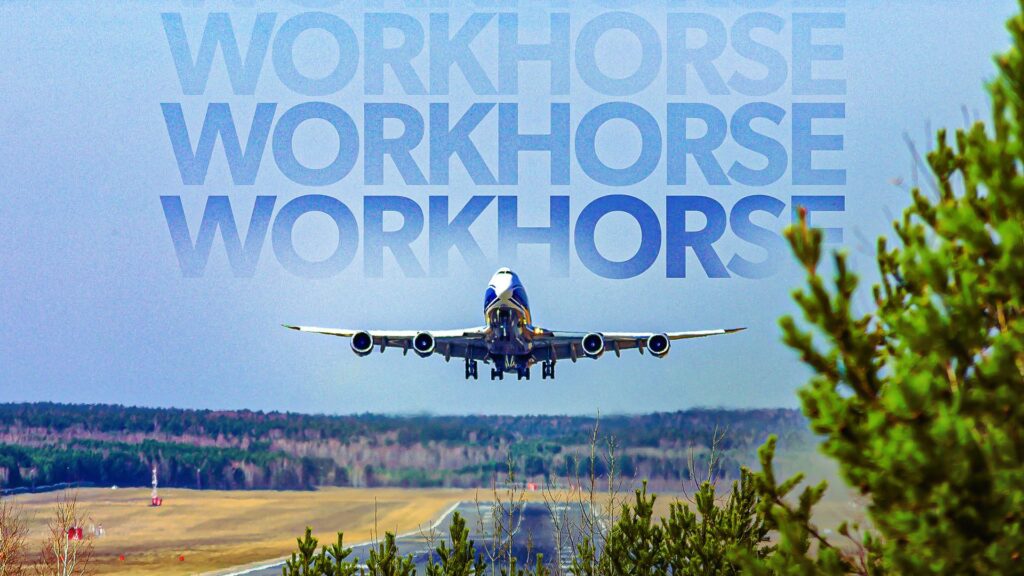
The iconic Boeing 747, once a symbol of luxury air travel, has transformed into a vital player in global cargo aviation as of 2026. While passenger versions have all but disappeared from airline fleets, more than 300 Boeing 747 freighters, including the advanced 747-8F introduced in 2011, remain active in transporting goods across long-haul trade routes. This remarkable transition highlights the aircraft’s unique design features, particularly its ability to load oversized cargo through a hinged nose door, a capability that distinguishes it from conventional cargo planes.
Boeing’s engineering legacy began in the late 1960s when the design process for the 747 took shape. Engineers positioned the cockpit above the main deck, resulting in the aircraft’s distinctive upper-deck “hump.” This innovative layout allowed for the upward-opening nose, facilitating the loading of freight that would otherwise not fit in standard cargo aircraft. A closer look at the 747’s evolution reveals its journey from the world’s first widebody passenger jet to a crucial component of global logistics.
The Boeing 747’s Rise in Passenger Aviation
The Boeing 747 entered commercial service in January 1970 with Pan American World Airways, marking a new era in air travel. Designed to carry more than 350 passengers, depending on its configuration, the 747 dramatically surpassed the capacities of earlier models like the Boeing 707. This significant increase in capacity revolutionized international travel, allowing airlines to reduce ticket prices and broaden access to long-distance routes.
Throughout the 1970s and 1980s, the 747 became the flagship aircraft for numerous airlines globally, dominating long-haul routes across both the Atlantic and Pacific Oceans. The aircraft’s spacious fuselage not only accommodated passengers but also laid the groundwork for its future as a cargo specialist. Even during its peak years as a passenger aircraft, industry leaders recognized the 747’s potential as a high-capacity freighter.
Evolution from Passenger Jet to Cargo Specialist
Over the decades, the Boeing 747 underwent several significant transformations. The inaugural variant, the 747-100, was followed by models like the 747-200, which enhanced range and engine power, and the 747-300, which featured an extended upper deck. The most notable advancement came with the 747-400, introduced in 1989, which improved fuel efficiency with winglets and advanced avionics.
Alongside these passenger variants, dedicated freighter versions emerged, equipped with structural reinforcements and specialized loading systems. Numerous passenger aircraft were later converted into freighters, contributing to a large fleet of cargo aircraft utilized by logistics companies worldwide. The 747-200F was one of the earliest purpose-built freighters, designed to handle oversized cargo through its innovative nose door, while the 747-400F further refined cargo operations with its advanced features.
The introduction of the 747-8F in the early 2000s marked a significant milestone in the aircraft’s legacy. Designed to compete with newer aircraft models, the 747-8 incorporated major aerodynamic and technological advancements, including a stretched fuselage and redesigned wings. These enhancements not only improved fuel efficiency and cargo capacity but also reduced noise emissions. Each GEnx-2B67 engine delivers approximately 66,500 pounds of thrust while achieving lower fuel consumption compared to earlier variants.
Despite the arrival of modern twin-engine freighters like the Boeing 777F, the 747 remains relevant in cargo aviation due to its unmatched capacity. The 747-8F offers over 30,000 cubic feet of cargo volume, enabling operators to transport substantial quantities of freight on a single flight. Its unique nose-loading capability allows for the transport of exceptionally long cargo items, critical for industries such as energy and aerospace.
While the 747’s production came to an end in March 2023, following a remarkable run of over 50 years, its legacy continues. The aircraft may no longer dominate passenger air travel, but it remains an integral part of the global economy, moving goods across continents daily. The Queen of the Skies has successfully transitioned from passenger transport to cargo operations, demonstrating its enduring significance in the aviation industry.