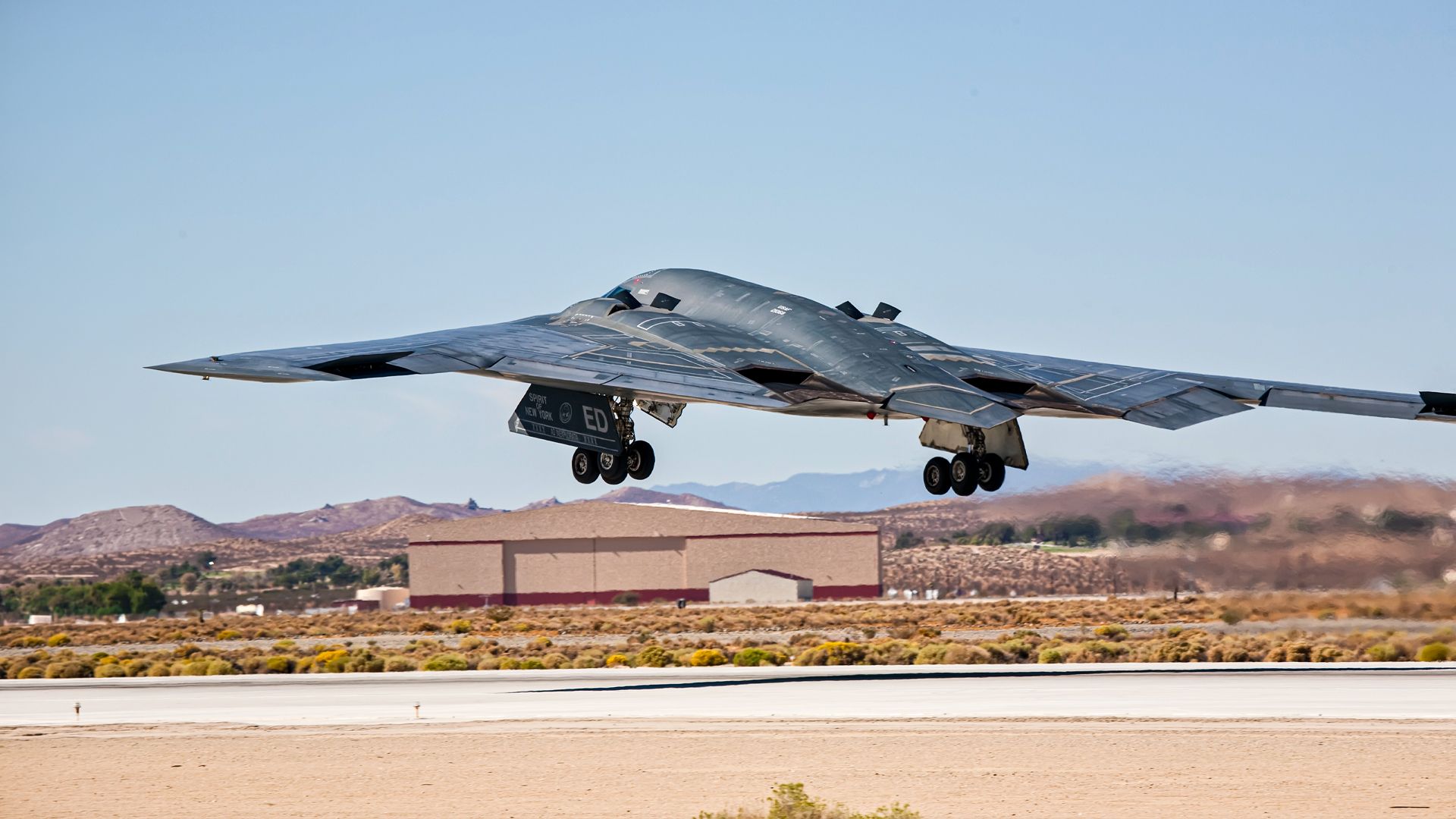
The Northrop B-2 Spirit, an advanced stealth bomber, is renowned for its innovative design, most notably its lack of a tail. This design choice distinguishes it from earlier aircraft and has influenced future projects, including the upcoming B-21 Raider and certain Chinese military aircraft. By eliminating the tail, the B-2 has solidified its place as a pioneering design in strategic bombers, adhering closely to its original mission objectives since its introduction.
Why the B-2 Spirit Was Designed Without a Tail
The B-2 Spirit is not only the first true “flying wing” strategic bomber but also a testament to stealth technology. Its design prioritizes a low radar cross-section (RCS), essential for penetrating enemy defenses. The absence of a tail allows the aircraft to maintain a smooth, curved shape, crucial for scattering radar signals effectively. This design minimizes the aircraft’s radar visibility while enhancing aerodynamic efficiency.
The elimination of vertical tails, which can create significant radar returns, simplifies the aircraft’s overall shape and enhances its all-aspect stealth capabilities. Additionally, this design feature contributes to reduced drag, allowing for greater range. The B-2’s strategic focus on stealth and endurance has made it a cornerstone of the US Air Force’s bombing capabilities.
Despite these advantages, the absence of tail stabilizers presents challenges. The B-2’s lack of natural aerodynamic stability means it relies heavily on sophisticated fly-by-wire systems for control. While these systems provide stability and adjust for flight conditions, they also limit the aircraft’s maneuverability. Unlike fighter jets designed for agility and quick changes in direction, the B-2 is optimized for straight and level flight, using its stealth and onboard defenses to navigate threats.
The Future of Stealth Aircraft Design
The B-21 Raider, set to enter service in 2027, continues the B-2’s legacy by adopting a similar tailless design. Northrop Grumman emphasizes that the B-21 will enhance the US military’s ability to conduct precision strikes while maintaining stealth in highly defended airspace. The aircraft is being developed as the next-generation solution for the US Air Force, with plans for at least 100 units, supported by a significant investment of $4.6 billion to expedite production.
Interestingly, while the B-2 and B-21 forgo tails, the Lockheed Martin F-22 Raptor features tail surfaces to meet its unique operational requirements. Designed for air dominance, the F-22 must perform high-speed maneuvers and maintain control during combat scenarios. Its tail surfaces, which are canted outward, help reduce radar visibility without compromising performance.
Emerging aircraft prototypes, such as China’s J-36 and the anticipated US F-47, hint at a shift in design philosophies. These models explore the potential for tailless configurations, driven by advancements in technology and the need for enhanced stealth capabilities. Although the specifics of these aircraft remain speculative, their development reflects a broader trend toward minimizing radar signatures.
As the B-2 approaches the end of its operational life, the US Air Force prioritizes the B-21 to restore its stealth advantages. With only 19 B-2 airframes remaining, the transition to newer technologies is critical for maintaining strategic dominance. The B-21 Raider promises to uphold the principles that made the B-2 successful while adapting to modern warfare’s evolving challenges.
In conclusion, the absence of a tail on the B-2 Spirit bomber illustrates a significant advancement in aircraft design, focused on stealth and mission effectiveness. As the military continues to innovate, future aircraft may further refine these principles, paving the way for a new era in aerial combat.