Educational institutions in the United States are facing increasing challenges regarding the teaching of Black history. Historian Elizabeth Todd-Breland emphasizes the critical role of education in combating authoritarianism and fostering social justice. Her insights come in light of ongoing governmental efforts that threaten the integrity of educational curricula, particularly regarding the representation of marginalized communities.
In her influential work, Teaching to Transgress: Education as the Practice of Freedom, the late bell hooks articulated the need for educators to actively dismantle biases within educational systems. She argued for a transformative approach that goes beyond mere subject mastery, urging teachers to engage in practices that advocate for equity and justice. This perspective is crucial as contemporary attacks on education seem to echo historical patterns of oppression.
At the University of Illinois Chicago, Todd-Breland is at the forefront of initiatives aimed at integrating Black history into K-12 curricula. She collaborates with the Chicago Public Library on a Black Studies curriculum project that utilizes archival materials to inspire students. The project includes resources such as photographs and documents from significant historical movements, enabling students to connect with their predecessors and understand their roles in the ongoing struggle for justice.
Todd-Breland notes that current educational policies reflect a broader political agenda aimed at controlling knowledge. The Trump administration has been particularly aggressive in undermining educational gains achieved through decades of civil rights activism. Legislation such as the 1964 Civil Rights Act and the Elementary and Secondary Education Act have laid the groundwork for equity in education, but recent actions threaten to roll back these hard-won advancements.
“Education has always been political and a site of struggle,” Todd-Breland explained. She pointed out that historically, Black individuals have fought for access to education as a means of liberation and community building. The current administration’s anti-intellectual stance, which seeks to delegitimize dissenting voices, poses significant risks to the educational landscape.
The implications are particularly concerning for Black students who continue to face systemic barriers in accessing quality education. Todd-Breland highlights how the dismantling of affirmative action and equity initiatives disproportionately affects these students, limiting their opportunities for higher education. Despite some resistance within K-12 systems, the push for privatization and funding cuts threatens to exacerbate existing disparities.
Amid these challenges, Todd-Breland remains optimistic about grassroots efforts to advocate for a more inclusive curriculum. Her work aims to not only preserve Black history but also to empower students through critical engagement with their past. “We are working towards a vision of education that promotes social justice and transformation,” she stated.
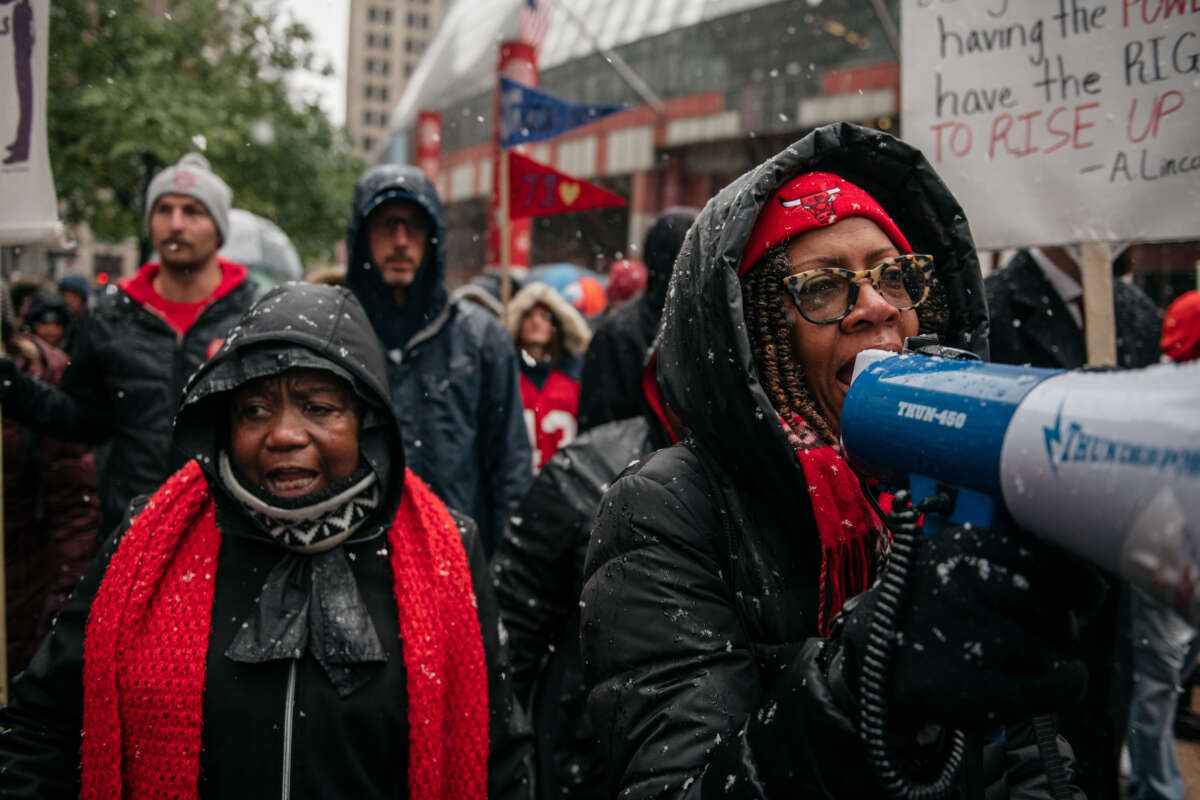
In addition to her curriculum development efforts, Todd-Breland recently co-authored the memoir of Karen Lewis, the late president of the Chicago Teachers Union, who played a pivotal role in advocating for public education and civil rights. Lewis’s legacy serves as a reminder of the power of collective action and the importance of solidarity across racial lines in the fight for educational equity.
As communities continue to organize against authoritarian policies, Todd-Breland’s work underscores the necessity of a robust and truthful educational framework. “We must fight for fully funded public schools as essential community hubs where the truth is taught and all identities are affirmed,” she asserted.
The struggle to teach and learn Black history is not merely an academic issue; it is a matter of justice and societal transformation. The urgency of maintaining this focus on Black history in education is clearer than ever as the nation grapples with the realities of systemic oppression and the need for inclusive narratives in shaping future generations.