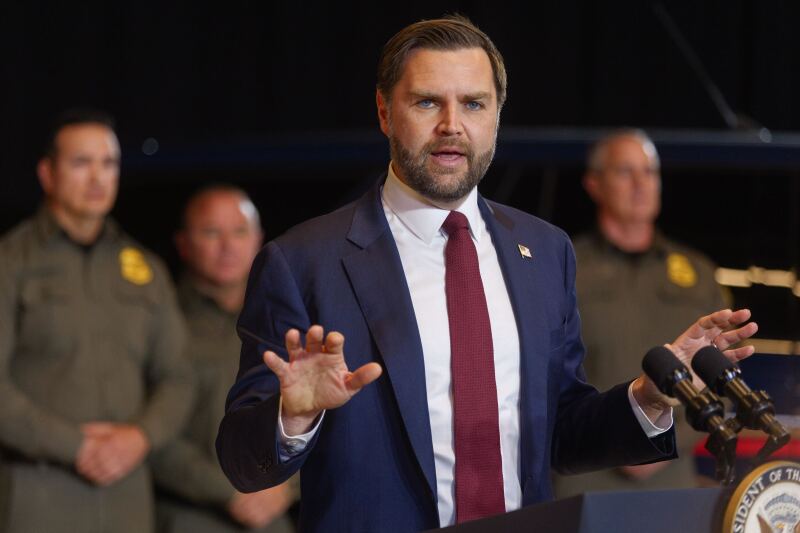
Vice President J.D. Vance visited Minneapolis on January 22, 2024, in response to rising tensions between local communities and federal immigration agents. The visit aimed to “turn the temperature down” regarding recent clashes surrounding operations conducted by Immigration and Customs Enforcement (ICE). Vance attributed the turmoil to local officials’ lack of cooperation with federal immigration enforcement.
During his visit, Vance stated, “I’m sure that people are seeing a lot of things that would make any member of our national community feel very upset.” He emphasized that the situation stemmed from a decision by state and local governments not to collaborate with ICE, which he described as contributing to the “chaos” in the city.
Federal Operations and Local Response
Accompanied by uniformed ICE agents, Vance addressed reporters at a press-only event in the Royalton Square event space, located in Minneapolis’ North Loop neighborhood. He noted that the presence of federal agents was necessary for protecting ICE officials from potential violence, stating, “We wouldn’t need it if we had a little more cooperation from the Minneapolis Police Department.”
Vance’s remarks come amid a controversial federal immigration operation involving approximately 3,000 officials in the Twin Cities area. Reports indicate that ICE has detained individuals, including legal residents, leading to protests and heightened tensions. According to Vance, some ICE agents have faced assaults and been unable to call for backup during these confrontations.
When questioned about the recent detention of children during ICE operations, Vance acknowledged an incident involving a 5-year-old boy. He clarified that the child was not the target of enforcement; rather, his father was apprehended, and the boy accompanied him voluntarily. Vance refrained from discussing the father’s background or any criminal history.
Clarifications on ICE Tactics
Vance addressed concerns regarding an internal ICE memo suggesting that agents do not require a warrant to enter homes for immigration enforcement, stating, “We’re never going to enter somebody’s house without a warrant.” His comments follow documented instances of ICE entering residences without judicial warrants, which have raised significant public outcry.
In the backdrop of Vance’s visit lies the recent shooting of Renee Good, an ICE observer, by an ICE agent in south Minneapolis. Vance maintained that Good’s actions led to the incident, despite video evidence suggesting otherwise. He did not provide further details about the ongoing investigations or the circumstances surrounding this tragic event.
Vance asserted that he does not believe the Insurrection Act would need to be invoked to dispatch federal troops for local law enforcement operations unless conditions worsen significantly. He indicated that the potential for increased assaults on ICE agents could escalate tensions further.
This visit underscores the complexities of immigration enforcement in the United States, particularly in areas like Minneapolis, where community response and federal policy intersect. Vance’s statements highlight the ongoing debate over the balance between immigration enforcement and community cooperation.