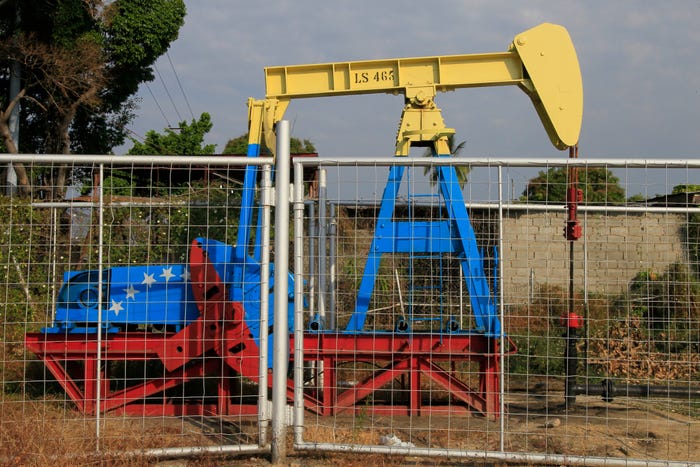
UPDATE: A potential revival of Venezuela’s oil industry is creating immediate disruptions in the US energy market following a recent US operation targeting Venezuelan leader Nicolás Maduro. Investors are now betting on increased access to Venezuela’s vast oil reserves, which could shake up the dynamics for US shale producers.
The surge in Venezuelan oil output could place pressure on smaller US shale companies, analysts warn. With oil prices already down, additional Venezuelan supply could further complicate the landscape for American energy firms, particularly those struggling with high debt and tight profit margins.
According to Daan Struyven, head of oil research at Goldman Sachs, the influx of Venezuelan crude could negatively impact shale producers that lack operations in Venezuela. He stated on the firm’s “Exchanges” podcast, “If supply growth over the next five to ten years comes from Venezuela rather than US shale, prices and volumes could come under pressure.”
Venezuela’s crude is heavier and sulfur-rich, which aligns better with the capabilities of many Gulf Coast refineries designed for such oil. This shift could mean that refiners benefit from Venezuelan crude while demand for lighter shale oil diminishes, creating a significant ripple effect in pricing across the market.
Energy stocks surged on Monday as investors reacted to the potential benefits of renewed access to Venezuelan oil. However, not all American energy companies will gain; smaller shale producers, particularly those with fragile balance sheets, may face dire consequences. Philippe Le Billon from the University of British Columbia notes, “In the US, the first casualties would likely be some oil producers, particularly smaller shale firms with high debt and thin margins.”
Currently, US benchmark West Texas Intermediate crude is trading around $56 per barrel, while Brent crude sits at approximately $60 per barrel. Both have dropped around 2% this year, following a significant decline of 20% in 2022. The outlook remains challenging, as the anticipated increase in Venezuelan oil production could exert further downward pressure on prices, complicating the situation for higher-cost shale producers.
Researchers at Columbia University’s Center on Global Energy Policy warn that even a medium-term boost in Venezuelan oil output could hinder the ability of US shale firms to justify new drilling projects. This dynamic underscores the complexity of energy geopolitics, indicating that a revival of Venezuela’s oil sector may not yield unequivocal benefits for the US.
As developments continue to unfold, the energy sector is bracing for a fundamental shift. Investors and producers alike will need to monitor the evolving landscape closely, as the implications of Venezuela’s oil revival unfold in real-time. The urgent question remains: who will emerge as the winner in this new energy game?
Stay tuned for more updates on this rapidly developing situation.