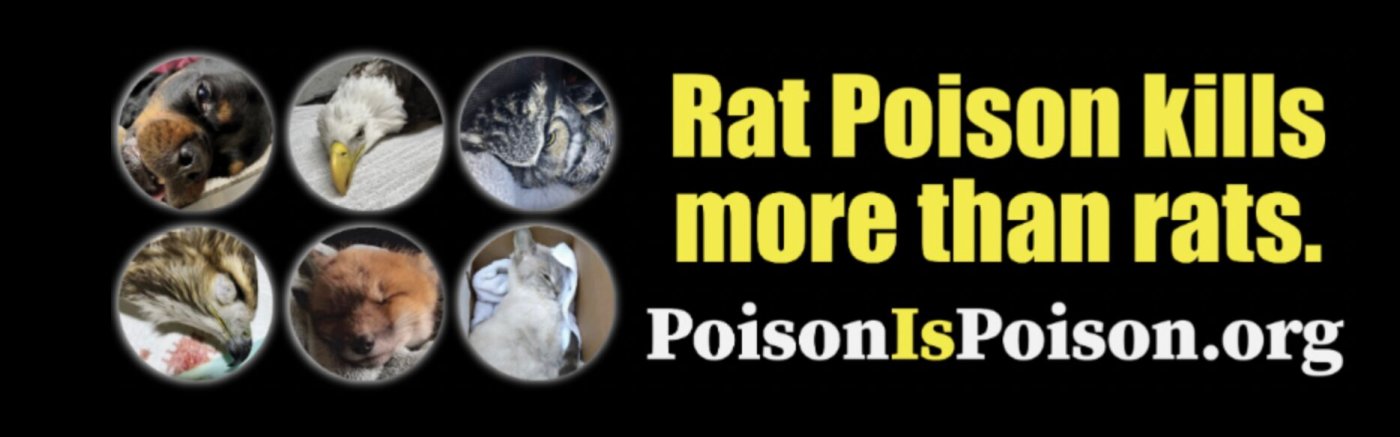
UPDATE: New graphic billboards on I-84 in Hartford and West Hartford are urgently raising awareness about the severe dangers of rat poison, specifically targeting Second Generation Anticoagulant Rodenticides (SGARs). This campaign, led by A Place Called Hope, highlights that these poisons kill not only rodents but also a wide range of wildlife.
The series of seven billboards vividly illustrates the tragic impact of SGARs, which are designed to cause rodents to bleed to death. Christine Cummings, president of A Place Called Hope, stated, “The billboards are meant to raise awareness that rodent poison kills way more than just mice and rats.” As non-targeted victims arrive at their clinic, it becomes clear that the repercussions of these poisons are irreversible.
SGARs are so potent that they were banned from retail sale by the U.S. EPA in 2014. However, they continue to be misused by pest control companies who falsely assure the public of their safety. “We have the proof that poison is poison, and there is no such thing as a safe poison,” Cummings emphasized.
Connecticut has already taken significant steps; SGARs can only be applied by licensed professionals, and some towns, like Fairfield, are exploring humane methods, such as rodent birth control programs. This innovative approach has been praised by animal rights advocates who are pushing back against the use of these harmful rodenticides.
Cummings highlighted alarming statistics: “Studies prove that 80% of wild animals tested positive for SGARs.” This indicates a widespread problem affecting not just rats, but also pets, small children, and various wildlife species. The billboards feature images of animals that succumbed to SGAR poisoning, including a dog, cat, fox, eagle, owl, and hawk.
The campaign also directs the public to PoisonIsPoison.org for more information on the dangers of rodenticides and safe, non-toxic alternatives. Cummings stressed, “They show that rodent poison kills more than the intended targets,” underlining the cruel and indiscriminate lethality of SGARs.
Animal rights advocate Jack Keller from Friends of Animals further warned that SGARs can linger in rodents for up to 10 days, posing significant risks to predators that consume them. “Many times they are still up and moving days after consuming them,” Keller noted, stressing the need for immediate public awareness.
With public awareness growing, the next wave of billboards is set to launch in April, reinforcing the urgency of this issue. The campaign aims to protect both human and animal lives by promoting safer pest control alternatives.
This is a critical moment for Connecticut residents and wildlife advocates alike. As the deadly effects of SGARs become increasingly apparent, the call for action resonates loud and clear: poison is poison, and it threatens our ecosystem.
Stay tuned for ongoing updates as this story develops and consider sharing this vital information with your community.