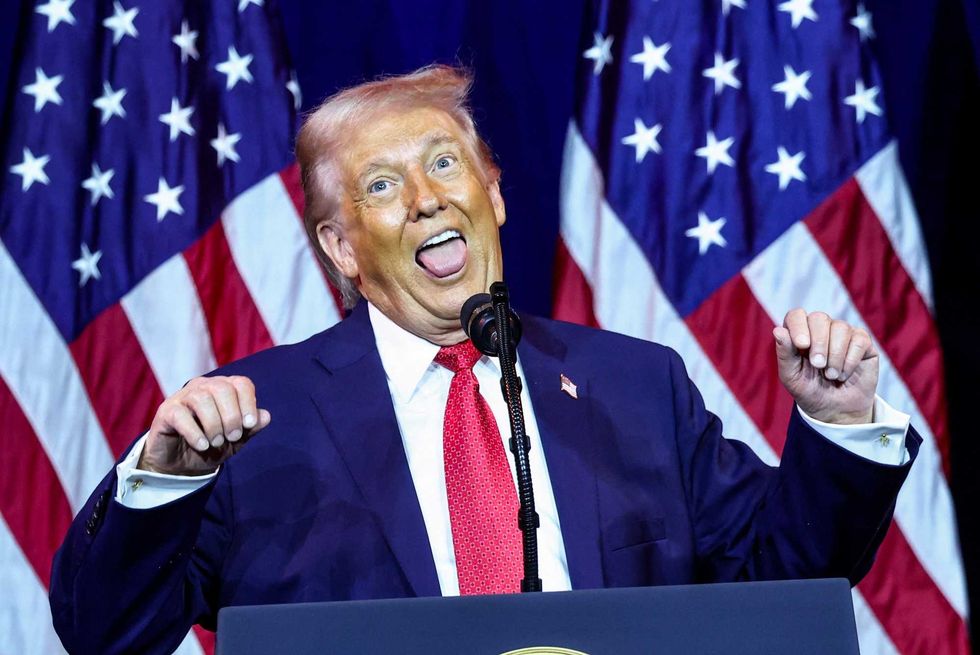
UPDATE: A 1991 memoir predicts the challenges foreign leaders face with Donald Trump, highlighting his leadership style as detrimental in crisis situations. Sir Ben Wallace, former British defense secretary, urged world leaders to reconsider their approach to Trump, emphasizing that flattery and extravagant gifts do not yield positive results.
Wallace revealed insights from the book Trumped!, authored by one of Trump’s former casino operators, which depicts him as a “cocksure boor” who neglects critical details and is overly confident in his decisions. “You only have to meet people, do the job, read the room to realize that sucking up to Donald Trump doesn’t work,” Wallace stated in a recent episode of the One Decision podcast.
The remarks come as global dynamics shift, particularly following a U.S. raid on Caracas that removed Venezuelan President Nicolás Maduro. The fallout from this operation is profound, as many countries, including the U.K., strategize on how to engage with Trump amid escalating tensions surrounding Ukraine and Russia.
In the podcast discussion, Wallace recounted a tense meeting in February 2022, where Ukrainian President Volodymyr Zelensky was criticized by Trump and Vice President JD Vance for not adhering to formal dress codes during discussions on military aid. This incident underscores the importance of understanding Trump’s eccentricities, as outlined in O’Donnell’s memoir.
Published when Trump was a struggling property magnate, Trumped! provides a revealing account of his personality traits, including a tendency toward germaphobia and racism. Critics described it as an “evenhanded, knowledgeable account” of a man whose overconfidence often overshadows his decision-making abilities.
The conversation on the podcast also highlighted the European dependency on U.S. support. Philip Gordon, a former national security adviser, expressed empathy for European nations navigating their relationships with Trump. “They are worried about Trump retribution,” he noted, emphasizing the precarious balance Europe must maintain.
Gordon elaborated that while some countries are willing to criticize the U.S., others remain cautious, fearing they will lose vital support. “Europe looks irrelevant in this situation,” he said, pointing to a trend of European leaders trying to appease Trump through flattery, only to be met with contempt.
As international tensions rise, particularly concerning Venezuela, Gordon warned that Trump’s foreign policy approach lacks a solid contingency plan. “If Plan A doesn’t work,” he cautioned, “I don’t think he knows what Plan B is.” The implication is clear: without proper strategy, the U.S. risks repeating historical failures seen in other regions.
The urgency of this discussion is heightened by the ongoing political and military instability in Venezuela and Ukraine. As nations seek clarity on U.S. intentions, the insights from the 1991 memoir resonate with growing significance, offering a lens through which to understand the complexities of engaging with Trump.
As world leaders grapple with these dynamics, it becomes increasingly vital to comprehend the underlying principles that guide Trump’s decision-making. The implications of his leadership style could resonate far beyond the Oval Office, impacting international relations for years to come.
WHAT TO WATCH FOR: As the situation evolves, all eyes will be on Trump’s next moves concerning Venezuela and the broader international landscape. Will foreign leaders adapt their strategies based on insights from past critiques, or will they continue to risk missteps in their dealings with the unpredictable leader?