The Trump administration has announced agreements with nine additional pharmaceutical companies aimed at aligning U.S. drug prices with those in other affluent nations. This brings the total number of companies participating in what the administration terms “most-favored-nation pricing” to fourteen. Under these agreements, drug manufacturers will charge the U.S. government no more for new medications than the prices paid by other wealthy countries.
The newly involved companies include Amgen, Boehringer Ingelheim, Bristol Myers Squibb, Genentech, Gilead Sciences, GSK, Merck, Novartis, and Sanofi. These arrangements will also enable state Medicaid programs to access lower drug prices from these firms.
In addition to adjusting pricing strategies, the drug manufacturers have pledged to invest at least $150 billion in U.S. pharmaceutical manufacturing operations. This move is part of a broader initiative by the Trump administration to bolster domestic production of medicines.
The agreements include provisions for consumers as well. A new platform called TrumpRx is set to launch in early 2026, allowing consumers to purchase certain popular medications directly at reduced prices. For instance, the price of Januvia, a diabetes medication, will drop from $330 to $100 when purchased through this platform. Similarly, Amgen will reduce the cost of Repatha, a cholesterol-lowering drug, from $573 to $239 for direct purchases.
In exchange for these pricing concessions, the participating companies will receive a three-year exemption from potential tariffs imposed by the administration. The actual extent of savings for consumers remains uncertain, as Medicaid and its beneficiaries already benefit from some of the lowest drug prices available. Those with health insurance may find that their copays are lower than the cash prices offered through the drugmakers.
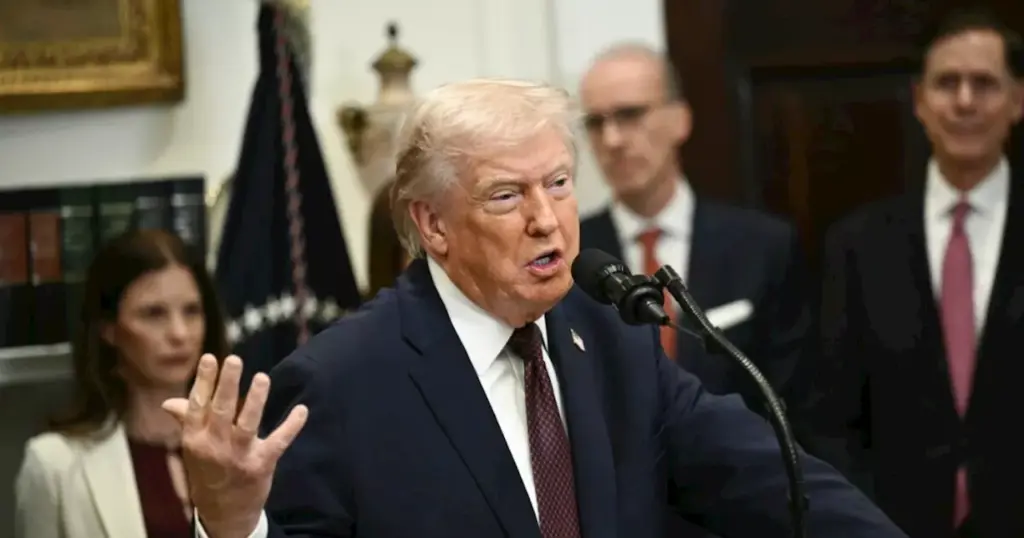
During the announcement, President Donald Trump expressed his intent to also engage health insurers in discussions about lowering their prices. “I’m going to call a meeting of the insurance companies,” he stated, emphasizing the need for price reductions in the healthcare sector.
In a related development, Bethany Kozma has been appointed as the new director of the Department of Health and Human Services Office of Global Affairs, a role often described as the “diplomatic voice” of HHS. Although not widely recognized in public health circles, Kozma’s influence may be significant in shaping U.S. health policy abroad, especially following the Trump administration’s cuts to foreign aid and withdrawal from the World Health Organization.
Kozma’s career began during the George W. Bush administration and included a senior advisory role at the U.S. Agency for International Development (USAID). Her past activism has included strong opposition to gender-affirming care and abortion, which could influence the direction of U.S. health assistance to other countries.
The evolving landscape of U.S. health policy is marked by a shift away from traditional partnerships with organizations like the WHO. Instead, under Kozma’s leadership, the Office of Global Affairs is expected to negotiate health aid agreements directly with individual countries, potentially imposing specific policy requirements on recipients.
Concerns have been raised about Kozma’s past positions and how they may affect health equity, particularly for marginalized groups. Advocates fear that her stance could lead to restrictive health policies that may undermine access to critical services for communities already at risk.
As these developments unfold, the full implications for drug pricing and global health policy remain to be seen, but the administration’s recent actions signal a notable shift towards aggressive negotiation strategies and direct consumer engagement in the pharmaceutical market.