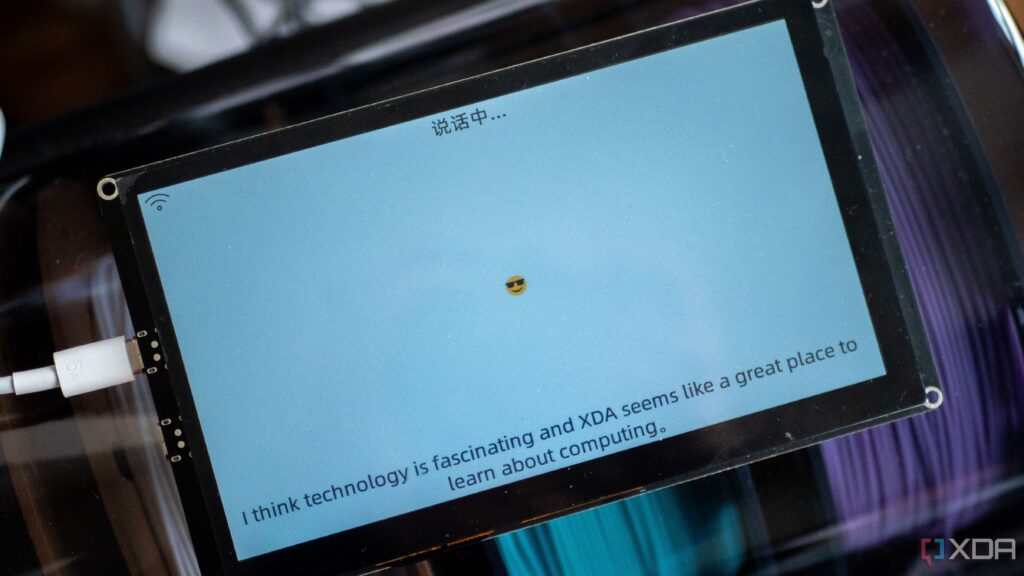
BREAKING: An exciting new development in voice assistant technology has emerged from the world of microcontrollers. The ESP32-P4 and Elecrow CrowPanel Advance have combined forces to create an innovative voice assistant called XiaoZhi, which can express emotions through animated emojis on a stunning 7-inch display. This project, showcased at Maker Faire Shenzhen, is set to revolutionize how we interact with voice assistants.
This development, confirmed just this week, allows users to engage in real-time conversations with a chatbot that not only talks back but also visually reacts based on the emotional tone of its responses. Happy replies display smiling faces, while confused answers show puzzled looks. This emotional engagement is not just a novelty; it enhances the user experience significantly.
Developers have been exploring XiaoZhi for two months, with its open-source platform designed to run on ESP32 microcontrollers. Its impressive capabilities include handling wake word detection, voice activity detection, speech-to-text, and text-to-speech, all on modest hardware. The project operates by streaming audio to a server that processes the input and sends back responses, making it highly efficient.
The emotional tagging feature, which determines which emoji to display, is handled by the server-side LLM (large language model). The Elecrow CrowPanel Advance is particularly notable because it offers ample resources, including 32MB of PSRAM and dual 400MHz RISC-V cores, allowing it to run XiaoZhi seamlessly. Users no longer have to deal with the limitations of smaller boards, ensuring a robust interaction with high-quality audio that feels natural.
The implications of this technology are profound. With XiaoZhi, users can create a fully private voice assistant that operates without needing to connect to external servers. This feature is appealing for those concerned about privacy and data security, as it allows complete control over their interactions. The potential applications are vast, from kitchen assistants to interactive story-tellers.
XiaoZhi’s versatility is further enhanced by its support for the Model Context Protocol (MCP), enabling it to interact with external tools and smart home devices. This capability means users can ask the assistant to check the weather, control their home environment, or retrieve information from the web—all through voice commands.
Developers will appreciate the ease of setting up XiaoZhi, whether using a cloud service or self-hosting their server instance. The setup process is streamlined, making it accessible even for those who may not have extensive technical backgrounds.
In conclusion, the launch of XiaoZhi on the ESP32-P4 marks a significant step forward in voice assistant technology, merging emotion, utility, and accessibility. For tech enthusiasts, this breakthrough is not only a demonstration of innovative engineering but also a glimpse into the future of human-computer interaction.
Stay tuned for more updates on this groundbreaking project as it continues to evolve, and consider sharing this news with fellow tech lovers eager to learn about the latest advancements in AI and voice technology!