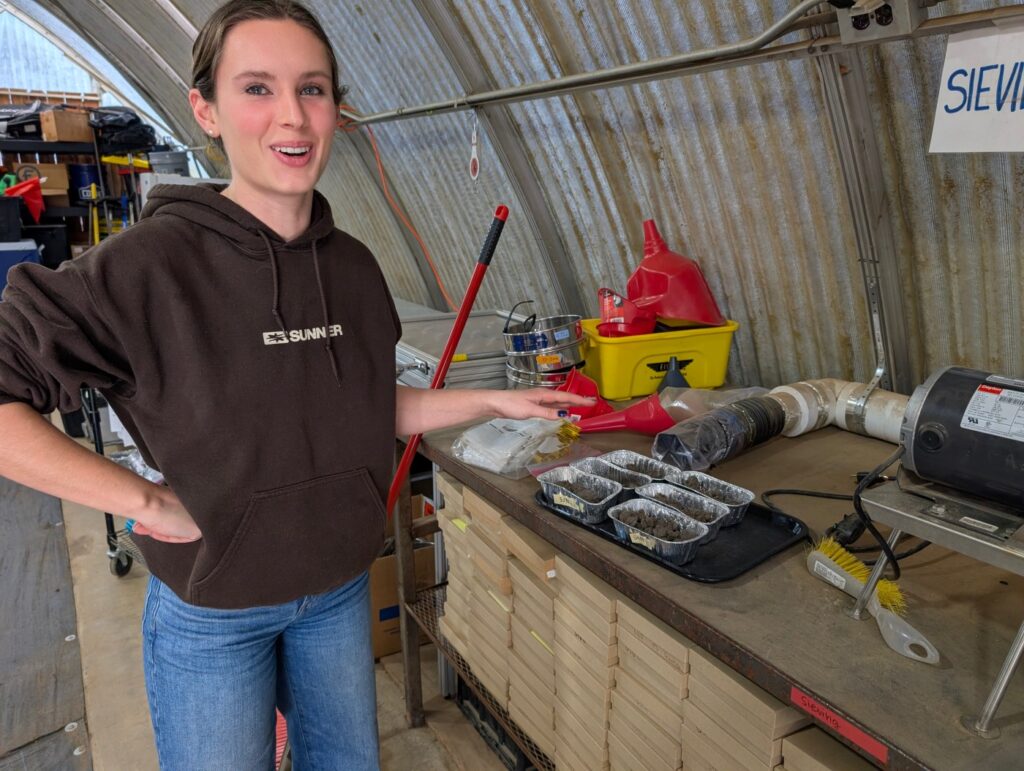
URGENT UPDATE: Students at Chico State University are taking immediate action to revolutionize soil health through innovative testing methods. On February 4, 2026, Kaylee Mulhearn and Paige Flaig conducted critical soil tests at the university farm, aiming to create optimal natural growth conditions.
“This is the soil processing area, and it’s under the wing of the Center for Regenerative Agriculture and Resilient Systems,” Flaig revealed. The team is partnering with agricultural producers across California to implement more sustainable practices. Their work is essential as the agricultural sector faces increasing pressure to improve efficiency while reducing environmental impacts.
The students are currently testing various soil samples for nutrient qualities, performing side-by-side comparisons and field analyses. “We collect forage samples for nutritive qualities, and we also take cores of soil at different depths to measure its stability,” Flaig explained. This process assesses the soil’s ability to retain water and its structural integrity, crucial for supporting a healthy biological community.
Mulhearn added that they also conduct carbon-nitrogen testing and send samples to a lab in Montana for pH level analysis. “This helps us understand the differences in soil health between regenerative and conventional practices,” she stated. This research is vital as it aims to support farmers in making informed decisions that leverage natural processes over synthetic inputs.
The long-term implications of their work are profound, as they strive to help farmers reduce reliance on synthetic materials. “We try to work with nature instead of against it,” Flaig emphasized. This commitment to sustainability not only supports local agriculture but also promotes environmental health.
As farmers prepare for the challenges of the upcoming season, including potential adverse weather conditions, the insights gained from this research could lead to significant cost savings and improved crop yields. The students’ efforts exemplify a growing trend of integrating regenerative practices into mainstream agriculture, addressing both economic and ecological concerns.
The developments at Chico State University reflect a larger movement toward regenerative agriculture, emphasizing the importance of soil health in food systems. As these students continue their work, the agricultural community and the public will be watching closely, eager to see the results of their innovative approaches.
Stay tuned for more updates as this story develops, and follow the students’ progress in transforming agricultural practices for a sustainable future.