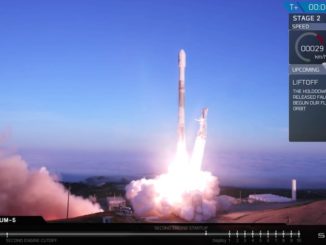
SpaceX is preparing to launch its Falcon 9 rocket for the Starlink 17-33 mission, marking a return to flight after a brief stand down lasting less than a week. The mission will deploy 25 Starlink satellites into low Earth orbit, contributing to the company’s expanding satellite constellation, which currently includes over 9,600 satellites, according to expert orbital tracker Jonathan McDowell.
The launch is scheduled for February 7, 2024, at 09:21 PST (12:21 EST / 17:21 UTC) from pad 4E at Vandenberg Space Force Base in California. The Falcon 9 rocket will follow a south-southwesterly trajectory during its ascent. Coverage of the launch will begin approximately 30 minutes prior to liftoff on Spaceflight Now.
The Falcon 9 first stage booster, designated B1088, will be utilized for this mission. This marks its 13th flight, having previously supported missions including NASA’s SPHEREx and Transporter-12, as well as two batches of satellites for the National Reconnaissance Office’s proliferated architecture satellite constellation.
Approximately 8.5 minutes after liftoff, B1088 will attempt to land on the drone ship named ‘Of Course I Still Love You’, stationed in the Pacific Ocean. If successful, this will represent the 176th landing on this vessel and the 568th booster landing for SpaceX overall.
Return to Flight Following Anomaly
SpaceX’s return to its regular launch cadence follows a brief pause caused by an in-flight anomaly experienced during the recent Starlink 17-32 mission on February 2, 2024. After the launch, the company reported that the Falcon 9’s second stage encountered an “off-nominal condition” during preparations for the deorbit burn. Despite this, the vehicle performed as designed, successfully deploying all 25 Starlink satellites into their designated orbits.
In response to the incident, SpaceX temporarily rolled the Starlink 6-103 mission satellites back to its Hangar X facilities at NASA’s Kennedy Space Center. The company also prepared another Falcon 9 booster, tail number 1101, for the upcoming Crew-12 launch scheduled for the following week.
The Federal Aviation Administration (FAA) announced the conclusion of the investigation into the anomaly on February 2, allowing SpaceX to resume its FAA-licensed flights. The FAA’s final report indicated that the probable root cause was a failure of the Falcon 9 stage 2 engine to ignite before the deorbit burn. SpaceX has taken steps to implement technical and organizational measures to prevent a recurrence of such an event.
With the FAA’s endorsement, SpaceX is set to reestablish its launch schedule, underscoring the company’s commitment to advancing its satellite deployment objectives. The upcoming Starlink 17-33 mission represents an important step in expanding global internet access through the use of satellite technology, continuing SpaceX’s vision for a connected world.