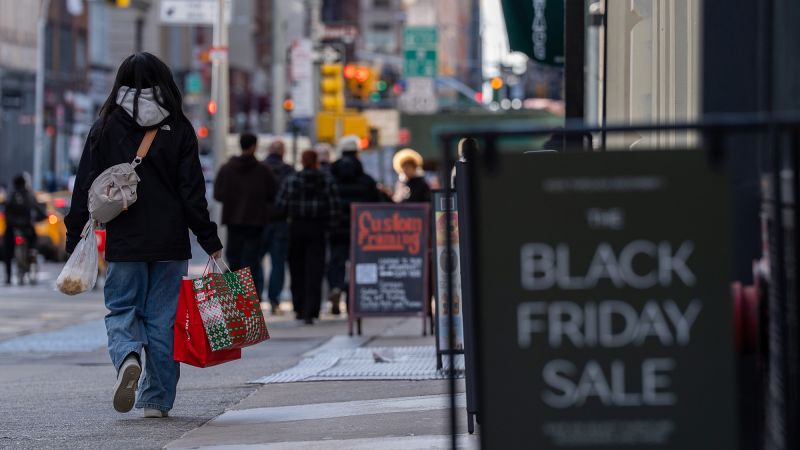
UPDATE: Black Friday has shown a surprising resilience in retail, with a 4.1% increase in US retail sales, according to Mastercard. This surge, however, comes at a cost—shoppers are paying more but receiving less.
New reports indicate that online shopping skyrocketed 9.1% this Black Friday, as Salesforce confirmed that prices surged by an alarming 7% on average across all categories. Despite the positive sales figures, consumers are feeling the impact of higher prices, raising concerns about economic stability.
Salesforce data reveals that while consumers flocked to stores, the average selling price of items increased by 7%, overshadowing a 1% decline in order volume compared to last year. Caila Schwartz, director of consumer insights at Salesforce, stated, “Consumers are paying more per item than last year, but it’s not stopping them from coming out and spending.”
As holiday shopping ramps up, prices during Cyber Week have already risen by 7%, compared to a 5% increase in 2022. The price hikes are partially attributed to historic tariffs imposed during the previous administration, affecting essential categories like home goods, which saw a staggering 24% spike in prices on Black Friday.
President Donald Trump has previously warned that tariffs could lead to consumers receiving less for their money. “All I’m saying is that a young lady, a 10-year-old girl… doesn’t need 37 dolls,” Trump remarked, highlighting the potential implications of increased costs on consumer behavior.
The economic landscape is further complicated by a K-shaped recovery, where higher-income consumers continue to spend aggressively, while lower-income Americans are forced to tighten their belts. Gallup reports that households earning less than $50,000 plan to spend $651 on holiday gifts, a drop from $776 last year. Conversely, high-income consumers are expected to increase spending to $1,479, up from $1,403.
Looking ahead, the pressure on retailers is evident as consumers remain price-sensitive. Sales growth saw a boost over the weekend, rising 5% as deeper discounts enticed buyers back to stores. Salesforce projects an estimated $13.4 billion in US online shopping sales for Cyber Monday, reflecting a 4% increase from last year.
With significant discounts expected on home goods (26%), health and beauty (35%), and clothing (37%), retailers are hoping these offers will attract consumers grappling with ongoing price pressures.
As shoppers navigate this complex economic landscape, the upcoming days will reveal whether these deals can effectively combat the ongoing sticker shock felt by many Americans. Stay tuned for further updates on this developing story.