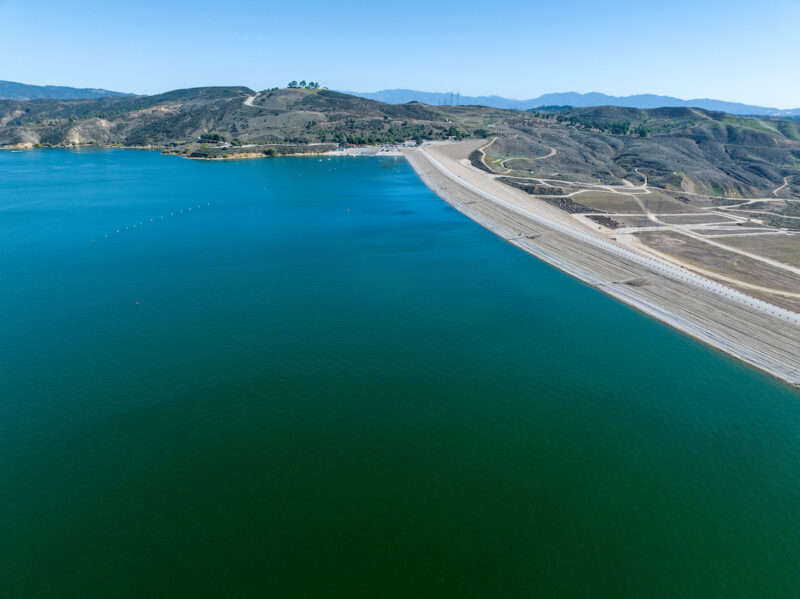
A drone view of Castaic Lake in Los Angeles County with an algal bloom. Castaic Lake is part of the West Branch of the State Water Project. The reservoir formed by Castaic Dam on Castaic Creek, in the Sierra Pelona Mountains of northwestern Los Angeles County, California. Photo taken October 14, 2023 Ryan McKinney / California Department of Water Resources
UPDATE: Santa Clarita’s water supply is showing promising signs as rainfall levels surge to 147% of the water year average, totaling 25.3 inches from October through February. This significant uptick is bolstered by the Santa Clarita Valley Water Agency’s efforts to restore wells previously impacted by PFAS contamination, making more locally sourced water available by 2026.
During a crucial board meeting on February 27, 2023, Sarah Fleury, SCV Water’s senior water resources planner, revealed that the agency aims for a balanced 50-50 split of imported and groundwater sources to meet growing demand. This comes as the agency successfully brought several wells back online after addressing contamination issues.
While the local supply is recovering, the situation remains precarious due to the effects of climate change on California’s snowpack. Fleury warned that warmer storms are leading to increased runoff, with the latest data from the California Department of Water Resources showing the statewide snowpack at only 66% of its average as of late February. This rapid melt-off complicates water management and threatens future supply, especially for agricultural users in the Central Valley.
“Water that used to stay frozen for later use is now flowing away too quickly,” Fleury stated, emphasizing the unpredictable weather patterns that have made it challenging to estimate runoff and supply levels. Despite this, SCV Water’s diverse portfolio offers some protection against state-level uncertainties, although the agency has been allocated just 30% of its 95,000 acre-feet water allocation from the State Water Project this year.
As conditions evolve, the agency’s water reserves are climbing back toward pre-drought levels, nearly reaching 140,000 acre-feet this year, compared to 90,000 acre-feet in 2023. However, the ongoing challenges with snowpack and precipitation patterns signal a need for continued vigilance and adaptation.
Residents and local stakeholders are urged to stay informed as SCV Water navigates these turbulent waters. The agency’s ability to balance local groundwater resources with state allocations will be critical for ensuring a sustainable water supply moving forward.
As the situation develops, authorities recommend monitoring updates from SCV Water for the latest insights on water availability and management strategies.