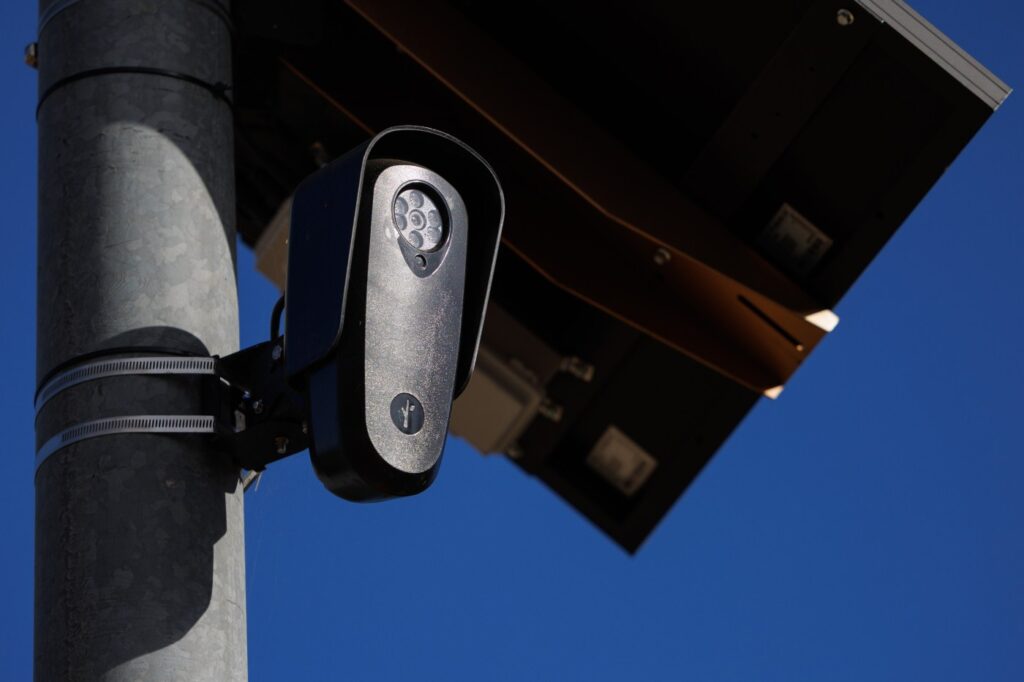
UPDATE: The San Jose Police Department (SJPD) is taking immediate action to revise its license plate reader policies amid growing concerns over privacy and surveillance. In a significant policy memo released on Thursday, Chief Paul Joseph requested the City Council to approve a reduction in data retention from one year to just 30 days and to prohibit recording vehicles entering or leaving places of worship and reproductive health clinics.
This decision comes as the debate over automated surveillance technology intensifies across the Bay Area. San Jose currently has 474 automatic license plate reader (ALPR) cameras deployed throughout the city, and their use has sparked controversy regarding potential collaborations with immigration enforcement agencies.
The new policies, set to be discussed by the City Council on March 10, 2025, aim to bolster privacy protections while still leveraging the technology for law enforcement purposes. Joseph emphasized the importance of these cameras as a “force multiplier” for a police department facing staffing challenges, while acknowledging the community’s privacy concerns.
In response to mounting pressure, the SJPD is enhancing its data request protocols, requiring outside agencies to provide detailed justification for accessing plate data. This change is particularly focused on preventing unregulated cooperation with agencies that may not adhere to California’s strict laws against immigration-related actions.
“We have to have the tools that are available to law enforcement these days while acknowledging legitimate concerns about privacy and data misuse,” Joseph stated in an interview. The department has also disabled a feature that allowed for federal sharing of data, blocking access from federal agencies like ICE and DEA.
Public sentiment remains divided. In November, civil rights organizations including the Electronic Frontier Foundation and ACLU of Northern California filed a lawsuit against the city, claiming that indiscriminate data searches violate the California Constitution. The ongoing litigation underscores the contentious nature of surveillance technology in urban policing.
Other cities in the Bay Area are also reevaluating their relationships with license plate reader technology. Just this week, the Mountain View City Council voted to terminate its contract with major vendor Flock Systems after reports of unauthorized access to camera data by federal agencies. Similarly, Santa Clara County officials moved to restrict the sheriff’s office from pulling data from Flock cameras, signaling a shift in how such tools are utilized for local law enforcement.
Despite these challenges, SJPD continues to tout the effectiveness of ALPR technology in solving crimes. Chief Joseph highlighted recent arrests linked to camera data, including a homicide case and a sexual offender apprehended for abducting a teenager. “These cameras are the linchpin of everything we’re trying to do with technology at San Jose PD,” he affirmed.
As the public discourse evolves, Joseph is seeking to assure community members that increased safeguards are being implemented to protect their privacy. “We want to ensure the community feels confident in this program,” he added.
This is a developing story. Stay tuned for updates as the situation unfolds.