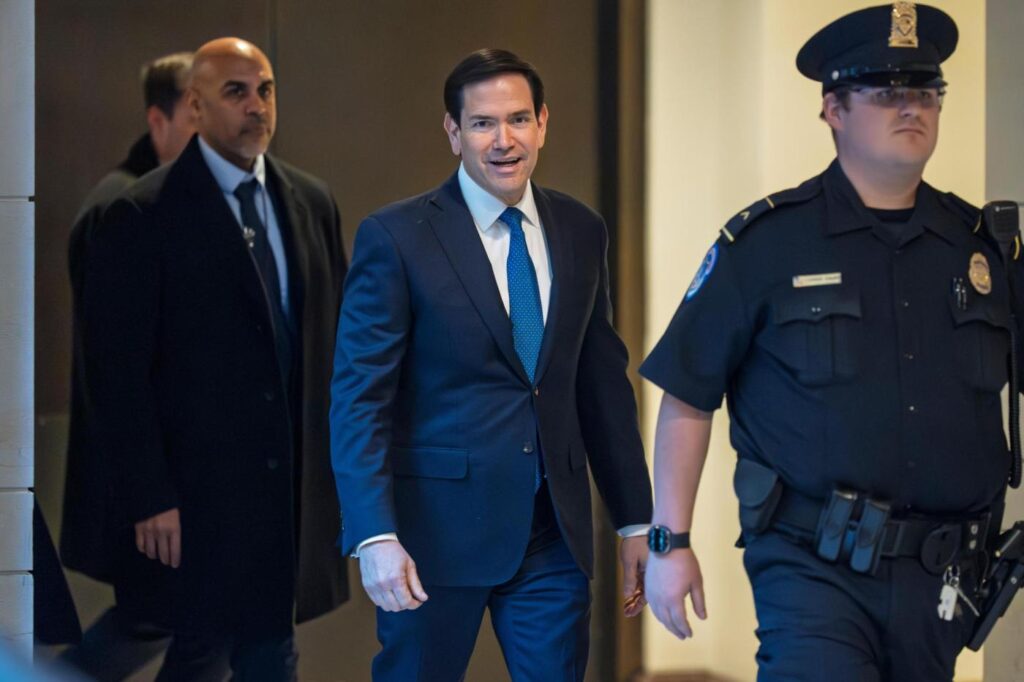
URGENT UPDATE: U.S. Secretary of State Marco Rubio has just announced a major shift in diplomatic correspondence, mandating the use of Times New Roman instead of Calibri effective Wednesday. This drastic reversal targets recent diversity, equity, and inclusion (DEI) policies implemented by the previous administration.
In a cable dispatched to all U.S. embassies and consulates on Tuesday, Rubio criticized the Calibri font as “wasteful” and “confusing,” asserting it undermined the dignity of U.S. government documents. He stated that the previous shift to Calibri was part of misguided DEI efforts led by former Secretary of State Antony Blinken.
Rubio’s decision comes as a part of a broader initiative to dismantle DEI programs within the State Department, aligning with Donald Trump’s directive to return to merit-based standards across federal agencies. Since assuming office in January 2023, Rubio has eliminated various DEI initiatives, including funding for foreign assistance programs aimed at promoting inclusion.
“Typography shapes how official documents are perceived in terms of cohesion, professionalism, and formality,” Rubio reiterated in the cable. He emphasized that the switch to Calibri, which was intended to address accessibility issues, failed to achieve its goals and incurred costs of $145,000 without any evidence of improvement.
“Switching to Calibri achieved nothing except the degradation of the department’s correspondence,” Rubio stated, highlighting the inconsistency with the State Department’s official letterhead.
The memo also specified that all templates for official documents must be updated immediately, with the only exceptions being documents related to international treaties and presidential appointments, which will continue to use Courier New at 12-point size.
This sudden change has sparked discussions among diplomats and officials regarding the impact of typography on official communications. Many are questioning whether such a focus on font choices aligns with the pressing issues facing the State Department today.
As this news develops, observers are keenly watching how the Rubio administration will continue to reshape the State Department’s policies and what further changes might lie ahead. The urgency of this shift underscores a significant reorientation within U.S. diplomacy that could affect how the country engages with global partners.
Stay tuned for more updates as this story unfolds and the implications of these changes become clearer.