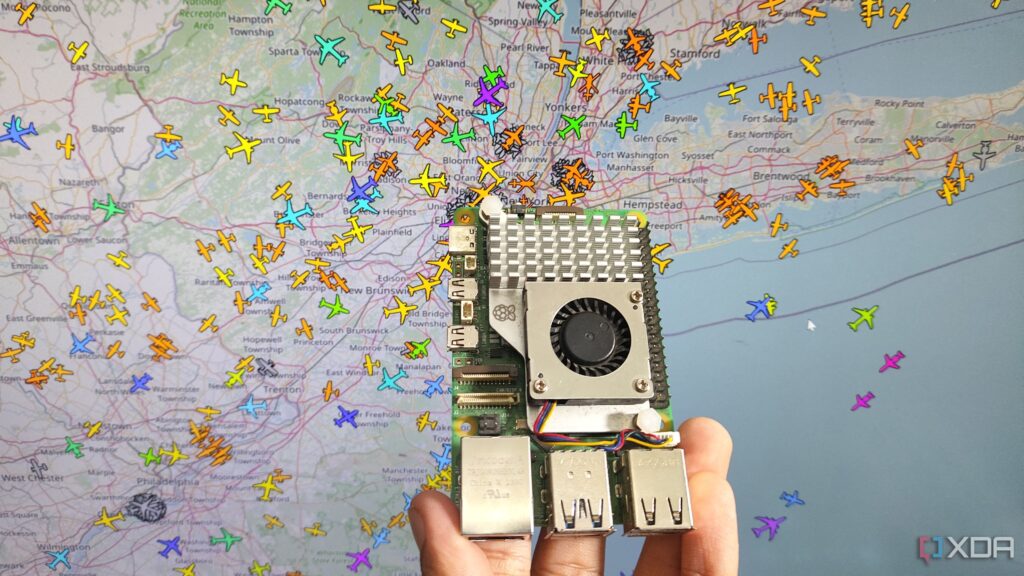
UPDATE: A recent experiment has confirmed the challenges of using a Raspberry Pi as a Wi-Fi router, revealing critical insights for tech enthusiasts and DIY tinkerers. The project, which aimed to replace conventional commercial routers, has sparked interest due to the Raspberry Pi’s flexibility and potential for customization.
The experiment highlights that while the Raspberry Pi 5 offers sufficient speed for various home projects, it struggles with real-world demands in networking. The latest findings show that despite its appealing features, including running Pi-hole and VPN services, the device’s performance is hindered by limitations in wireless capabilities and routing efficiency.
The project began with high hopes, as many guides tout the Pi as a viable alternative to budget routers. However, it quickly became apparent that the Raspberry Pi’s lack of integrated radio hardware leads to significant performance issues, particularly in larger living spaces. Even when paired with an external USB Wi-Fi adapter, the throughput fell short compared to even the most affordable consumer routers, especially when multiple devices competed for bandwidth.
“One misconfigured rule can silently break DNS, DHCP, or routing,” an expert noted, emphasizing the risks of relying on a DIY setup. This aspect highlights the importance of solid configuration and discipline, as a single mistake can lead to connectivity problems that are often easier to resolve on dedicated hardware.
The experiment also underscored the inherent learning opportunities available to those who attempt to set up a Raspberry Pi as a router. Users gain practical knowledge of networking fundamentals, from configuring interfaces to managing access point modes. This hands-on experience deepens understanding of the complexities often hidden behind the interfaces of commercial routers.
Despite the challenges, the endeavor proves valuable for tech enthusiasts who wish to push their skills. The satisfaction of building a mostly functional network device offers insights into both the limitations of the Raspberry Pi and the engineering that underpins consumer-grade networking hardware.
For those looking to pursue this project, experts recommend pairing the Raspberry Pi with capable external hardware, including a dual-band USB Wi-Fi adapter that supports access point mode. A powered USB hub is also essential to ensure stable operation under load.
As the DIY tech community continues to explore creative applications for the Raspberry Pi, this experiment serves as a cautionary tale about the realities of home networking. While the Raspberry Pi excels in flexibility and experimentation, it is not a substitute for dedicated routers, especially for users requiring reliable, high-speed wireless coverage.
The findings of this project resonate with many who seek to understand the intricacies of home networking. As technology rapidly evolves, such experiments provide critical insights that shape future developments in both DIY projects and consumer hardware.
Stay tuned for more updates as the tech community shares their experiences and continues to innovate in the realm of DIY networking.