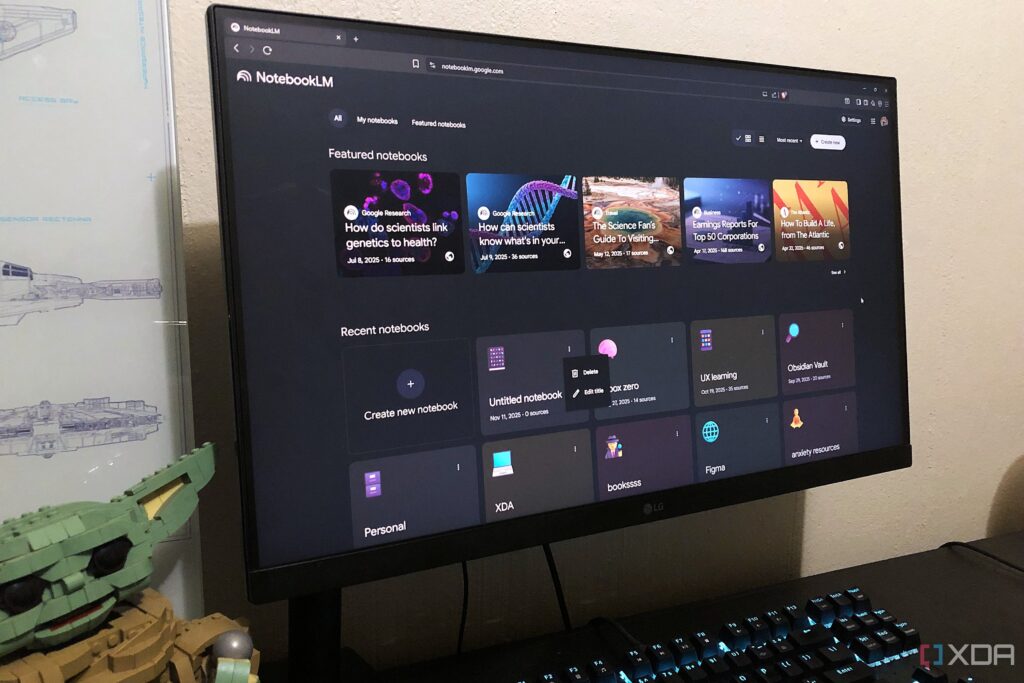
UPDATE: A groundbreaking tool, NotebookLM, has just been launched, making the self-hosting of local Large Language Models (LLMs) more accessible than ever before. Users are reporting that the setup process, previously regarded as overly technical, is now straightforward and user-friendly.
Just today, users shared that NotebookLM enables individuals to run LLMs directly on their hardware without the steep learning curve that typically accompanies self-hosting. This development is crucial for those who fear data privacy issues or limitations imposed by cloud-based services.
Self-hosting allows users to bypass reliance on external servers, offering significant privacy advantages. With NotebookLM, running models like gpt-oss and Nemotron 3 can be done locally, meaning data remains securely on personal devices. The implications of this are profound, particularly for industries handling sensitive information.
Users can now take control of their LLMs easily. By leveraging LM Studio, a tool integrated with NotebookLM, individuals can manage model configurations without extensive technical knowledge. The interface allows for simple adjustments, empowering users to optimize models for specific tasks, such as UX design and coding assistance.
In a recent demonstration, one user recounted how they transformed their learning experience by employing NotebookLM. “I started with the basics, using clear prompts and breaking down complex topics into manageable parts,” they stated. The process involved using the NotebookLM Web Importer to quickly compile resources and tutorials, drastically enhancing understanding and efficiency.
NotebookLM allows users to customize their learning experience by adjusting prompts based on their skill level. This significantly reduces the intimidation factor often associated with self-hosting. As one user explained, the clarity provided by NotebookLM helped them prioritize “clarity, consistency, and low hallucination” in model performance over creative capabilities.
For those looking to explore the vast array of models available, LM Studio offers more than 30 options. Users can request tailored recommendations from NotebookLM, ensuring they select models that best fit their needs. The ease of use has led to a surge in interest, with many seeing the potential for local LLMs to revolutionize how they interact with AI technology.
In light of these developments, experts suggest that the adoption of self-hosted LLMs will only increase, as users recognize the benefits of maintaining control over their data and avoiding subscription fees. The positive feedback surrounding NotebookLM indicates a growing community of users eager to explore the world of AI with fewer barriers.
As the self-hosting movement gains momentum, those interested are encouraged to share their experiences and insights on social media platforms. The urgency to adapt and innovate in this space is palpable, and with tools like NotebookLM, the future looks promising for users ready to embrace self-hosted LLMs today.
Stay tuned for more updates as this story develops!