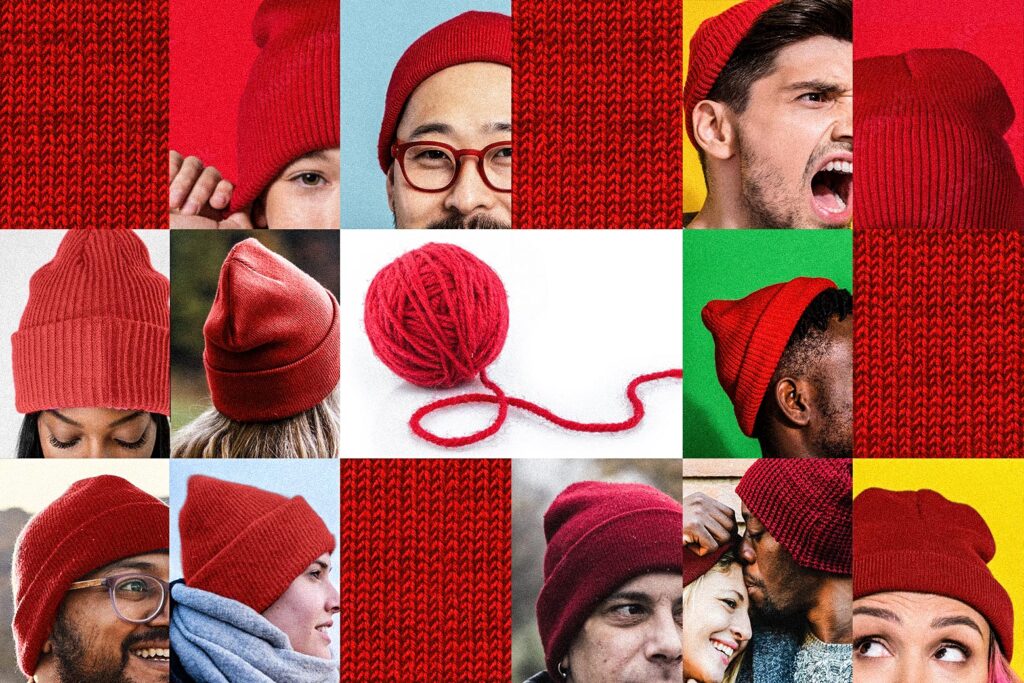
A new wave of activism is emerging, symbolized by the “Melt the ICE” hat, which has captured the attention of knitters across the United States. This initiative began in response to the actions of Immigration and Customs Enforcement (ICE) in Minneapolis, particularly following the tragic deaths of Renee Good and Alex Pretti. The hat pattern, priced at $5, is designed to raise funds for the St. Louis Park Emergency Program and the Immigrant Rapid Response Fund.
From Yarn to Activism
Needle and Skein, a yarn store in St. Louis Park, Minnesota, played a pivotal role in popularizing this new symbol of resistance. The store’s owner, Gilah Mashaal, sought a project for the store’s Wednesday night knit-alongs. Inspired by the red hats worn by Norwegians during the Nazi occupation, the team at Needle and Skein quickly developed the pattern after an employee named Paul discovered the historical significance of the nisselue, or “elf hat.” The pattern was officially launched in March 2026, and its impact has been profound.
Mashaal reported that the hat pattern has generated over $250,000 for the causes it supports. Posts about the hat have taken over social media platforms, particularly KnitTok and various crafting subreddits. As Mashaal noted, “This is a way for the crafting community to get together and love each other and show their support for our community that needs this help.”
Crafting as Political Expression
The resurgence of knitting as a form of political activism is not new. Fiber arts have historically provided a platform for individuals, particularly women, to express their beliefs and engage in social issues. Quilting, for example, has long been a domestic medium for political expression, predating women’s suffrage in many regions. Today, as discussions about immigration grow more contentious, the crafting community is revisiting its roots in activism.
The visibility and speed of making hats make them particularly effective as symbols of resistance. However, the red hats evoke complicated memories of the pink pussy hats created during protests against former President Donald Trump. Critics have labeled the original pussy hats as emblematic of “cringe white feminism,” which some argue overlooked issues related to race and gender inclusivity. Jayna Zweiman, co-founder of the Pussyhat Project, acknowledged this complexity, stating, “If I had anything like that on my body, I would go to the doctor immediately.”
Following her work on the Pussyhat Project, Zweiman founded the Welcome Blanket project, highlighting the needs of immigrants and refugees. Author Betsy Greer, known for her book “Knitting for Good!: A Guide to Creating Personal, Social, and Political Change Stitch by Stitch,” views the “Melt the ICE” hat as a potential catalyst for broader social awareness. “If you have never shown up in any way before… if you let making a garment like [the red hat] change you in some way, then you’re like, ‘Hey, I can do this,’” Greer explained.
The importance of such initiatives cannot be overstated, especially in light of the ongoing struggles faced by many communities. Mashaal emphasized that the hat symbolizes hope in what feels like a dark time. “It feels so dark out there. And this is hopeful,” she remarked, reflecting the sentiments of many who have rallied around this cause.
The “Melt the ICE” hat movement not only represents a response to current events but also stands as a testament to the enduring power of craft in social activism. As knitters across the country unite to support a cause they believe in, they are transforming a simple act of making into a significant statement of solidarity and change.