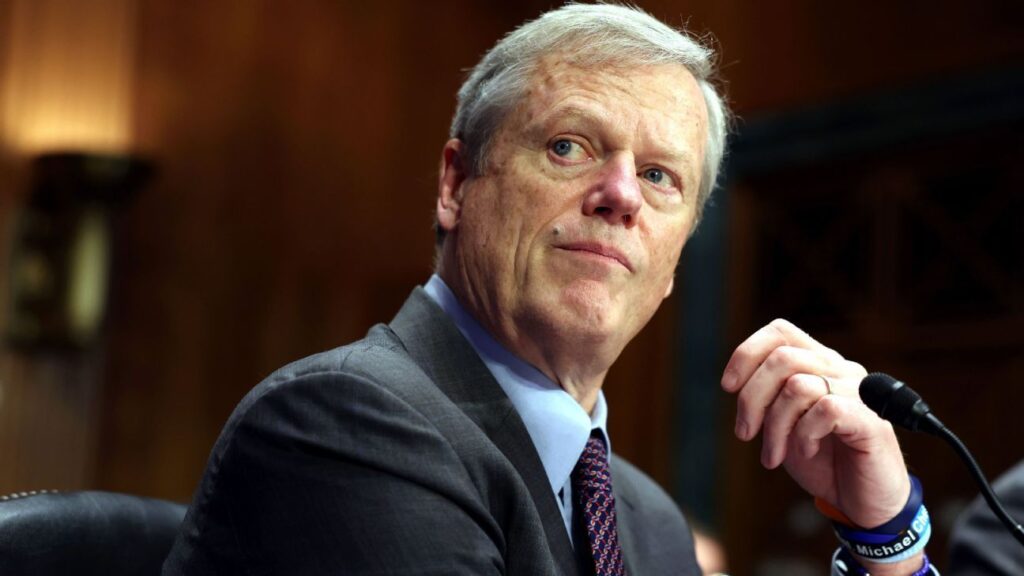
URGENT UPDATE: NCAA President Charlie Baker has just clarified the organization’s strict stance on college basketball eligibility for players with NBA experience. This announcement comes on the heels of Baylor University‘s recent signing of former NBA draft pick James Nnaji, stirring significant debate over eligibility rules.
In a statement released on Tuesday, Baker confirmed that the NCAA will not grant eligibility to any prospective or returning student-athletes who have signed an NBA contract, including two-way contracts. “The NCAA has not and will not grant eligibility to any prospective or returning student-athletes who have signed an NBA contract,” Baker emphasized.
The urgency of this situation cannot be overstated. With the increasing recruitment of players who have played in international leagues, Baker stated that the NCAA is exercising discretion to ensure fair competition. “Rules have long permitted schools to enroll and play individuals with no prior collegiate experience midyear,” he added.
Nnaji, the 31st pick in the 2023 NBA Draft, signed with Baylor on Christmas Eve. Although he participated in the NBA Summer League and was part of an October 2024 trade involving Karl-Anthony Towns, he never played in an NBA game. Instead, Nnaji spent five years with FC Barcelona in the EuroLeague and was cleared by the NCAA last week, potentially making his debut for the Bears as early as this weekend.
The controversy extends beyond Baylor. Current NBA player Trentyn Flowers, who is exploring college eligibility despite being on a two-way contract with the Chicago Bulls, is at the center of this ongoing debate. Flowers, a former top-50 recruit who previously committed to Louisville, is now navigating the complexities of NCAA rules and may soon test them in court.
Prominent college coaches are voicing their frustrations over these developments. Arkansas coach John Calipari stated, “The rules be the rules… if you put your name in the [NBA draft], you can’t play college basketball.” He criticized the inconsistency in applying these rules, particularly for international players.
Similarly, Gonzaga coach Mark Few lamented the lack of clear organizational leadership, saying, “It’s wild out there right now.” The absence of uniform rules is leading to confusion and a chaotic atmosphere within college basketball.
As these disputes escalate, the NCAA’s longstanding eligibility rules may soon face legal challenges similar to those that have previously affected amateurism policies. The implications for college basketball are profound, impacting not just players but the integrity of the entire system.
With potential legal battles looming and the landscape of college basketball shifting dramatically, all eyes will be on the NCAA in the coming weeks. Will they hold firm on their stance, or will emerging trends force them to reconsider their policies? Stay tuned for the latest developments as this story unfolds.