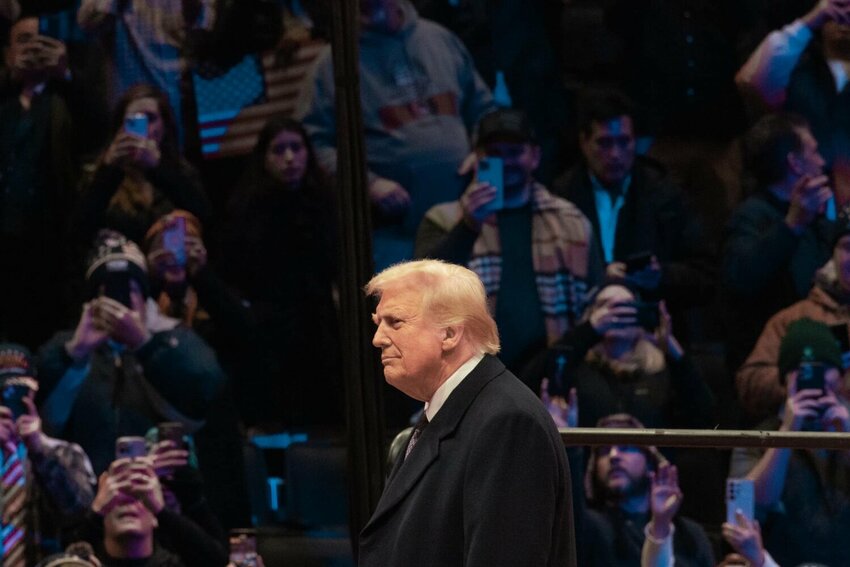
The National Park Service will charge visitors on Martin Luther King Jr. Day, a shift from its long-standing policy of offering free entry on this federal holiday. For the first time in 15 years, visitors will need to pay to enter any of the 63 national parks across the United States on January 15, 2024. This decision comes as part of a new entry fee schedule announced by the Interior Department, which now designates President Donald Trump’s birthday, June 14, as a free entry day.
Since 2011, the National Park Service has allowed free access on Martin Luther King Jr. Day, recognizing the significance of the civil rights leader’s legacy. The same policy was extended to Juneteenth in 2021 following its designation as a federal holiday. However, the recent changes have drawn criticism from lawmakers and advocates who argue that they undermine the importance of celebrating Black history.
In a statement made on November 25, 2023, the Interior Department claimed that these adjustments “reflect President Donald J. Trump’s commitment to making national parks more accessible, more affordable, and more efficient for the American people.” This rationale has not been well received in many quarters.
Reactions from Lawmakers
Legislators have expressed their disbelief and anger regarding the decision. Representative Dan Newhouse, a Republican from Sunnyside, Washington, reacted with surprise, stating, “Seriously? I guess it never ends, does it?” He referred to the decision as part of a broader pattern associated with the Trump administration.
Representative Marilyn Strickland, a Democrat from Tacoma, criticized the removal of free entry days for MLK Day and Juneteenth. She stated that this move is “further proof that this administration is deeply rooted in anti-Blackness.” Strickland pointed to the firing of Gen. Charles Q. Brown, the first Black chairman of the Joint Chiefs of Staff, as an example of the administration’s disregard for Black leaders.
Representative Michael Baumgartner, a Republican from Spokane, acknowledged Flag Day’s significance but expressed a desire for all three holidays—MLK Day, Juneteenth, and Trump’s birthday—to be designated as free entry days. Baumgartner noted his personal commitment to honoring King’s legacy through community events.
Democratic Representative Emily Randall also emphasized the value of free entry days, arguing that they promote access to the natural beauty of the United States. She indicated that the administration’s changes appear to signal a diminishing importance on the contributions of historical figures like King.
Concerns Over Historical Narratives
Critics, including Representative Pramila Jayapal from Seattle, have reframed the decision as indicative of an administration that prioritizes personal legacy over national values. Jayapal stated, “We’re encouraging people to not celebrate heroes like Martin Luther King,” highlighting her concern over the implications of honoring Trump’s birthday while sidelining significant historical events.
While some officials, such as former Interior Secretary Ryan Zinke, have refrained from commenting directly on the changes to specific days, he expressed skepticism about the efficacy of free entry days in general. Zinke noted that entry fees are crucial for park maintenance, with a significant portion of funds directly supporting park operations.
Washington Senators Patty Murray and Maria Cantwell voiced their disappointment over the administration’s choices. Murray remarked, “Every single minute of every day, he’s thinking of things to irritate people,” emphasizing the negative sentiment surrounding the changes. Cantwell added that the selection of recognized days is not arbitrary, but rather reflects societal values and struggles for equity.
The recent adjustments to national park entry policies have sparked an ongoing debate about the significance of historical recognition and the values that shape public access to cultural landmarks. As Americans prepare for the upcoming holidays, the implications of these changes will likely continue to resonate among constituents and advocacy groups concerned with civil rights and historical acknowledgment.