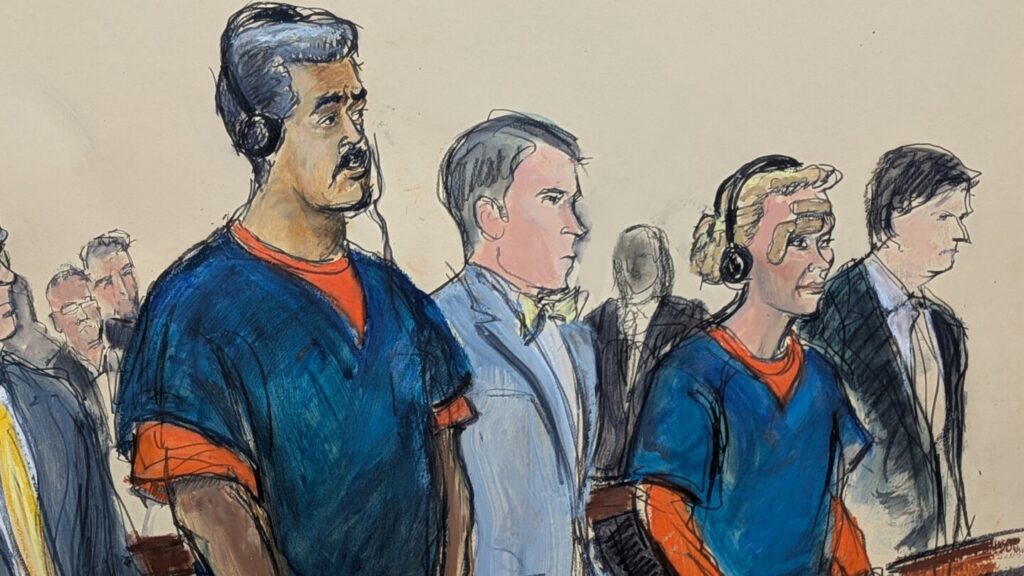
BREAKING: The capture of former Venezuelan President Nicolás Maduro by U.S. forces has sent shockwaves through the international community, raising urgent questions about the future of global legal frameworks. This dramatic event unfolded on October 7, 2023, when Maduro was removed from power and charged with participating in a narco-terrorism conspiracy.
In a developing story, U.N. Undersecretary-General Rosemary A. DiCarlo addressed the Security Council, emphasizing that the stability of international peace depends on adherence to the principles of the U.N. Charter. This legal framework, established post-World War II, is now under threat as the doctrine of “might makes right” resurfaces.
U.S. President Donald Trump has justified the operation, declaring it legal and framing it as part of an “armed conflict” with Venezuelan drug cartels. U.S. Ambassador to the United Nations Mike Waltz called the operation a “surgical law enforcement action,” aligning with Trump’s broader strategy to reaffirm American dominance in the Western Hemisphere. Trump’s aggressive stance has also put Colombia’s leftist President Gustavo Petro on notice, following recent sanctions against him and his government.
The fallout from Maduro’s ouster has prompted condemnation from various world leaders, with critics warning that such actions could pave the way for more military interventions. French Foreign Minister Jean-Noël Barrot stated that capturing Maduro violates the principle of non-use of force, which could lead to severe consequences for global security.
As tensions rise, the implications for international relations are vast. The ongoing conflict in Ukraine could be affected, as Europe heavily relies on U.S. support amidst Russia’s aggression. Russian Ambassador to the U.N. Vasily Nebenzya condemned the U.S. operation, branding it a retreat into lawlessness and urging the Security Council to unite against such military policies.
The repercussions extend to other regions as well. Trump’s remarks about Greenland’s strategic importance have ignited concern in Europe, with Danish Prime Minister Mette Frederiksen asserting that Denmark has the right to its territory. Additionally, speculation is brewing over potential Chinese actions against Taiwan following the U.S. precedent in Venezuela.
The Middle East is not spared either, as Trump’s administration continues to engage militarily with Iran, further complicating the landscape of international law.
As global leaders grapple with the implications of this military action, the future of international norms hangs in the balance. The European Union has expressed its commitment to upholding international laws, but divisions are evident, particularly with allies like Hungary questioning the efficacy of these rules.
This urgent situation demands immediate attention as the world watches how nations will respond to the shifting geopolitical landscape. The capture of Maduro not only raises questions about sovereignty but also signals a potential shift toward more unilateral actions by powerful nations.
Stay tuned for more updates as this story develops, and consider the global ramifications of today’s events.