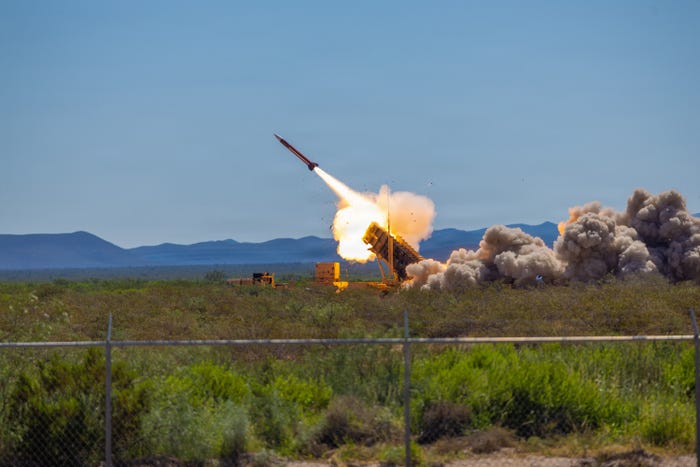
UPDATE: Lockheed Martin has just announced a groundbreaking plan to more than triple its production of Patriot missile interceptors, increasing annual output from 600 to 2,000 units. This urgent move comes amid escalating global demand for robust air defense systems, driven by recent geopolitical tensions.
On November 14, 2023, Lockheed confirmed it has reached a pivotal agreement with the US Department of Defense to “rapidly accelerate” the production and delivery of its PAC-3 Missile Segment Enhancement (MSE) interceptors over the next seven years. This substantial increase in production capacity is critical as the demand for effective air defenses has surged due to ongoing conflicts in regions such as Ukraine and the Middle East.
The MIM-104 Patriot air defense system has emerged as a key asset in combating missile threats, particularly in Ukraine, where it has been integral to defending against Russian missile strikes. As the first line of defense, the Patriot system has become crucial not only for Ukraine but also for US and allied forces facing threats from hostile regions.
Lockheed’s chairman and CEO, Jim Taiclet, emphasized the company’s commitment to delivering at the speed required by the US and its allies. He stated, “We will create unprecedented capacity for PAC-3 MSE production, delivering at the speed our nation and allies demand.”
In a significant response to the increased demand, Lockheed Martin has already boosted PAC-3 MSE production by more than 60% over the past two years, delivering 620 missile interceptors in 2025 alone, marking a 20% increase from the previous year. The company currently supplies these interceptors to 17 countries, solidifying the PAC-3 MSE as a cornerstone of missile defense strategies in both the US and Europe.
The Pentagon’s announcement is part of a broader strategy aimed at enhancing the defense industrial base. Secretary of Defense Pete Hegseth revealed the new Acquisition Transformation Strategy in November, which focuses on increasing production capacity for essential weapons and munitions. This framework agreement establishes the groundwork for negotiating a seven-year supply contract that will require Congressional approval.
Michael Duffey, the undersecretary of defense for acquisition and sustainment, stated, “This framework agreement marks a fundamental shift in how we rapidly expand munitions production and magazine depth.” This new approach aims to foster collaboration between the Pentagon and defense contractors, ensuring a swift response to evolving threats.
As global tensions continue to rise, the ramp-up in Patriot missile production by Lockheed Martin signals a decisive step in bolstering air defenses for the US and its allies. As developments unfold, the focus will be on how quickly these additional interceptors can be delivered to meet urgent security needs.
Stay tuned for further updates on this developing story.