UPDATE: In a groundbreaking initiative, citizen scientists in Santa Cruz, California, are now equipped with revolutionary Bluetooth technology to track migratory monarch butterflies. This new project, titled Project Monarch, is set to transform our understanding of these iconic insects’ migration patterns.
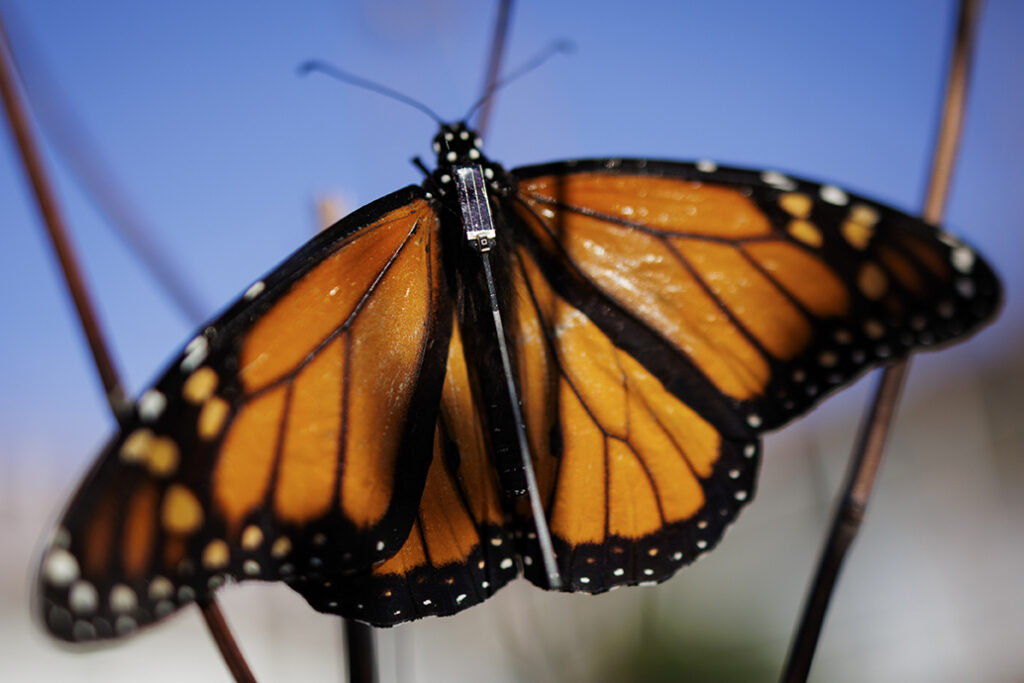
For the first time, enthusiasts like Sasha Hernandez are using ultra-light Blu+ tags to monitor monarchs on their journey from west of the Rockies to their winter colonies in Mexico. The tags enable smartphone users to detect tagged butterflies within a 100-yard range, automatically uploading crucial data to a central database. This innovative approach is crucial as it allows for widespread community involvement in tracking these butterflies, which have seen a staggering 95 percent decline in population over the past few decades.
According to experts, including Leone Brown from James Madison University, the technology is a game-changer. Each tag weighs just two-thousandths of an ounce, making it as light as a grain of rice, and attaches to the butterfly using non-toxic eyelash glue. These tags, powered by miniature solar panels, emit signals every three seconds, helping researchers gather real-time data about the butterflies’ movements.
The significance of this initiative cannot be overstated. The western monarchs, unlike their eastern counterparts, follow a more fragmented migration route, making community-driven tracking efforts essential to understanding their behaviors. Ashley Fisher from the Xerces Society emphasized, “We want to identify what a monarch’s overwintering path looks like,” highlighting the importance of community involvement in conservation.
As of July 2025, nearly 360,000 detections have been recorded during the eastern monarch migrations, utilizing the same technology that will soon be deployed along the West Coast. The tags will be activated by mid-December, allowing for immediate data collection as the migration season kicks off.
However, challenges remain. While the design of the tags aims to balance the survival and comfort of the monarchs, researchers are cautious. Should any discomfort be observed in tagged butterflies, the tagging process may be reevaluated. Additionally, the solar panels could potentially be obstructed as butterflies cluster together for warmth, creating potential data gaps.
The upcoming migration season, running from October to January, will see volunteers counting butterflies along California’s coast. Charis van der Heide, a senior biologist and regional coordinator for the Santa Barbara Western Monarch Thanksgiving Count, stated, “Getting more citizen scientists involved is crucial, given the huge areas over which they migrate.” The integration of the Project Monarch app allows volunteers to contribute to data collection effortlessly.
Hernandez, a second-year neuroscience student at UC Santa Cruz, expressed her excitement about the project, stating, “It’s great to have science that I can easily access on my phone.” This sentiment resonates with many, as the project aims to enhance public engagement in science while addressing the urgent conservation needs of monarchs.
As the migration season approaches, the collaboration between researchers and the public is vital. By participating in this initiative, volunteers will help uncover the mysteries of monarch behavior, potentially aiding in the restoration of their dwindling populations.
The Xerces Society and other organizations are rallying support, urging community members to download the app and contribute to this vital conservation effort. The hope is to not only track the butterflies but to foster a deeper connection between the public and these magnificent creatures.
Stay tuned as this story develops and more updates are expected when the tags are activated next month.