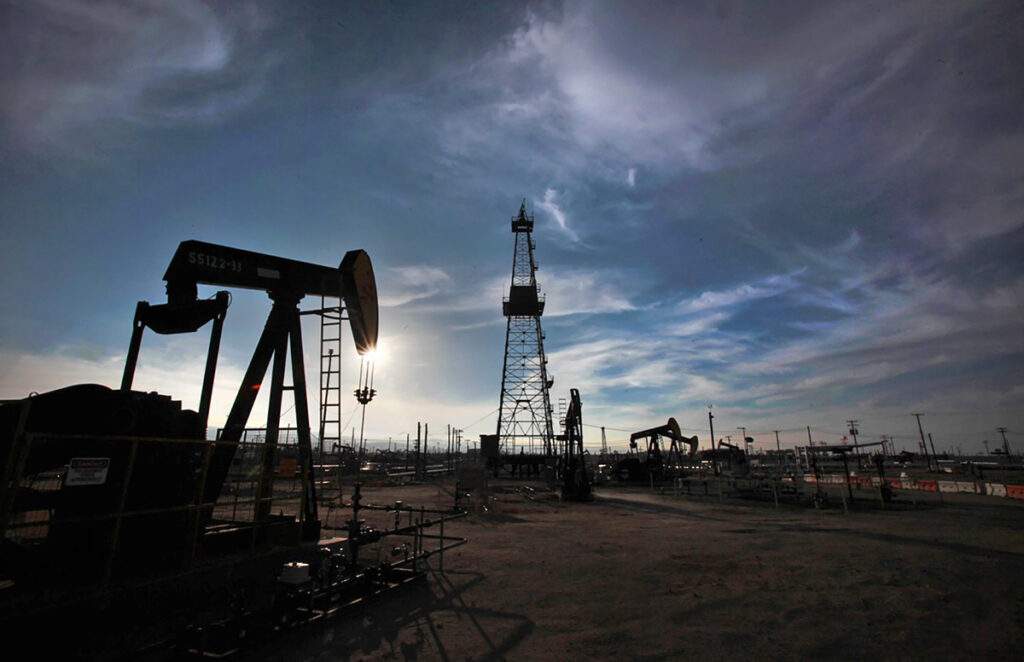
URGENT UPDATE: Political analysts are calling for a shift in strategy as the Democratic Party grapples with maintaining influence in key states like North Carolina, Ohio, and even Texas. In a bold new argument, prominent writer Matthew Yglesias contends that supporting America’s oil and gas industry could be crucial for Democrats in upcoming elections.
Latest insights reveal that Democrats need to reassess their stance on fossil fuels to achieve electoral success in states where they face stiff opposition. As the 2024 elections approach, the party must confront a challenging reality: how to regain traction in traditionally conservative states while promoting a cleaner environment.
Yglesias emphasizes that embracing the oil and gas sector may not be a popular stance among liberal factions. However, examples from international leaders like President Claudia Sheinbaum of Mexico and Prime Minister Mark Carney of Canada illustrate that left-leaning governments can successfully integrate fossil fuel support into their platforms without sacrificing environmental goals.
Historically, the Democratic Party’s platform has championed a balanced energy approach. In the run-up to Barack Obama‘s re-election in 2012, the party argued for harnessing “all of America’s great natural resources.” However, recent years have seen a pivot toward an anti-oil sentiment, especially after Joe Biden pledged to transition away from the oil industry during the 2020 campaign.
Yglesias points out that the shift in policy has resulted in significant electoral losses in critical states like Pennsylvania and Ohio. In contrast, by adopting a more nuanced stance on energy, Democrats could reclaim support in these regions, capitalize on local industries, and ultimately bolster their chances of a Senate majority.
The economic implications of this strategy are substantial. The oil and gas sector not only provides well-paying jobs but also contributes vital tax revenue, which can finance social programs, education, and infrastructure improvements. As Yglesias notes, the U.S. has become a net exporter of oil, thanks to policies that prioritize domestic energy production, thus enhancing national security by reducing reliance on foreign oil from countries like Russia and Iran.
In addressing climate change, Yglesias argues that a pragmatic approach is essential. He suggests that Democrats should collaborate with the oil and gas industry to adopt best practices, regulate emissions, and invest in cleaner technologies. This way, they can create a framework that benefits both the economy and the environment.
The crux of the argument is this: while the fight against climate change is urgent and necessary, the transition away from fossil fuels requires a careful balance. Democrats must acknowledge the current realities of energy consumption and work toward solutions that do not alienate potential voters or harm local economies.
As the political landscape shifts, Yglesias advocates for a comprehensive strategy that recognizes the role of fossil fuels in the energy mix while promoting sustainable practices. If Democrats can successfully navigate this complex terrain, they stand to gain not just in upcoming elections but also in the broader fight against climate change.
Moving forward, political observers will be watching closely to see if the Democratic Party adjusts its approach in response to this urgent call for a pragmatic energy policy. The stakes are high, and the time for decisive action is now.